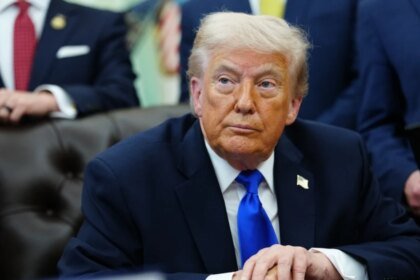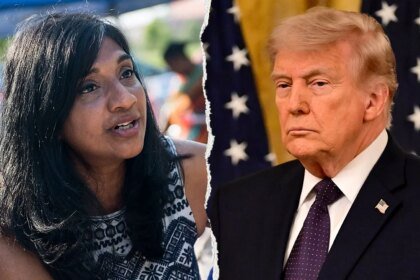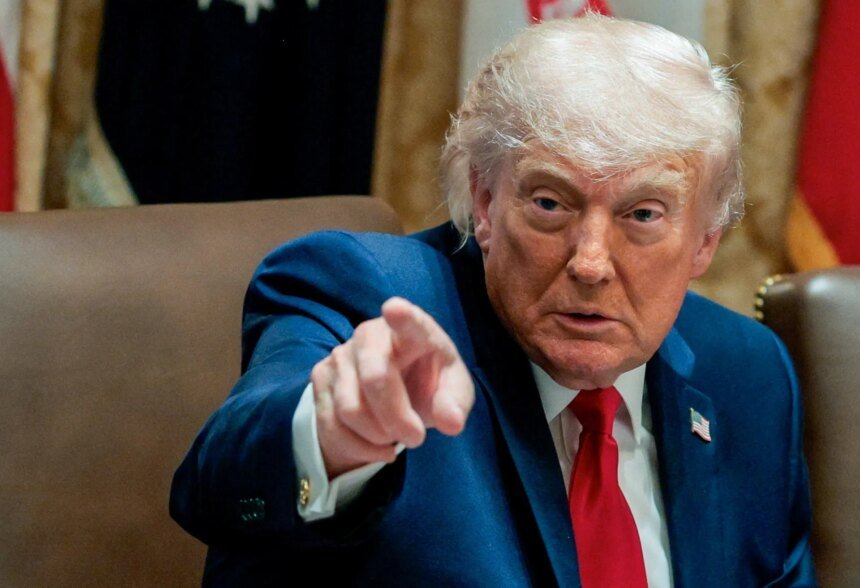
The Colombian elections have turned into a new stage in the political conflict taking place in Latin America between the left and the right. With the approach of the runoff scheduled for June 21, US President Donald Trump entered directly into the competition, declaring his full support for the right-wing candidate, Abelardo de la Espriria, in a move that sparked widespread controversy inside and outside the country.
Trump’s intervention came days after the results of the first round, which carried a major political surprise, after Abelardo de la Esperilla (47 years old), a lawyer with no political experience, topped the voting results, slightly ahead of the leftist senator and heir to the current government, Ivan Cepeda.
Read also
list of 2 itemsend of list
In a post on the “Truth Social” platform, Trump described the elections as important for the future of the relationship between the United States and Colombia, declaring his “full support” for the right-wing candidate. He also attacked his rival Cepeda, describing him as “a Marxist from the extreme left.”
Accusations of interference
According to the New York Times, Trump’s support sparked angry reactions within the leftist camp. Outgoing President Gustavo Petro criticized American interference in the elections, stressing that people’s freedom is at risk when one country tries to influence the choices of another country.
The newspaper points out that Trump’s interference in the Colombian elections is part of a recurring pattern that he followed during his second presidential term, as he had previously deliberately interfered and influenced foreign elections to support his allies and right-wingers who share the same ideas, which contributed to fueling the “wave of right-wing rise” in Latin America.
As the runoff approaches, Colombia appears to be at a political crossroads. Either the left will succeed in maintaining power and complete its political project, or the country will join the wave of populist right.
In both cases, Trump’s entry into the running confirms that the Bogota battle is no longer just a Colombian affair, but has become part of a broader struggle over the future of political balances on the continent.
Criticism of Trump’s candidate
The New York Times criticized De la Espriria – who openly boasted of the lavish and luxurious life he lived abroad between Florida and Italy – noting that he faced investigations and intense press scrutiny in Colombia about the true source of his enormous wealth.
He is also subjected to constant criticism in the Colombian press due to the nature of his previous work as a “criminal lawyer defending criminals,” as he had previously defended clients and figures involved in corruption cases and controversial political files.
De la Esperría previously worked as a lawyer for Alex Saab, a Lebanese-Venezuelan businessman close to Venezuelan President Nicolas Maduro, who was accused of money laundering, which exposed him to widespread criticism in the Colombian press.

The New York Times confirms that Trump’s candidate – who lacks political experience, as it puts it – has fortified himself with the same political rhetoric that brought leaders such as Trump, Argentine President Javier Milley, and El Salvador’s President Nayib Bukele to power, by calling for tightening security and reducing costs in the country.
This political campaign – along with his love of spectacle and impassioned speeches – made him attractive to Colombians searching for solutions to widespread violence and local conflicts.
Fears of leftist rule
For its part, the Wall Street Journal editorial, known for its conservative right-wing tendencies, attacked the political left, and adopted a sharp critical stance towards Petro and his party, considering that during his reign, Colombia moved away from the United States and moved closer to countries such as Venezuela, Cuba, Russia, and China.
The newspaper used a set of negative descriptions to evaluate Petro’s performance, claiming that the country’s economy is suffering from “financial chaos,” pointing to “the erosion of the oil and gas industry,” as well as a decline in private investment.
The newspaper believes that Cepeda represents a direct extension of Petro’s policies, and therefore he is running in the elections burdened by the current government’s record.

The editorial warns that Cepeda seeks to complete Petro’s dream of rewriting the constitution in the style of the late leftist Venezuelan president Hugo Chavez, in direct reference to fears of repeating the “Venezuelan model.”
The newspaper not only criticizes policies, but also questions the left’s electoral methods, and accuses the ruling party of following “intimidation tactics in rural areas” that, in its opinion, helped strengthen the government’s influence.
While Petro accuses the United States of interfering in Colombia’s internal affairs and warns against turning his country into a “colony,” the runoff, expected on June 21, appears to be a new test of the ability of the populist right to expand in Latin America with the direct support of Trump and his allies.