Al Jazeera correspondents
Addis Ababa – Tomorrow, Monday, millions of Ethiopians will head to the polls to participate in the seventh general elections since the adoption of the 1995 constitution, at a time when the country is facing multiple internal files, in addition to regional issues related to Sudan, Eritrea and Somalia, as well as the issues of the Nile River and the Red Sea, which makes the election results a matter of interest beyond the borders of Ethiopia.
Electoral geography
The number of registered voters reached more than 50.5 million voters. According to the Ethiopian National Election Board, This is the highest number of voters witnessed in the elections in the country, while 42 political parties participate in the electoral process, competing for 547 seats in the federal parliament, in addition to 2,764 seats in the regional parliaments.
Elections are held in 11 out of 12 regions, in addition to the cities of Addis Ababa and Dire Dawa, which have a special administrative status, while the Tigray region is absent from the elections, after the National Elections Council decided to cancel the legal registration of the Tigray Front, the historically dominant party in the region, which prevented the elections from being held.
Ethiopia adopts a republican system based on the principle of national federalism, which was approved under the 1994 Constitution, where the regions were granted broad powers in managing their local affairs with the aim of enabling the nationalities to manage their affairs within the framework of the federal state.
Ethiopia currently includes 12 regions in addition to the cities of Addis Ababa and Dire Dawa, which have a special administrative status. The regions include: Oromia, Amhara, Tigray, Ethiopian Somalia, Afar, Sidama, southern Ethiopia, central Ethiopia, the peoples of southwestern Ethiopia, Benishangul, Gambella, and Harar.
These regions have governments and parliaments that administer a number of powers stipulated in the Constitution within a federal system that grants the regions a wide degree of autonomy.

The chances of participating parties
42 parties are running in the elections at the federal parliamentary level and at the regional parliamentary seat level, and despite the multiplicity of parties, the political scene is still characterized by disparities in political capabilities and resources among them.

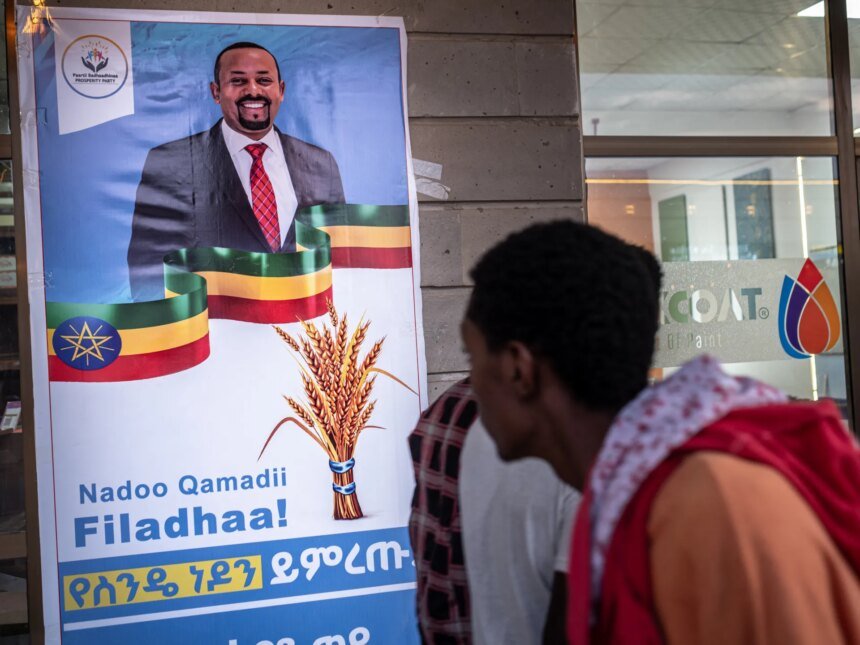
At the forefront of the political scene is the Prosperity Party, led by Abiy Ahmed, who is running in the elections based on his government’s record over the past years, which includes implementing major infrastructure projects, launching economic reforms, in addition to the completion of the Renaissance Dam project, which is one of the most prominent development symbols in the country.
On the other hand, opposition parties are running in the elections with different programs and political visions, while parties that are similar in their orientations have tended to form electoral alliances, in an attempt to unify the votes of their voters and increase their chances of winning the largest possible number of seats in the federal parliament and regional parliaments.
The researcher on Ethiopian affairs, Jaber Ali, says that the lists of candidates presented by the various parties showed that the Prosperity Party did not present candidates in about 15% of the electoral districts, indicating in his interview with Al Jazeera Net that this step may provide the opposition forces with greater opportunities to win these seats, in addition to that the alliances formed by some parties may contribute to increasing their share of the seats.
Jaber explained that this trend reflects a desire to strengthen the presence of an effective opposition within state institutions, including its representatives assuming ministerial portfolios, as happened after the 2021 elections, as well as enabling the opposition to play a more influential role and participate effectively in the constitutional amendments expected after the elections.

The future of Ethiopian federalism
During the election campaigns, many issues emerged that topped the political debate, most notably the future of the federal system and the possibility of introducing constitutional reforms to it. This controversy was clearly reflected in the electoral debates, which witnessed a difference in visions and positions regarding the form of the state and the nature of the political system during the next stage.
The electoral debates also showed an increasing interest in foreign policy issues, most notably the Nile River file, the issue of access to the Red Sea, and relations with neighboring countries. Therefore, the importance of the elections is not limited to determining the winners and losers, but rather extends to shaping the features of the policies that the state will adopt in the future.

International arrangements and oversight
The Ethiopian National Electoral Council announced the completion of logistical arrangements, by equipping 52,000 polling stations throughout the country and deploying 359,000 employees. In terms of monitoring, the African Union sent a mission of 59 observers headed by former Kenyan President Uhuru Kenyatta, while IGAD deployed a mission of 26 observers headed by former Ugandan Vice President Speciosa Wandira Kazibwe.

Political analyst Ali Omar Omar explained that the importance of the elections is not limited to the Ethiopian interior, but extends to its regional surroundings, as Ethiopia is one of the most prominent actors in the Horn of Africa and the Nile Basin region. He pointed out in his interview with Al Jazeera Net that Sudan and Egypt, for example, are following the results of the elections with interest, given their connection to the Nile River issue, as it is expected that any future government will continue to adopt a position that supports the benefit of Ethiopian water resources.
Ali pointed out that the elections are also of great importance to neighboring countries in light of the intertwining of security and economic interests with Ethiopia, in addition to the issue of access to the Red Sea, whose presence has increased in the Ethiopian political debate as Addis Ababa seeks to secure a sea port, and therefore there is anticipation for these elections and the effects that may result from them in the files of security, development and regional cooperation, as he put it.