Published On 5/27/2026
|
Last update: 15:28 (Mecca time)
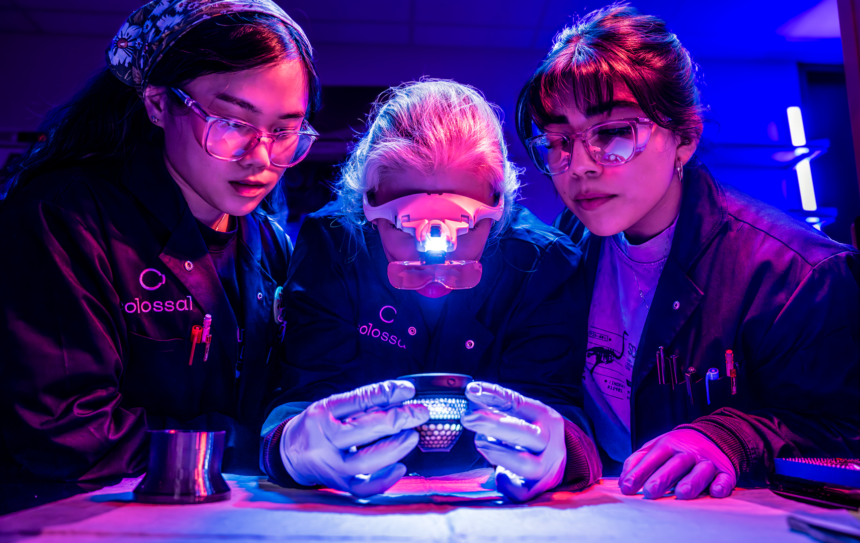
The announcement by the American company “Colossal Biosciences” of its success in hatching 26 chicks from artificial eggs was not just ordinary news reported by news agencies. The direct importance of this achievement is that it breaks the biological barrier to laboratory reproduction of birds, something that was not available before, but the expected applications go far beyond that.
In the past, scientists tried to modify bird embryos, just as they succeeded in doing so with mammals, but they were powerless in the way of birds taking shelter in their natural incubator, which is the egg. Therefore, the success in deciphering this code by creating artificial eggs printed with 3D technology represents an unprecedented step, which does not aim to develop the poultry industry, but rather paves the way for re-engineering the planet’s biodiversity and reviving species that have become extinct, which is the goal for which the company was founded.
Ben Lam, CEO and co-founder of the company, said in statements to Al Jazeera Net that their artificial egg system was originally designed to simulate the breathing functions and structure of the natural egg shell, and it is still an experimental platform and not a complete biological substitute for all the functions of the natural bird egg.
He explains the components of this system, which consists of an exoskeleton printed with 3D printing technology, which contains a precisely designed porous network that allows for controlled gas exchange. This exoskeleton can be made of biocompatible polymeric materials or titanium, depending on the application.
The shell is lined with an innovative silicone-based membrane mesh, specially designed to regulate the transport of oxygen and carbon dioxide while maintaining the appropriate humidity for fetal growth.
He points out that this membrane system has shown, in tests, a performance comparable to, and in some cases even superior to, the performance of a natural chicken egg shell, providing effective respiratory support for the growth and development of chicks.

Growth without deformities
Regarding how to control the early stages of growth without causing deformities or failure to grow, he explains that the growth process in the artificial egg is almost identical to growth inside a regular egg, as the embryo grows above the yolk and settles naturally at the top of the device, allowing a complete view of the developing embryo throughout its formation.
“This is the first time that the entire chick development process can be viewed dynamically through the window at the top of the artificial egg,” says Ben.
He adds: “Our artificial egg platform is designed to accurately mimic the key conditions for natural growth inside the egg, including gas exchange, moisture balance, temperature stability, and nutritional support. One of the basic requirements is the addition of calcium.”
He explains: “In a natural egg, the embryo derives calcium from the shell while its skeleton is growing. So in the artificial system, we supply the developing embryo with calcium while its skeleton is growing, and the embryo continues to grow naturally above the yolk, mimicking the natural embryogenesis process in birds. Our device provides a continuous view of the developing embryo throughout the process, allowing the chick’s growth to be monitored in real time for the first time.”
Before embryo development begins, the genetic modifications targeted by the experiment are made at the level of primary germ cells or embryonic cells in their very early stages, and the role of the artificial egg is to support the healthy growth of these genetically engineered embryos under controlled conditions, as Ben explains.

Part of the bigger challenge
Although Ben is thrilled with this achievement, he stresses that, despite its importance, it represents only one part of the larger challenge of recreating an extinct species, which is the goal that his company seeks.
“For a species like the giant moa in the South Island, for example, embryonic growth is one of the main challenges,” he says. “Moa eggs are about eight times larger than emu eggs, and no living bird is capable of naturally carrying or laying an egg of this size. This means we need either an engineered replacement system or an external growth platform capable of supporting and supplementing embryonic growth outside the constraints of the natural egg.”
He adds: “At the same time, our scientists must reconstruct the moa’s precise genome from ancient DNA, determine the genetic basis of its key traits, and engineer these traits into closely related species, such as the emu, its closest living relative.”
The project is currently in the genome sequencing phase, and is focused on building high-quality genomic references for all nine moa species. To date, the team has identified multiple, robust sources of ancient DNA, including samples from the giant moa on the South Island.
The artificial egg platform is designed to address the growth dilemma by creating a scalable environment that mimics the key functions of a natural egg, including gas exchange, moisture regulation, and growth support.
Therefore, Penn emphasizes, “the artificial egg system should be viewed as an enabling technology for future species revival research, and not as a complete solution in itself for reviving extinct species.”

Integration, not conflict
Regarding some people’s reservations about the company’s activity, on the grounds that it is preferable to direct funds to preserve endangered animals, and not to restore what has already become extinct, Ben says, “Our company’s capital comes from private investments, which means that we are providing new financing that does not compete with or divert the path of traditional financing to preserve existing species. Investing in reviving extinct species adds value to the efforts made, not a substitute for them.”
He explains, “From an environmental standpoint, the revival of extinct species plays an important role in restoring the lost functions of degraded ecosystems, and every project to revive extinct species implemented by the company is closely linked to the preservation of related living species. For example, in the context of efforts to save the woolly mammoth, the company has created genomic references for all species of elephants, accelerated the development and dissemination of a vaccine that protects elephants from the deadly African elephant herpes virus, and used artificial intelligence tools with field partners such as the “Save” organization. Elephants” to analyze drone footage and track the behavior of wild African elephants. The science developed to revive extinct species directly benefits species that exist today.”
As for the concern that bringing back extinct species might lead to lax protection of currently endangered species, Ben sees this argument as indicating two things that are not true about humans. It assumes that most people care about extinction in the first place, when in reality most people care about it to the extent it affects them personally. It also assumes that those who care will stop caring because of the possibility of creating a species roughly similar to the species that existed previously, thanks to hard work and technological progress.
He concludes: “The most honest position is that reviving extinct species and preserving habitats are not competitors, but rather in our company they are one goal.”