Medication waste in Jordan is gradually turning into an economic burden worth millions of dinars annually, amid warnings of continued misuse of medications and weak integration of health systems.
Local estimates and studies indicate that the volume of pharmaceutical waste in the Kingdom exceeds tens of millions annually, whether within government health institutions or at the level of expired medications piled up in citizens’ homes.
The CEO of the Kafaa Performance Indicator Center, Moaz Al-Mubaideen, told Al Jazeera Net that a study conducted by the center revealed that Jordan suffers from “high levels of waste in medicines and medical supplies,” explaining that the percentage of waste within hospitals and government medical centers is estimated at between 20% and 25%, equivalent to about 60 million dinars (about 84.6 million dollars) annually.
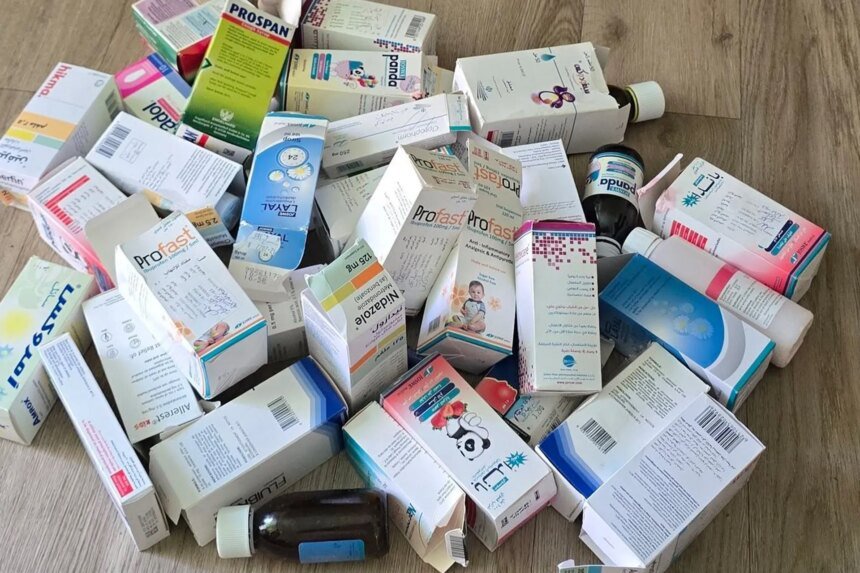
Al-Mubaideen added that approximately 12 million dinars (about 16.9 million dollars) are wasted annually by citizens as a result of the accumulation of medicines in homes and their expiration, according to a study conducted by the center, considering that the responsibility is shared between the various parties.

Health insurance chaos
For her part, the former Director of the Directorate of Pharmacy and Pharmacists in the Ministry of Health, Dr. Zeina Halsa, confirmed to Al Jazeera Net that the issue of medication waste is directly related to the absence of complete integration between health insurance systems and service providers, noting that the multiple types of health insurance per person without a unified electronic link opens the way for repeated dispensing of medications from more than one party, which leads to an increase in the volume of medication waste and an increase in the financial burden on the health sector.
Halsa explained that implementing comprehensive health insurance within a unified electronic system is one of the most important solutions to reduce this waste, as it contributes to creating a unified medication file for the patient that allows tracking of previously dispensed treatments, and prevents duplication of prescriptions or dispensing of quantities exceeding the actual need.
She added that pharmaceutical waste is not limited to damaged or expired medications, but also includes misuse of medications, storing them at home, and not adhering to the treatment plan, which are practices that cause losses estimated at millions of dinars annually.
Two forms of drug waste
In response to Al Jazeera Net’s inquiries, the head of the Strategic Stock Management Follow-up Department in the Jordanian Ministry of Health, pharmacist Mai Al-Issa, confirmed that there is not yet a unified and documented government number that accurately determines the volume of pharmaceutical waste annually, explaining that the current estimates differ depending on the definition of waste and the mechanisms for calculating it.
Al-Issa points out that pharmaceutical waste in the Ministry of Health system is divided into two main forms: The first relates to waste within health institutions, and is linked to the efficiency of inventory management, planning, prescribing and dispensing behavior, and the rational distribution of medicines, while the second form is linked to the behavior of citizens in terms of consuming medicines, reusing them, disposing of them, or accumulating them without use.
She explained that the Ministry of Health has taken several measures to reduce waste and promote the rational use of medicines, most notably the expansion of the application of the “Hakeem” electronic system and the electronic medical file, which allows showing the medicines dispensed to the patient and preventing the same treatment from being dispensed from more than one party without it appearing in the system.
She added that the Ministry also worked to digitize the management of supply chains, which contributes to controlling the consumption of medicines and tracking them from the main warehouses until they are dispensed to patients, in addition to linking the citizen to a specific health center through the “white card”, which prevents him from obtaining medicines from several health centers at the same time, while imposing financial fines in the event of a violation.

Monitor consumption rates
She indicated that the Ministry follows up on the electronic reports extracted from the “Hakeem” system and the inventory management system to monitor consumption rates and abnormal fluctuations resulting from the dispensing of medicines. Work is also underway to electronically link the administration of medicines within internal departments and the inventory management system to prevent any deduction of inventory outside the scope of actual use by patients.
Al-Issa confirmed that the Ministry adopts evidence-based treatment protocols that determine the treatment sequence for medical conditions, especially with regard to high-priced medications, with the aim of reducing unjustified dispensing or simultaneous dispensing of several medications for the same medical condition.
Regarding the extent of the success of the electronic medical file in reducing waste, she explained that the “Hakeem” system succeeded well in reducing the frequency of dispensing medications, by providing doctors and pharmacists with access to current medications, allergies, and drug alerts. However, the presence of some non-computerized health centers still contributes to the continuation of a limited percentage of waste.
She added that the absence of a unified patient file and the absence of a complete link between all government and private health agencies allows some patients to obtain medications from more than one agency without knowing the others, especially for those with multiple health insurances.
She pointed out that the dispensing of some medications in quantities exceeding what is needed is due to the incomplete connection between all health facilities, stressing that work is underway to complete this connection before the end of this year.
With regard to monitoring the sale of medicines without prescriptions, Al-Issa explained that the primary task falls on the General Food and Drug Administration, through periodic inspection of pharmacies and ensuring compliance with the dispensing of medicines that require a prescription, especially antibiotics, tranquilizers, and psychiatric medications.

Pharmaceutical companies
Regarding the role of pharmaceutical companies, Al-Issa pointed out the importance of their contribution to reducing waste by designing packages that suit the duration of treatment, supplying medicines in batches instead of large quantities, in addition to including clauses in tender contracts that oblige suppliers to replace expired materials without additional cost.
It also stressed the importance of companies adhering to the correct storage and transportation conditions, improving demand forecasting and estimating actual needs, and providing high-quality and long-lasting medicines, as well as participating in any national drug take-back programs.
For his part, the head of the Jordanian Pharmacists Syndicate, Zaid Al-Kilani, confirmed to Al Jazeera Net that drug waste in Jordan is one of the important health and economic challenges, but at the same time it is not a problem limited to Jordan only, but rather exists in various countries of the world to varying degrees, due to its connection to the nature of societies and the mechanisms of using and storing medicines.
Al-Kilani explained that the presence of a “medicine cabinet” inside homes is common globally and is not limited to Jordanian families. However, Jordan may sometimes witness an increase in storage and waste as a result of the surrounding political and regional circumstances, as some citizens resort to storing larger quantities than they need for fear of some medications being interrupted or the occurrence of crises, which may later lead to the expiration of medications and not being used properly.
He pointed out that pharmaceutical waste is not limited only to expired medications, but also includes misuse of medication, dispensing quantities exceeding the actual need, and poor treatment adherence among some patients, which is directly reflected in the cost of health care and national pharmaceutical security.
He stressed the importance of raising citizens’ awareness not to buy or store unnecessary quantities of medicines, in addition to strengthening the role of the pharmacist in health education and therapeutic follow-up, as this is one of the most important elements of reducing waste and improving therapeutic results.