Published On 5/18/2026
It seems that the Syrian government has been able to bypass the most sensitive issues of merging the areas that were under the control of the Syrian Democratic Forces (SDF), and all that remains is for it to complete what was agreed upon last January.
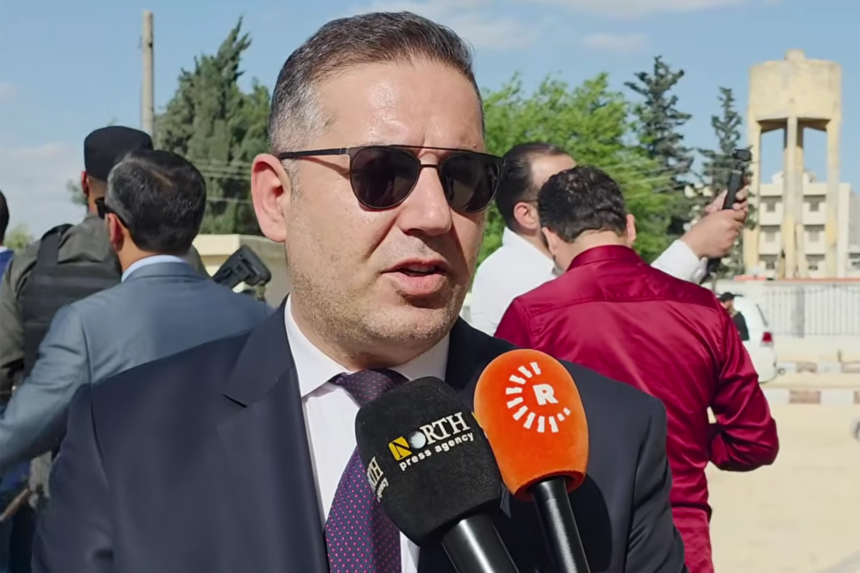
In a step described as important, Ibrahim Muslim was assigned by the Syrian government to administer the Ayn al-Arab region of Kobani in the eastern countryside of Aleppo, and began his work duties from the headquarters that had previously been used as the headquarters of the Autonomous Administration, after Muslim met with the Commander-in-Chief of the SDF, Mazloum Abdi, in the city of Hasakah.
Read also
list of 3 itemsend of list
The step comes in implementation of an agreement signed by the government with the SDF last January, after armed confrontations between the two sides during which the government forces were able to extend their control over many strategic areas that were under the control of the Kurdish forces.
The agreement stipulated the integration of the SDF into state institutions militarily, politically, and security, and President Ahmed Al-Sharaa said that the agreement does not aim to exclude, but rather to unify all Syrian components within the body of the state.

Serious about unifying the state
Ibrahim Muslim assuming his position as director of Ayn al-Arab Kobani reflects the Syrian leadership’s commitment to rebuilding national identity away from sectarian labels, and confirms the country’s entry into the phase of gradual recovery in preparation for regional and international integration, says political researcher Mustafa al-Nuaimi.
The state’s assumption of the administration of Ayn al-Arab Kobani – as Al-Naimi said in the program “Beyond the News” – “is part of a larger project for stability in the Middle East region, based on Syria’s geopolitical and economic importance and its role in energy security and global trade.”
What is happening now “is strengthening Syria’s stability and a message to the world that Damascus is continuing to strengthen stability and end what was previously done,” in the opinion of Al-Naimi, who expected that the part related to the city of Hasakah of the agreement would also be implemented.
It is clear that there is a clear path for the government to deal with the new changes through participation and the integration of political, military and service forces into the body of the state to build national identity and get out of the state of chaos that prevailed.”
What the Syrian leadership is taking are steps towards strengthening the country’s security, ending the chaos, and confining weapons to the state, “evidence of the existence of a goal that will be achieved through stages, starting with the integration process and ending with containing the region, and not ending with extending the influence of the Syrian state at all levels,” as the Syrian analyst says.
Important files completed
Lawyer and political analyst Mustafa Sheikh Muslim does not differ from the previous opinion by saying that the most sensitive files between the government and the SDF – that is, the military and security sides – have been successfully overcome, which indicates that the rest of the files are on their way to implementation.
It is true that the government is doing some things that are not stipulated in the agreement, including unilaterally appointing the new director of Ayn al-Arab Kobani without consulting the SDF, which has angered the residents. However, these matters do not negate the progress of the merger process, albeit at a slow pace, in the opinion of Sheikh Muslim.
This period is somewhat difficult because the institutions of self-administration were not completely dissolved and the state institutions did not fully enter the city, according to Sheikh Muslim, who pointed out the importance of implementing matters related to education, transport and communication, and graduates of the University of Kobani, as well as service institutions such as post office and civil status.

Among the important matters that the guest talked about was “the appointment of officials from among the city’s people to manage it according to what was agreed upon, and not from abroad as was the case during the days of the previous regime.”
The only thorny file remaining – in the opinion of Sheikh Muslim – is the file of the Kurdish prisoners detained in Damascus, who some view as a negotiating card for the government to hold on to.
The government was supposed to hand over some prisoners to the city of Al-Hasakah, but the matter was postponed until further notice, which angered the residents and families of the prisoners, who Sheikh Muslim said that they “do not know the fate of their children at all,” and that some of them received bodies from their families.
After fierce battles and air strikes by the international coalition forces led by the United States, the city was liberated from the organization’s forces at the end of January 2015, when the People’s Protection Units announced its control over the entire Ain al-Arab after it was subjected to major destruction and the displacement of tens of thousands of its residents to Türkiye.
After unimplemented agreements and violent clashes between the government and the SDF, the two sides agreed to integrate Kurdish forces and institutions into the state, and the executive committees seek to implement the agreement no later than the end of this year.