Published On 5/16/2026
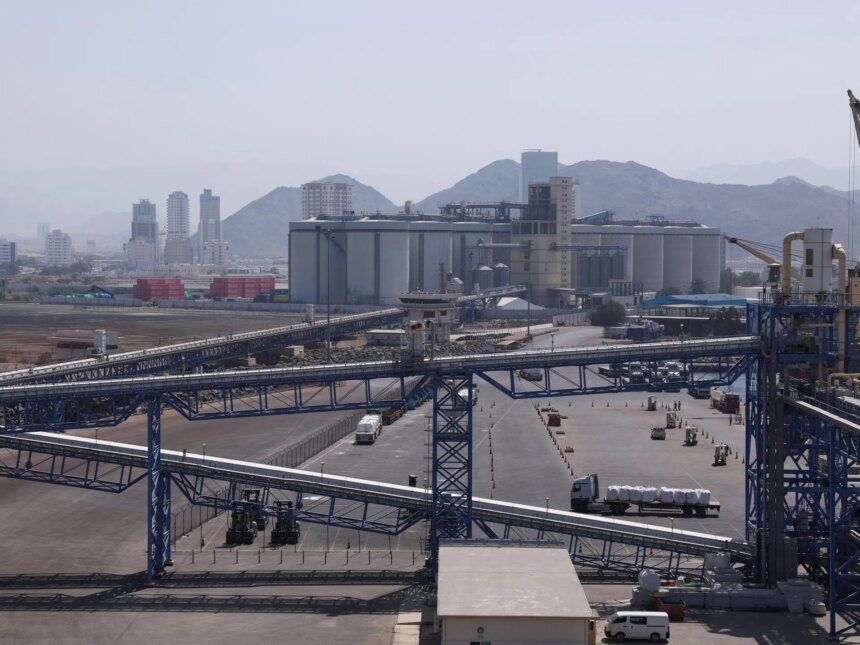
The Abu Dhabi Media Office announced – yesterday, Friday – that the UAE is seeking to accelerate the pace of construction of a new oil pipeline to double the export capacity of the Abu Dhabi National Oil Company (ADNOC) through the port of Fujairah by 2027, a project that would enhance its ability to bypass the Strait of Hormuz.
The office said that the Crown Prince of Abu Dhabi, Sheikh Khalid bin Mohammed bin Zayed, directed ADNOC to accelerate the implementation of the (West-East 1) pipeline project, during the meeting of the Executive Committee of the company’s Board of Directors, noting that the pipeline is under construction and is expected to begin operation next year.
Abu Dhabi has a crude oil pipeline (ADCOP) currently operating, with a capacity of 1.8 million barrels per day. This line – also known as the Habshan-Fujairah pipeline – has proven to be extremely important as the UAE seeks to increase exports directly from the coast of the Gulf of Oman.

The new UAE pipeline will not conflict with the Saudi East-West Pipeline, which Amin Nasser, CEO of the oil giant Aramco, described as a very important lifeline.
Al-Nasser said that Aramco increased the pipeline’s capacity to 7 million barrels per day in 8 days, which maintained the flow of about 60% of the quantities that the Kingdom was exporting before the war.
The UAE and Saudi Arabia are the only Gulf producers that have pipelines to export crude oil away from the Strait of Hormuz, while the Sultanate of Oman has a long coastline on the Gulf of Oman. As for Kuwait, Iraq, Qatar, and Bahrain, they rely almost entirely on the strait for shipments to cross.
The announcement of the new pipeline comes two weeks after the UAE withdrew from the Organization of the Petroleum Exporting Countries (OPEC), which exempted it from committing to specific oil production quotas.
The UAE company ADNOC aims to reach its production capacity to 5 million barrels per day by next year, a goal that was presented 3 years ago. The company stated – in May 2024 – that its production capacity reached 4.85 million barrels per day, and has not provided any update since then.

Reuters reported – last March – that the UAE’s production in January – before the US-Israeli war on Iran – was close to 3.4 million barrels per day, but it decreased by more than half after the strait was actually closed, which forced ADNOC to stop some production operations.
Since the outbreak of the Iran War, Tehran has sharply expanded its definition of the strait and the maritime area it says is under its control.
The Iranian Revolutionary Guard’s naval forces published a map on May 4 showing a new area of control that includes most of the UAE’s coast on the Gulf of Oman.
This step coincided with a drone attack on an ADNOC tanker and the launching of a barrage on the oil area in Fujairah. The UAE Ministry of Foreign Affairs described this as an unacceptable attack and economic blackmail.
Last Tuesday, the Revolutionary Guard announced an additional expansion that redefines the Strait area as an “expanded area of operations” extending to a distance of 482.8 kilometers.
Iran has kept the strait closed since the United States and Israel launched attacks on Iran on February 28, disrupting the flow of about 20% of oil supplies to global markets.
Energy prices witnessed a sharp rise as a result, prompting some countries to implement measures to rationalize fuel consumption, and raising fears of a slowdown in the economy due to high inflation.
The port of Fujairah – as well as the nearby port of Khor Fakkan – has become a lifeline for the Emirates, even with regard to non-oil trade, especially since the country relies heavily on imported food commodities. The port of Fujairah was attacked several times, and the UAE accused Iran of responsibility for these attacks, which forced it to temporarily suspend oil shipping operations last April.