In moments of major transformations that occur at a rapid pace in life, people do not realize that the world is changing until it is too late. This is how Bloomberg opinion writer David Fickling describes oil shocks, noting that their radical effects are only understood when viewed in retrospect.
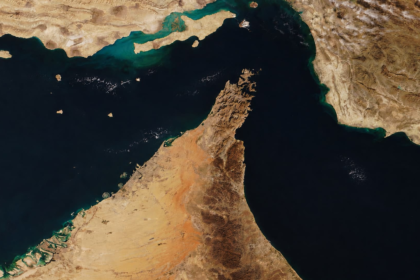
Today, with the intensification of the war between the United States and Iran and the closure of the Strait of Hormuz, the features of a new energy shock are taking shape that may redraw the map of the global economy, but this time, the epicenter of the earthquake will be in Asia.

The Asian citizen is a victim of the crisis
In his analytical article, Fickling believes that what is happening now is very similar to the two oil crises of the 1970s, when expectations at the time indicated that demand for oil in Europe would continue without significant change.
Read also
list of 2 itemsend of list
However, the reality of the situation at that time contradicted those estimates. Sharp price increases prompted Europe to turn radically towards energy alternatives, such as nuclear power and gas, resulting in a 20% decline in oil consumption by the mid-1980s.
Today, the same indicators are repeated in Asia, which is increasingly dependent on energy imports. According to the article, more than 80% of the oil and gas passing through the Strait of Hormuz heads east towards Asian markets, making them the most vulnerable to any supply disruptions.
According to the author, this fragility is no longer limited to countries such as Japan and South Korea, but rather extends to emerging economies. Vietnam has become a net energy importer, Malaysia, despite its oil wealth, has become a fuel importer, while Indonesia has relied on imports for more than two decades.
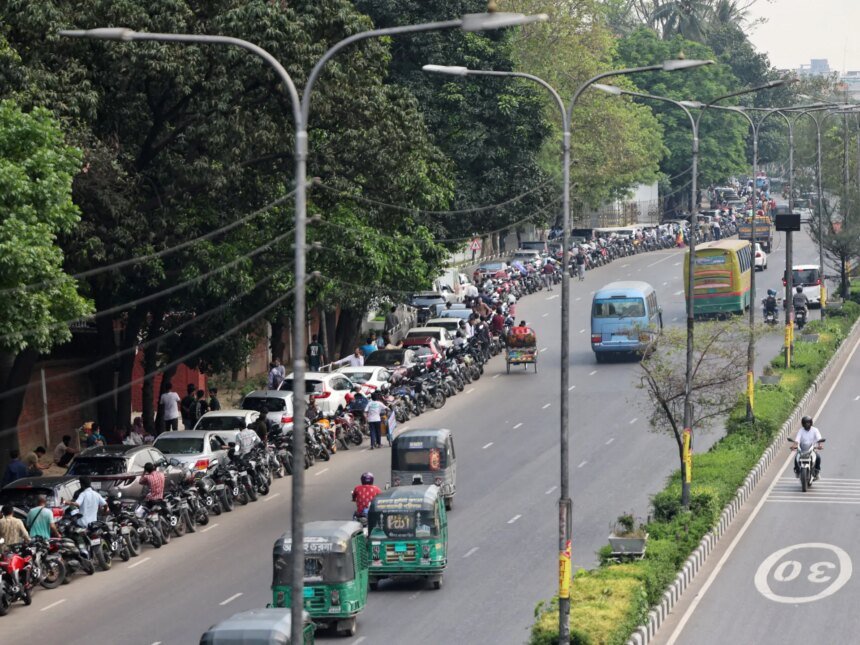
The article pointed out that the energy crisis has already begun to affect daily life, and is haunting Asian citizens in their livelihood. In the Korean capital, Seoul, the price of the popular noodle dish “Kalguksu” exceeded 10,000 won (about 6.7 US dollars) for the first time.
In Japan, the price of the famous ramen noodles approached an important psychological threshold of 1,000 yen (about $6.4), amid rising food prices. Traditional public baths are also facing increasing pressure due to rising heating costs.
In less wealthy countries in Asia, the repercussions are more severe. Pakistan, the Philippines and Sri Lanka have resorted to shortening weekly working days to reduce fuel consumption, while Manila has witnessed strikes by minibus drivers in protest against rising fuel prices.
Other repercussions of the crisis
But the impact does not stop at the limits of individual consumption, but rather extends to broader sectors. Jet fuel prices in Singapore have risen to record levels, prompting airlines in Southeast Asia to reduce their flights by 10% to 15%.
Thai Airways has canceled two-thirds of its daily flights between Bangkok and Seoul, while Cathay Pacific has imposed additional fees of up to $200 on long-haul flights.
In less wealthy countries, the repercussions are more severe. Pakistan, the Philippines, and Sri Lanka resorted to shortening weekly working days to reduce fuel consumption, while Manila witnessed strikes by minibus drivers to protest the rise in fuel prices, which reduced their incomes by up to 80%.

In India, farmers face difficulties in purchasing fertilizers due to their high prices, while cities such as Lahore suffer from daily power outages in light of the decline in gas supplies.
However, according to Fickling, this crisis is not limited to being a negative shock, but also represents a turning point towards clean energy. In India, the shortage of cooking gas led to a widespread demand for electric stoves, while sales of used electric cars doubled in Australia, and Chinese companies achieved a large share of reservations at the Bangkok Motor Show.
Countries such as the Philippines have also seen a significant increase in solar panel imports, which has significantly increased solar energy production capacity.
The writer confirms that this transformation was not completely surprising, but rather came as a result of a long path of declining clean energy costs and the progress of Chinese industries in the fields of solar energy, batteries, and electric vehicles. However, the current crisis may accelerate this transformation in an unprecedented way, similar to what happened in Europe after the shocks of the 1970s.
Trump insists that Iran is on the verge of collapse and that the economic blockade will bear fruit soon, while leaders in Tehran believe that their ability to withstand the suffering is longer than the ability of the American administration to bear the brunt of the electoral pressures it faces.
Political dimensions of the crisis
In another article in the New York Times, columnist Nicholas Kristof focused on the political dimensions of the crisis, warning of mutual miscalculation between the United States and Iran.
He described the situation as a confrontation between “two overly confident authoritarian regimes”, with each side believing that time is on its side and that the other will soon back down.
He explained that US President Donald Trump, for his part, insists that Iran is on the verge of collapse and that the economic blockade will bear fruit soon. On the other hand, leaders in Tehran believe that their ability to withstand the suffering is longer than the ability of the US administration to bear the brunt of the electoral pressures it faces.
Analysts also warned that the naval blockade may not push Iran to retreat, but rather to militancy, with global economic repercussions.
In this regard, Kristof cited a statement by former Israeli military intelligence analyst, Danny Citrinovic, in which he said, “Tehran is unlikely to give up its fundamental strategic demands. Rather, the regime will adhere more closely to its positions amid the escalation of global economic repercussions.”
The writer warned that the continuation of the crisis could lead to widespread disruptions in the global economy, with the prices of basic commodities, from medicines to fertilizers, rising as a result of the disruption of shipping routes and energy supplies.
The article indicated that Iran proposed a preliminary agreement to reopen the Strait of Hormuz, while setting aside other issues for later, such as the nuclear program. However, the United States is still not satisfied with this offer at the present time.
Kristof believes that “Iran may come up with some unpalatable arrangement” that allows it to profit from the passage of ships through its territorial waters, while the mines remain in the main part of the strait, considering that this would be better than maintaining the naval blockade for months.
If that initial agreement can be reached, Trump – according to the author – must ensure that he maintains the pressure cards he possesses, namely easing sanctions, in order to push towards imposing restrictions on the Iranian nuclear program.
Ironically, in Kristof’s view, Trump’s initial threats of war seemed to prompt Iran to offer a very favorable nuclear deal in February. But two months into the war, both Iran and the United States seem to feel they are in the stronger position.
Faced with the possibility of making concessions to the other party, each may prefer postponement or escalation, while the global economy remains hostage to this conflict, according to the article.