Published On 4/28/2026
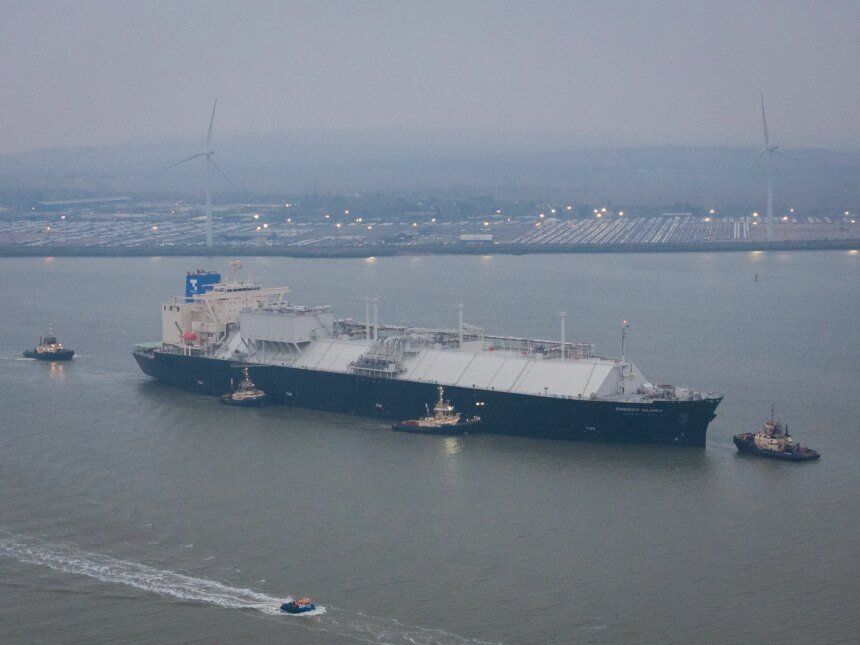
The shortage of liquefied natural gas supplies worsened with the continuation of the war in Iran and the closure of the Strait of Hormuz, which led to the loss of global markets, one of the most important sources of supply, at a time when America, the largest natural gas exporting country, is operating at its maximum capacity without sufficient capacity to fill the gap created by the interruption of Qatari natural gas supplies.
The American newspaper “The New York Times” explains that the cessation of gas shipments from Qatar for two months raised prices sharply in Europe and Asia, and was directly reflected in the costs of electricity, heating, and industry in countries that depend on this fuel, such as Italy, Taiwan, and South Korea.
Read also
list of 2 itemsend of list
America’s energy is at its limit
“All the LNG exported by the United States is shipped at maximum capacity,” meaning there is no spare capacity to increase supplies, said Massimo Di Odoardo, vice president of gas and LNG research at energy research and consulting firm Wood Mackenzie.

According to the New York Times, the prices of liquefied gas heading to Europe and Asia have risen to up to six times the prices inside America since the outbreak of the war on February 28, compared to less than four times before the war.
Qatar shock
The war caused the cessation of production at the Ras Laffan facility in northern Qatar, which is one of the most important energy assets in the region, before it was subjected to missile strikes that damaged about 17% of its production capacity.
The American newspaper notes that the Strait of Hormuz, through which about 20% of global liquefied natural gas trade passes, has become almost halted, which has prolonged the supply disruption in the world.
Although America is working to build new export terminals, especially in the states of Texas and Louisiana, these projects “cost billions of dollars and take years,” making them unable to provide a quick solution to the current crisis.
The US Energy Information Administration stated that the country’s exports amounted to about 18 billion cubic feet per day last March, which is close to record levels, with expectations of an increase of 18% this year, and 10% next year.
But the International Energy Agency warned, according to the New York Times, that damage to Qatari infrastructure could delay the growth of global supplies for at least two years.
Extended stress
Natural gas represents about a quarter of the global energy mix, while demand for it is increasing with the growth of electricity consumption, including demand from data centers linked to artificial intelligence technologies.
The term energy mix is used to describe the set of different sources that a country, region, or even company relies on to generate and consume energy.

But the rise in prices has begun to push some countries to re-evaluate their dependence on gas, as European consumption recorded a decline of about 4% in March compared to the previous year, with increased reliance on wind and water energy.
Find alternatives
“Every country that relies on LNG is now evaluating this relationship,” said Julie McNamara, director of federal energy policy at the Union of Concerned Scientists. “This is a very fragile situation for any country.”
In light of these pressures, some countries in Asia have begun switching to other types of fuel, while investments in renewable energy are accelerating, with record exports of solar panels recorded, especially from China, according to reports reported by the New York Times.
On the other hand, global energy companies continue to search for new reserves of natural gas, as Shell announced an acquisition deal for a Canadian gas producing company worth $16.4 billion, in an indication of an escalating race to secure supplies in a market that has become more volatile.