In light of the ongoing Israeli military escalation in southern Lebanon despite the extension of the ceasefire between Lebanon and Israel, Hezbollah is preparing to introduce new, old tactics into the confrontation, including the activation of “martyrdom groups.”
This was confirmed by a Hezbollah military leader to Al Jazeera on Monday, who said that the party is preparing to adopt combat tactics dating back to the 1980s, pointing to the deployment of “large groups of martyrdom fighters in the occupied region, according to pre-prepared plans.”
The party’s military leader explained that the mission of the martyrdom fighters is to “engage with enemy officers and soldiers in the occupied Lebanese villages.”
To better understand the nature of the combat methods intended by Hezbollah’s statements, in this report we answer 4 pivotal questions regarding this matter:
First: Why did Hezbollah vow to return to the tactics of the 1980s?
The Lebanese military and strategic expert, Brigadier General Hassan Jouni, believes that Hezbollah’s announcement of a return to these tactics aims to revitalize the Israeli memory of what was happening in the 1980s and 1990s when their army was present in Lebanon.
Johnny explained – in an interview with Al Jazeera Net – that the operations during that period resulted in deaths and injuries among the ranks of the Israeli army on a daily or weekly basis, noting that Hezbollah’s announcement was considered “primarily psychological.”
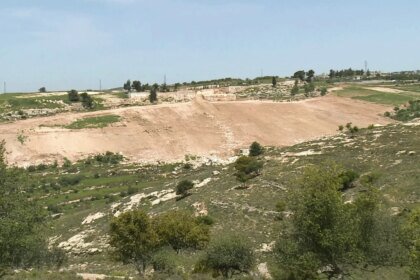
What Israel calls the “yellow line” brings back memories of what was called the “buffer zone” in the 1980s, from which Israel was forced to withdraw.
The buffer zone is a border strip that Israel established 10-20 kilometers deep inside southern Lebanon under the pretext of protecting its northern borders. It was known as the “border strip” or the “safe zone,” before it was forced to withdraw from it unilaterally and suddenly in 2000, ending an 18-year occupation under the pressure of Lebanese resistance strikes.
As for the “yellow line”, it is a similar model that Israel is trying to install recently after declaring a ceasefire between Lebanon and Israel on April 17, and it may reach about 10 kilometers inside Lebanese territory.
In this context, military expert Johnny said that Hezbollah wanted its announcement to remind Israel that they had occupied southern Lebanon for 18 years, but they had not settled for a single day until they were forced to leave as a result of the pressure of military operations.
Israel occupied parts of southern Lebanon in 1978, and in 1982 it occupied Beirut, then withdrew and remained in the south until 2000, when it withdrew without an agreement with Lebanon, leaving the militia cooperating with it, led by Antoine Lahad, facing its own fate.
Second: What distinguishes the tactics of the 1980s?
Returning to the past, the most prominent feature of the Lebanese resistance’s tactics in the 1980s was the weapon of “martyrs,” in addition to lightning ambushes and exploiting geography to surprise the Israeli army.
Brigadier General Johnny explained these combat tactics, indicating that they are based mainly on targeting military personnel, through “operations that depend on infiltration and entry into the ranks of the enemy and its army, setting traps and ambushes, targeting its members, and raiding – sometimes – centers and sites.”
He continued: “In addition, there are the martyrdom operations that were also mentioned, and they had a bitter impact on the occupation army, especially those operations that led to the deaths of hundreds of its soldiers.”
Regarding Hezbollah’s history with these tactics, the former coordinator between UNIFIL forces and the Lebanese government, Brigadier General Mounir Shehadeh, said that these methods appeared since the founding of Hezbollah during the Israeli invasion of Lebanon in 1982, through the period of the Israeli occupation of southern Lebanon.
Shehadeh confirmed – in an interview with Al Jazeera Net – that these tactics were the backbone of the Lebanese resistance until the withdrawal of Israeli forces in 2000.
He explained that after the Israeli withdrawal – especially after the 2006 war – the party began to move to precision missiles, anti-armor systems, drones, and a more organized military structure. That is, it moved from a “primitive resistance war” to a “semi-regular force.”
The threat to use the martyrdom weapons is not new to Hezbollah, as the former Secretary-General of the party, Hassan Nasrallah, was always keen in his speeches to recall the martyrdom fighters from the party, always reminding Israel of this weapon.
Nasrallah said at a celebration of “Hezbollah Martyr’s Day” in 2015, “The martyrdom jihadist spirit is our strongest weapon in the face of the enemy and the tremendous American support for Israel’s arsenal.”
Nasrallah also recalled that day the first martyrdom operation in the history of the resistance in 1982, carried out by Ahmed Qasir, whom the Secretary-General of Hezbollah at the time called “the conqueror of the era of martyrdoms, and the prince of martyrdom fighters.”

Third: Does the field reality allow these tactics to be applied?
Since Israel has revived the idea of occupying parts of Lebanon’s territory through what it called the “yellow line,” the field reality is very similar to what was known as the “buffer zone,” but with a major difference in the weapons and technologies used.
This was explained by the Lebanese military and strategic expert, Brigadier General Hassan Jouni, indicating that “when the occupation is perched on the ground, the resistance takes place in this form and with this strategy.”
He pointed out that “the party’s resort to these old tactics stems from the conditions of the reality of the occupation, as it faces an entrenched occupation, and therefore, this is the optimal method, and it also stems from the power equation or the balance of power that has been greatly affected, as Hezbollah has lost the deterrence equation and deterrence ability.”
By Hezbollah’s loss of the deterrence equation, the military expert means the strikes Hezbollah has been subjected to, targeting its political and military leadership and its infrastructure since it entered the “battle of support for Gaza” on October 8, 2023, the day after Operation “Al-Aqsa Flood” until today.
But at the same time, he stressed that the implementation of these tactics, in addition to the presence of various advanced weapons such as drones – which have already entered the battle – will have a significant impact on the confrontation.
He added, “If the balance of power were different, Hezbollah would have fought a broader, more comprehensive, and far-reaching war against the Israeli interior, so that there would be great pressure on the occupation army, but it is clear that the balance of power no longer allows this ability, and therefore it resorted to announcing this method.”

Fourth: What are the effects of these tactics?
As for the impact of these tactics on reality, Brigadier General Johnny explained that they target the field and the political or societal depth in Israel, and here lies the most important impact.
He said, “In the previous occupation before 2000, the psychological impact on Israeli society was so effective that it was the society that chose and elected Ehud Barak, who promised them to withdraw from southern Lebanon.”
He stated that the political dimension to Israeli society is what contributes to producing the withdrawal decision.
He stressed that “Hezbollah – in this reality – can carry out these operations for a long time, as it has the will, and has previous experience and expertise, and these operations do not require advanced weapons, but rather benefit from the time factor.”
As for Brigadier General Shehadeh, he identified a group of factors that could help Hezbollah to continue using these tactics for a long time, which are:
- Low cost of these operations
- Hezbollah’s long historical experience
- Possibility of working with small cells
As for the challenges that it may face in using these combat methods, Shehadeh said that they boil down to security and intelligence pressure, given that Israel has greatly developed its capabilities since the 1980s, and the pressure that the Lebanese internal environment may be exposed to, as well as international escalation since martyrdom operations are considered a challenge that may attract political pressure, in addition to the fact that the party’s return to the past is not easy or complete.
What emerges from all of this is that Hezbollah is trying to reformulate the rules of engagement by moving from a war of “military elites” and smart weapons to a “war of wills” and direct engagement. While Israel is trying to impose a new field reality across the “yellow line,” the party is betting that restoring the “spirit of the 1980s” mixed with modern technologies may constitute a gap in the wall of Israeli technological superiority.