Published On 4/27/2026
|
Last update: 19:08 (Mecca time)
The American Wall Street Journal, citing current and former officials in Iran, said that Tehran has resorted to unprecedented methods to rationalize oil storage space, as its tanks are full as a result of the disruption of exports due to the US naval blockade of its ports.
The American newspaper pointed out that Iran, which relies heavily on oil revenues, has begun using dilapidated and unused containers and warehouses in its oil centers in the south of the country, especially in Ahvaz and Asalouyeh, as a means of absorbing the surplus of crude.
Read also
list of 3 itemsend of list
In the same context, the newspaper quoted a spokesman for the Iranian Oil Exporters Union that Tehran is also trying to export oil via railway to China, although this option is considered less efficient and profitable compared to sea transport.
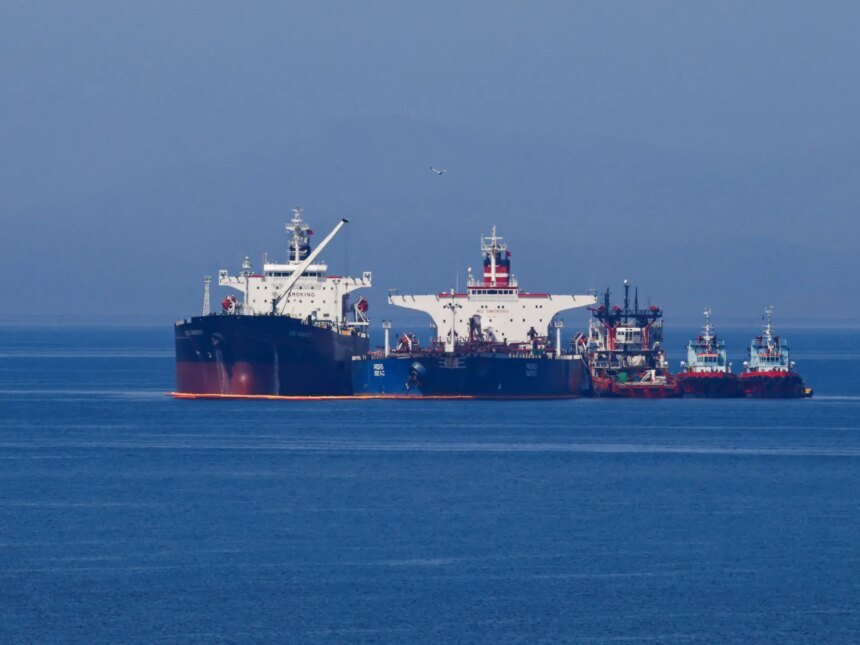
This comes at a time when pressure on the Iranian energy sector is increasing, as data from the Tanker Trackers platform yesterday, Sunday, indicated that Iran loaded about 4.6 million barrels of crude, while about 4 million additional barrels were able to cross the American blockade line.
The data also showed that shipments worth $1.05 billion returned to Iran after being intercepted by the US Navy, while the United States seized other shipments estimated at $380 million in the Indian Ocean, which were apparently destined for the United States.
Flows despite restrictions
Despite these pressures, Reuters reported, citing Vortexa, that about 10.7 million barrels of Iranian oil crossed the Strait of Hormuz between April 13 and 21, using tankers that had turned off their tracking systems.
The company also recorded 35 crossings of ships linked to Iran during the period between April 13 and 22, which reflects the continuation of navigation activity despite the restrictions.
In the same context, Bloomberg reported that 34 oil tankers linked to Iran were able to cross the strait, while the Wall Street Journal reported that more than 24 ships escaped the ban, based on data from Lloyd’s List Intelligence.
On the other hand, the US Central Command said that it forced 37 ships to return, which reflects the continuing confrontation in enforcing the blockade.
Despite these breaches, the frequency of shipping related to Iran declined to between one and two tankers per day, compared to a higher rate before the imposition of the blockade, which indicates a tangible impact of the restrictions on the movement of exports.