Published On 4/27/2026
|
Last update: 15:51 (Mecca time)
Axios, citing an American official and informed sources, revealed that Iran has presented, through Pakistani mediators, a new proposal aimed at reaching an agreement to reopen the Strait of Hormuz and end the war, while postponing negotiations related to the nuclear program to a later stage.
According to the sources, the proposal was discussed during the visit of Iranian Foreign Minister Abbas Araqchi to Pakistan, and focuses on addressing the Strait of Hormuz crisis and the US naval blockade of Iranian ports as a priority.
It also indicates the possibility of extending the ceasefire for a long period or reaching a permanent agreement, with nuclear negotiations starting later after the reopening of the strait and the lifting of the blockade.
A shift in strategy
In this context, the director of Al Jazeera’s office in Tehran, Nour al-Din al-Daghir, said that the Iranian proposal reflects a shift in the negotiating strategy, led by the highest authorities in the country, and which is based on the priority of ending the state of war with the United States before moving on to the rest of the files, including the nuclear file.
He added that this approach is based on two main requirements:
- Stop the war completely.
- Obtaining guarantees that it will not return, which is a central point in the new Iranian proposal.
In the background of this proposal, the fundamental disagreement between Tehran and Washington is the arrangement of negotiating priorities, as Iran seeks to separate the files and start with the Strait of Hormuz crisis, while the United States insists on linking all issues to the nuclear file, and considers uranium the primary input to any agreement.
Al-Daghir explains that these guarantees include:
- Regional guarantees may be provided by powers such as Russia and China.
- International guarantees through the issuance of a resolution by the UN Security Council enshrining any agreement reached between the two parties.
Negotiating environment
Regarding the Iranian-American negotiations, the director of Al Jazeera’s office in Tehran said that there is a possibility of moving them from Islamabad to other locations, such as the Sultanate of Oman or Turkey, as part of the search for a more appropriate negotiating environment.
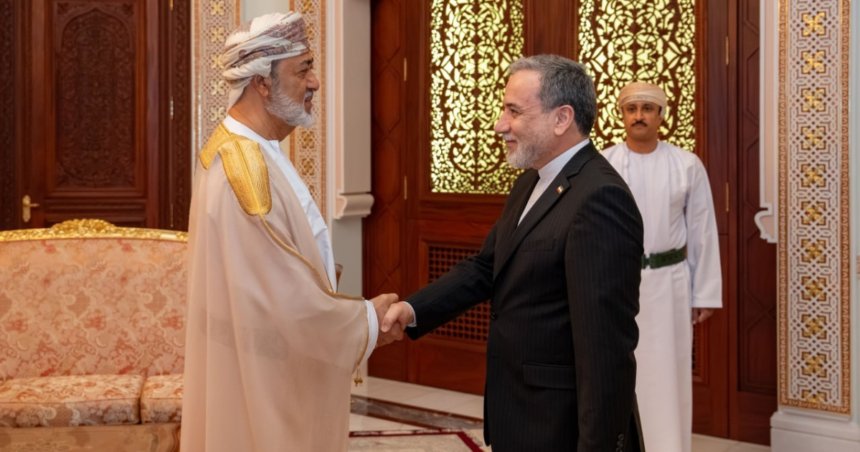
Al-Daghir added that the recent Iranian moves, particularly the visits made by Foreign Minister Abbas Araghchi to Pakistan, the Sultanate of Oman, and Russia, reflect an effort to rebuild the negotiating track with the United States, after the faltering of the previous round held in Islamabad.
He explained that the first round of negotiations witnessed a broad agreement between the two parties, with Pakistani mediation, and the two sides were close to signing a framework agreement extending for 45 days, in preparation for comprehensive negotiations that will last from 4 to 6 months. However, Tehran accuses Washington of reneging on those understandings and putting forward demands that it described as “excessive,” which led to the disruption of the second round.
Military scenario
In parallel with this diplomatic movement, the military scenario remains on the table in Iran, especially with the halt of negotiations, which opens the way for possibilities of confrontation.
Nour al-Din al-Daghir said that the messages carried by the Iranian Foreign Minister during his regional tours and contacts had two dimensions:
- The first is a diplomat seeking to revive negotiations.
- The second is a warning warning about the possibility of escalation if this path fails.
In a related context, regional mediations play a pivotal role in this path, as Pakistan emerged as a mediator in previous rounds, while the Sultanate of Oman returns to the forefront as a traditional channel for dialogue between the two parties, especially in the sensitive issues related to the Strait of Hormuz.
In this context, Al-Daghir quotes Iranian Parliament Speaker Muhammad Baqir Qalibaf as saying that Iran “did not play with all its cards,” indicating that options for escalation still exist if diplomacy does not achieve tangible results.
In conclusion, diplomacy remains an option along with the possibility of escalation, in light of the differing priorities of the two parties, awaiting the outcome of the next stage of the negotiation process.
Analysts believe that Washington may not accept the new Iranian proposal, as it believes that the nuclear file must be negotiated first.
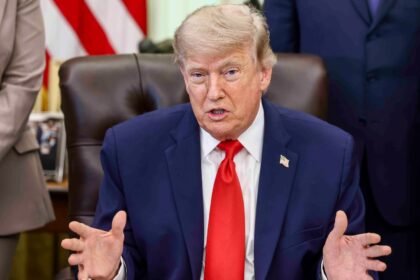
US President Donald Trump is scheduled to meet today with senior national security officials to discuss the impasse in negotiations with Iran, according to what was reported by American media.