Published On 4/26/2026
Iraq is entering a critical political phase as the constitutional deadline for appointing a candidate to head the new government approaches. This development comes in light of the continuing disagreement within the “coordination framework” forces, which have not yet reached a final agreement to nominate the major bloc’s candidate.
On April 11, the Iraqi Parliament elected Nizar Amidi as President of the Republic, and Paragraph (A) of Article 76 of the Iraqi Constitution stipulates that “the President of the Republic shall, within 15 days from the date of his election, assign the candidate of the largest parliamentary bloc to form the Council of Ministers,” which means that the constitutional deadline ends today, Sunday.
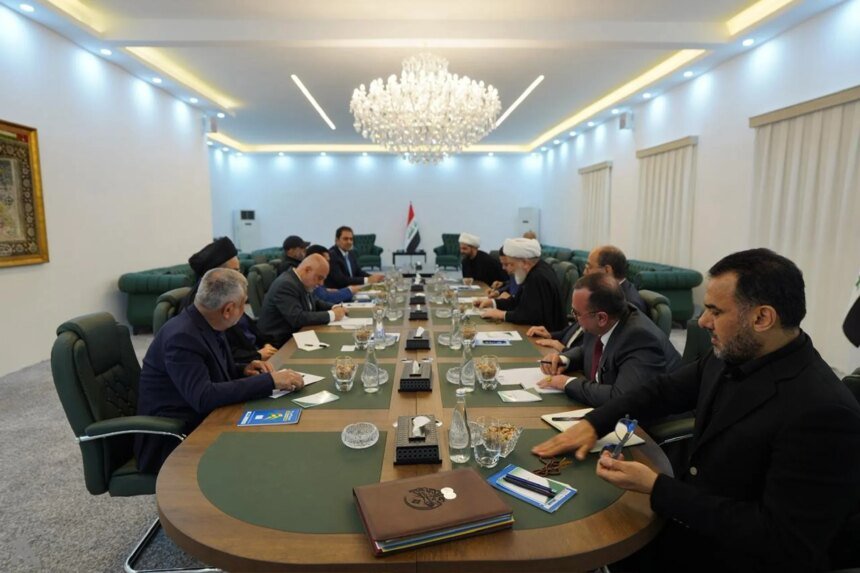
At the end of this period, legal and political readings of the outcome of the crisis differ in light of the repeated failure to hold crucial meetings of the leaders of the coordination framework, the last of which was yesterday, Saturday. According to the ongoing discussions, possible scenarios emerge to dismantle the crisis or aggravate it.

Crisis paths
- Exceeding the constitutional ceiling: This is the possibility that is closest to reality in light of the differences remaining raging, with the continuing controversy over the interpretation of Article 76 of the Constitution regarding determining the “most numerous parliamentary bloc,” as the most likely scenario is the continuation of negotiations between the political blocs despite the expiration of the period, relying on political precedents that witnessed violations of constitutional periods without the presence of penalties imposed by Iraqi law.
- Entering a long-term “political vacuum”: In the event that an agreement is not reached on a person to assume the position, the country will officially enter a state of “political vacuum” that brings to mind what happened after the October 2021 elections, when that political vacuum continued for about a full year due to severe disagreements and complete blockage, before it ended with an agreement to assign the current Prime Minister Muhammad Shiaa Al-Sudani and the House of Representatives to grant confidence to his government on October 27, 2022.
- Split coordination framework: This scenario represents a part of the framework forces going to support Muhammad Shia al-Sudani for a second term, in exchange for the “State of Law” coalition clinging to its leader, Nouri al-Maliki, and this sharp division within the Shiite house threatens to drag the country into a long political impasse that may reproduce the vacuum crisis that followed the 2021 elections.
- Settlement filter or “necessity filter”: Despite the Islamic Dawa Party’s denial at times and its emphasis on Nouri al-Maliki’s name as the only option, the option of pushing for a forced settlement candidate who is relatively acceptable remains in place, in order to ensure the assignment is passed and avoid legal embarrassment, after which a new deadline of 30 days begins to form the ministerial team. This option may become inevitable if external and internal pressures reach a dead end that threatens economic collapse or internal conflict.
- Retaining the current caretaker government: If complete consensus between the parties is difficult, the state may be forced to continue working under the current government as a caretaker government, which political leaders warn of its major negative consequences for approving the country’s general budget and disrupting the interests of citizens.
- Intervention of the Federal Supreme Court: The scene may move towards filing legal appeals before the Federal Supreme Court to explain the nature of the constitutional vacuum that occurred after the timings were exceeded, or to oblige the political parties to binding final deadlines at the risk of legal consequences.
The “coordinating framework” stands out as the major Shiite political force in Iraq, as it has the upper hand in naming the prime minister and drawing the features of the government formation. On January 24, the coalition announced the nomination of Nouri al-Maliki to head the next government, but this path collided with an explicit veto from US President Donald Trump under the threat of stopping support for Baghdad.