Researchers have discovered an unexpected effect of cocaine residue contaminating the water on the behavior of fish, not only in laboratory conditions, as previous studies have shown, but also in complex natural environments, according to a new study published on April 20 in the journal Current Biology.
This is the first study of its kind to monitor these effects in a natural lake, which gives the results special importance because they reflect what is actually happening in the environment, according to the authors.

An experience inside a lake reveals what is unseen
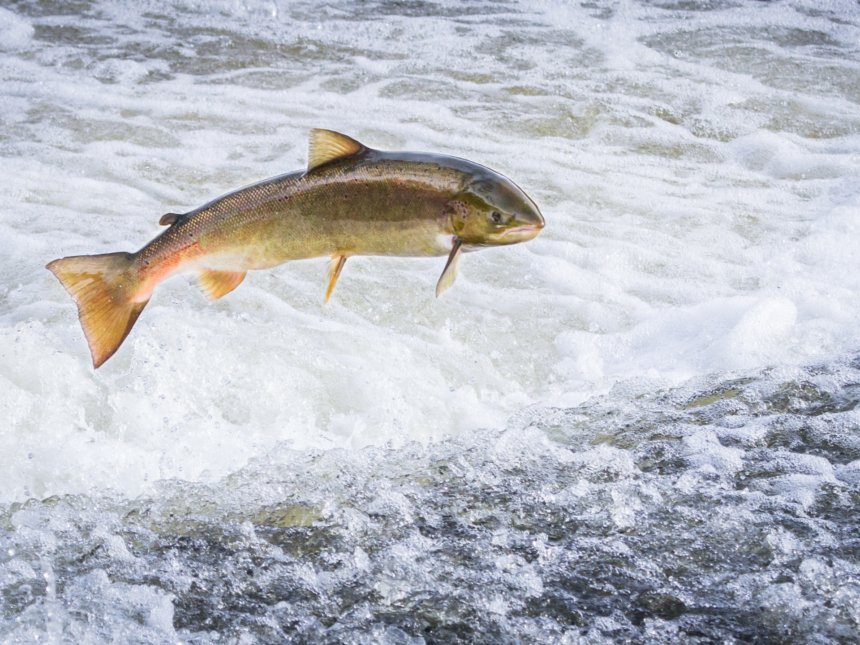
Researchers followed 105 juvenile Atlantic salmon over eight weeks in Lake Vättern, Sweden. To accurately monitor the effect of chemicals, the team used an innovative method, where they placed small capsules inside the fish’s bodies that gradually release small amounts of substances, mimicking what fish are exposed to in polluted water.
The study’s co-author, Marcus Michelangeli, a lecturer in environmental sciences at the Australian Rivers Institute at Griffith University, explained in statements to Al Jazeera Net that the team used audio tracking devices – which are tools that send signals that can be captured inside the water – to accurately know the locations of fish movements and their paths over time.
He added: “The fish were divided into three groups: one group was not exposed to any substances, another was exposed to cocaine, and a third was exposed to a substance known as (benzoyl ecgonine), which is a product formed when cocaine decomposes in the body or in the environment, and is found in abundance in wastewater.”
The results showed that the fish exposed to these substances did not move as they normally would; The fish exposed to the decomposition material traveled much longer distances, reaching about 1.9 times longer than the non-exposed fish during the week, and they also spread to wider areas within the lake, for distances exceeding 12 kilometers.
This change was not temporary, but rather increased over time, indicating that the effect of these substances gradually accumulates and affects the way fish use their environment.
“This is important,” says Michelangeli, “because the movement of fish is not random; it determines where they find their food, where they avoid predators, and how they are distributed within the ecosystem. Therefore, any change in this movement may affect the ecological balance as a whole, not just individuals.”

An experience inside a lake reveals what is unseen
Researchers followed 105 juvenile Atlantic salmon over eight weeks in Lake Vättern, Sweden. To accurately monitor the effect of chemicals, the team used an innovative method, where they placed small capsules inside the fish’s bodies that gradually release small amounts of substances, mimicking what fish are exposed to in polluted water.
The study’s co-author, Marcus Michelangeli, a lecturer in environmental sciences at the Australian Rivers Institute at Griffith University, explained in statements to Al Jazeera Net that the team used audio tracking devices – which are tools that send signals that can be captured inside the water – to accurately know the locations of fish movements and their paths over time.
He added: “The fish were divided into three groups: one group was not exposed to any substances, another was exposed to cocaine, and a third was exposed to a substance known as (benzoyl ecgonine), which is a product formed when cocaine decomposes in the body or in the environment, and is found in abundance in wastewater.”
The results showed that the fish exposed to these substances did not move as they normally would; The fish exposed to the decomposition material traveled much longer distances, reaching about 1.9 times longer than the non-exposed fish during the week, and they also spread to wider areas within the lake, for distances exceeding 12 kilometers.
This change was not temporary, but rather increased over time, indicating that the effect of these substances gradually accumulates and affects the way fish use their environment.
“This is important,” says Michelangeli, “because the movement of fish is not random; it determines where they find their food, where they avoid predators, and how they are distributed within the ecosystem. Therefore, any change in this movement may affect the ecological balance as a whole, not just individuals.”
Are there risks to humans?
The study also highlights an invisible problem in many rivers and lakes, which is the presence of drug and drug residues in the water. These substances reach the environment through wastewater, and treatment plants are not always able to completely remove them.
Although scientists have previously studied the effects of these substances in the laboratory, this study provides clear evidence that the same effects occur in nature, where conditions are more complex and intertwined.
One of the striking results is that benzoyl ecgonine – the substance resulting from the breakdown of cocaine – had a stronger effect than cocaine itself, which means that environmental risk assessment must not be limited to the original substance only, but must also include what it transforms into within the environment.
The researchers stress that these results do not mean there is a direct risk to humans from consuming fish, as the quantities used in the study reflect low levels already present in the water, and these substances decompose over time. But on the other hand, the study opens the door to broader questions: Do these substances affect other types of organisms? Could it affect reproduction or long-term survival?