Published on 4/25/2026
The “Lillehammer” operation in Norway reveals one of the most embarrassing failures in the history of special operations, when a secret assassination mission turned into a resounding international scandal after an innocent person was killed and an entire intelligence network was exposed, in a scene that reflected the fragility of planning despite the power of secrecy.
The film “Special Operations”, broadcast by Al Jazeera, narrates how a series of hasty decisions led to this end within a broader context of shadow wars that countries wage through hidden tools, whose impact exceeds the limits of traditional military operations.
The roots of the operation go back to after the Munich attack in 1972, when the Israeli government decided to launch an assassination campaign against the leaders of the Palestinian “Black September” organization, which was led by Ali Hassan Salama, one of the leaders of the Palestine Liberation Organization.
Aviva Gutman, a lecturer in strategy and intelligence at Aberystwyth University, explains that estimates indicated that there was safety in Norway, which prompted the operation to be carried out in a hurry.
But this haste, according to Israeli military historian Uri Milstein, was costly, as the Israeli Prime Minister at the time, Golda Meir, issued direct orders to liquidate the targeted leaders, but inaccurate intelligence information led the team to the town of Lillehammer, where the Moroccan waiter Ahmed Bouchikhi was mistakenly assassinated.
Milstein points out that this error was not accidental, but rather the result of a structural flaw in planning, stressing that some of the failed operations reflect the lack of professionalism of those who drafted them, which was clearly embodied in this issue, which turned into a political and diplomatic crisis.
Fragile process
For his part, Israeli military expert Yossi Melman explains that the pressure to achieve the goal quickly led to assembling the implementation team without sufficient preparation, which made the operation fragile from its beginning, especially in a security- and politically sensitive European environment.
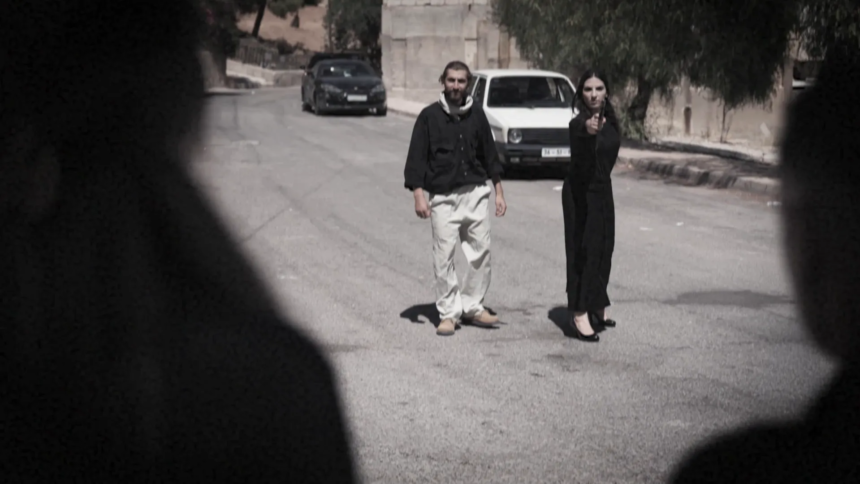
Implementation details reflected this confusion; The team arrived in Norway and rented cars in a remarkable manner, then tracked down the suspected target and shot him after he got off a bus before the perpetrators fled, while the rest of the team left for Oslo, which raised suspicions around them.
The final blow came from within, according to what Gutman reveals, when one of the agents collapsed after his arrest, and because of his suffering from claustrophobia, he could not bear the interrogation to reveal precise details about the operation, including sensitive information about the Mossad.
This collapse led to the arrest of 6 members of the team and the exposure of the entire network, in a rare precedent for operations that are supposed to be based on the highest levels of secrecy and discipline, which exacerbated the repercussions of the incident at the international level.
Politically, the operation sparked widespread anger in Norway, which considered what happened a blatant violation of its sovereignty. Gutmann confirms that the issue turned into a diplomatic scandal and raised the level of tension between Israel and several European countries despite the continuation of security cooperation behind the scenes.
This incident revealed, according to the film, that special operations, despite their supposed accuracy, can turn into a strategic burden if they are marred by a defect in information or implementation, as one mistake is enough to bring down an entire network and expose a system that has long operated in the shadows.