Published on 4/25/2026
The Financial Times quoted officials and international organizations as saying that supplies of food and commercial goods to the Gaza Strip declined sharply after the outbreak of the military confrontation with Iran.
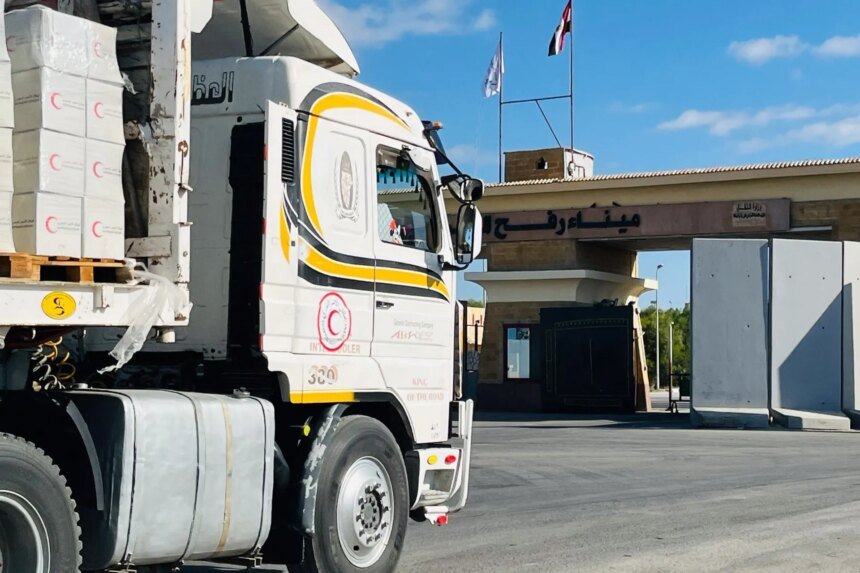
According to the newspaper, reports issued by the United Nations indicate that the number of aid trucks entering the Palestinian Strip daily, since the beginning of the Israeli war on Iran, does not exceed 60 trucks, compared to about 95 trucks daily before the outbreak of the conflict.
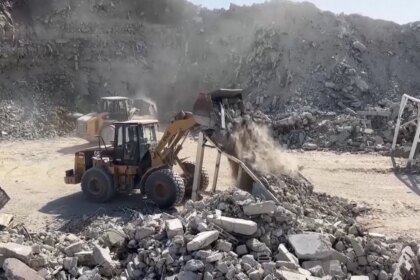
The newspaper reported that Israel is still preventing the entry of many basic materials, such as building materials, rubble removal equipment, and some medical supplies, and quoted international organizations confirming that the crisis is not limited to the number of trucks only, but also includes the nature of the materials allowed to enter the Strip.
The Financial Times also quoted international officials as expressing their frustration at the disruption of the diplomatic track that aimed to expand the flow of aid, as the humanitarian situation became hostage to the regional military escalation. After persistent international efforts to increase the flow, the escalation led to a decline in the numbers to very low levels, the percentage of decline in which in some periods reached 80%.
The newspaper’s report indicated that the Israeli authorities imposed additional restrictions on land crossings coinciding with tensions with Iran, causing the flow of aid to the Gaza Strip to slow down and sometimes completely obstructing the movement of trucks. The report also pointed out that shipping routes and logistics services in the region were affected by military tensions, making it more difficult for supplies to reach Gaza.

Violations and estimates
On October 10, 2025, the ceasefire agreement in Gaza, which is based on Trump’s plan to end the war, entered into force, but the Israeli army continued to violate the agreement hundreds of times, resulting in the martyrdom of 972 Palestinians and the injury of 2,235 others, according to data from the Ministry of Health in Gaza.
The agreement was reached two years after a genocide that Israel began on October 7, 2023, with American support, leaving more than 72,000 martyrs and more than 172,000 Palestinians wounded, and massive destruction that included 90% of the civilian infrastructure in the Strip, according to UN estimates.
Israel also disavowed its obligations stipulated in the agreement to open the crossings and bring in the agreed upon quantities of food, relief and medical aid and shelter materials, which exacerbated the catastrophic humanitarian conditions for about 1.9 million displaced people out of a population of 2.4 million in the Strip.
Despite this, in mid-January, the US President announced the start of the second phase of the agreement, the terms of which include: “forming structures to manage the transitional phase of Gaza, disarming Hamas and the rest of the Palestinian factions, implementing an additional withdrawal of the Israeli army, and beginning efforts to rebuild what Israel destroyed.”
As the regional situation calmed down after a truce was reached in Iran and Lebanon, right-wing voices in Israel returned to calling for the resumption of the war on Gaza, claiming that Hamas refused to disarm it, while the movement said that it would respond to proposals submitted within the framework of implementing the commitments of the first phase, and preparing for discussion about the arrangements for the second phase.