Published On 4/28/2026
Despite all the devastation and devastation caused by the war that lasted for nearly two and a half years on the Gaza Strip, Gazans seem determined to continue their lives and make their way towards the future, with all their strength, despite the scarcity of capabilities and resources.
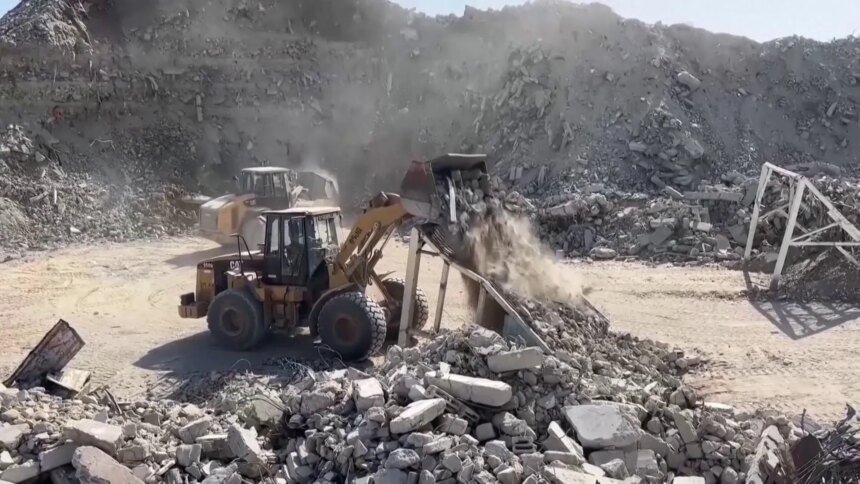
To achieve this goal, the Gazans resorted to converting the rubble and debris of their homes into raw materials for reconstruction, and thus the streets of the Strip became filled with scenes of crushing concrete and efforts to recycle metals and use them in repairing roads, within a project led by the United Nations Development Programme, in a step that seems small but carries an important economic dimension in light of the scarcity of resources and the faltering plan to restore life in Gaza.
Read also
list of 4 itemsend of list
The numbers reveal the scale of the challenge that Gazans face in reconstructing the Gaza Strip, as the volume of rubble in the Gaza Strip is estimated at about 61 million tons, while only 287 thousand tons of it have been removed so far, due to the difficulty of the removal process itself, and its high cost, as it requires examining the sites in search of unexploded ordnance before starting work, which slows down the process of progress and raises the level of risks for the workers.
The rubble represents a direct obstacle to recovery, as it complicates access to water and hospitals and paralyzes the movement of trade, but the picture is more complex, as international estimates indicate that the reconstruction of Gaza requires about 71.4 billion dollars over 10 years, while removing the rubble alone may take 7 years provided that equipment and fuel are available without restrictions, while official estimates indicate that 90% of the buildings in the Strip were destroyed, and more than 320 thousand units were damaged. Residential.