Published On 4/24/2026
|
Last update: 16:07 (Mecca time)
The European summit dedicated to discussing the accelerating security and economic repercussions of the war in the Middle East continues in the Cypriot capital, Nicosia.
This summit comes amid attempts by the bloc to formulate a unified position regarding the files of Iran and Lebanon, at a time when the old continent is witnessing severe economic pressures as a result of the closure of the Strait of Hormuz and the escalation of regional tensions.
The summit in Nicosia acquires a symbolic and security dimension, as it comes after two British bases on the island were targeted by Iranian drones during the war, which was temporarily ended by a truce concluded with Pakistani mediation.
According to an official quoted by Agence France-Presse, the Europeans are promoting “intensive dialogue” with countries in the region and want to discuss “the situation in Lebanon and the talks between Israel and Lebanon.”
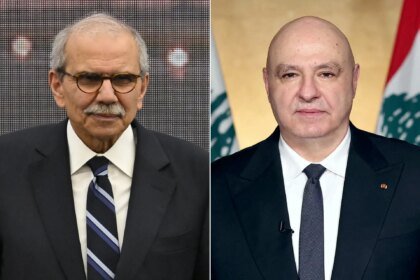
On Friday, the summit is scheduled to witness an expanded “working lunch” with the participation of leaders from the Middle East, including Lebanese President Joseph Aoun, Egyptian Abdel Fattah Al-Sisi, Syrian Ahmed Al-Sharaa, and Jordanian Crown Prince Hussein bin Abdullah, to discuss practical steps to avoid the effects of war and establish regional stability.

European red line
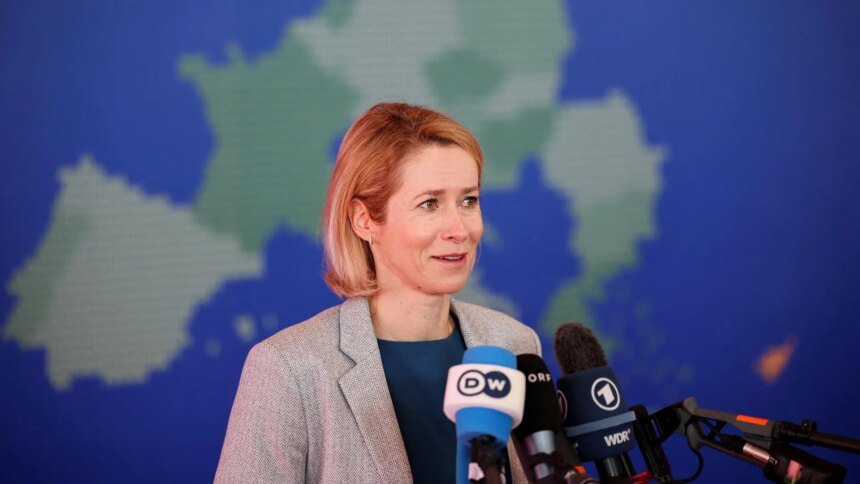
The issue of “freedom of navigation” topped the summit’s agenda, as European Union foreign policy chief Kaya Kallas confirmed that crossing through the Strait of Hormuz is “a non-negotiable matter,” stressing the need to reopen the strait immediately.
In this context, Al Jazeera’s correspondent in Nicosia, Abdullah Al-Shami, reported that this position reflects a European consensus that refuses to impose any restrictions or fees on the movement of ships and goods.
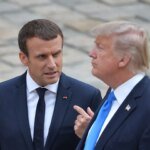
The correspondent pointed to an expected French move, as President Emmanuel Macron announced a mission led by Paris to establish freedom of navigation, pointing out that it will be “organized” and will not take the character of a blockade or direct military intervention, awaiting its details to be revealed in the coming days.
Yesterday, Thursday, Britain and France expressed their hope to formulate a military plan to protect the Strait of Hormuz, and work to keep it open as soon as the war on Iran ends, and trade flows resume through this vital corridor.
In an effort to make this plan a success, military planners from more than 44 countries participated in talks described as “constructive” in London over the course of Wednesday and Thursday, at the joint permanent headquarters of the United Kingdom in Northwood.

Tight security approach
On the political level, the European Union linked the success of any settlement with Iran to its inclusion of issues that go beyond the nuclear and missile programs. Al Jazeera’s correspondent quoted Callas as warning against concluding a “weak agreement” that does not include the missile program and Iranian influence in the region, considering that any deficiency in these provisions will enhance Tehran’s presence.
Regarding the Lebanese issue, Callas called for providing additional support to the Lebanese army to enable it to “disarm Hezbollah,” at a time when the Europeans are promoting an intensive dialogue with the countries of the region about the course of the Lebanese-Israeli negotiations, despite their recognition of the limited influence in this file.
Economically, Spanish Prime Minister Pedro Sanchez described the war as “illegitimate,” pointing to the huge damage it caused to European individuals and companies.
The data revealed that the closure of the Strait of Hormuz cost the European economy 24 billion euros (about 27 billion dollars) in just 7 weeks as a result of the high energy bill, which prompted countries to take costly measures to support the agricultural, fishing, and heavy industry sectors.
On April 8, Washington and Tehran announced a two-week truce, before the Pakistani capital, Islamabad, hosted a round of talks between the two parties on the 11th of the same month, without reaching an agreement. The United States and Israel started a war against Iran on February 28, leaving more than 3,000 people dead.