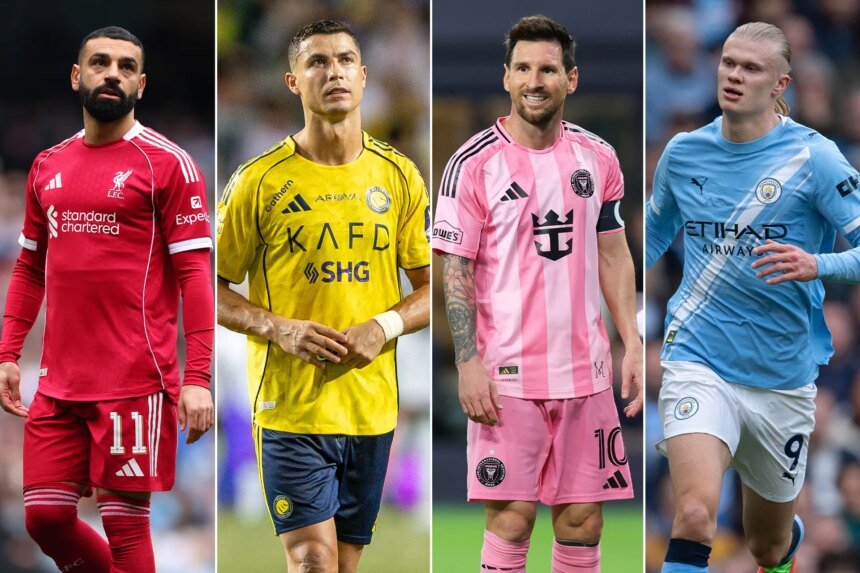
Nutrition has transformed from just a secondary or ordinary factor into a specialized science in itself in the modern era of professional football, and has reached the point of designing specific nutritional programs that every professional who seeks to provide the best sports performance adheres to, whether with clubs or national teams.
These nutrition programs receive great attention from the media, which highlights every little thing, especially those related to the game’s first-class stars, most notably the Argentine Lionel Messi, the Portuguese Cristiano Ronaldo, the Egyptian Mohamed Salah, the Norwegian Erling Haaland and others.
It can easily be noted that the names mentioned are all contemporary stars who have emerged during the last twenty years and are still maintaining their continuity, such as Ronaldo and Messi. This is due to the fact that nutrition programs emerged strongly in the late nineties of the last century and the beginning of the new millennium.

In the sixties and seventies of the last century, players ate food that was no different from the general public, such as bread, pasta, meat, and pastries, in addition to meals rich in sugar, due to the lack of sufficient awareness of the importance of food and its benefit to the body, and therefore attention was focused more on training hours.
In the late 1990s, despite the interest of club medical staff in performance science and data, nutrition programs remained based on general advice such as eating healthy food and avoiding fast food and soft drinks.
The beginning of change
The renaissance in this field came with the escalation of specialized research that linked proper nutrition, accelerating recovery, reducing injuries, and building muscle mass for players, in the period between 2000 and 2018.
Major clubs today employ specialized teams of nutritionists whose primary task is to design programs that precisely meet the individual needs of players, and which are modified weekly or whenever necessary, depending on training loads and match schedules.
The emergence of nutrition experts within clubs
The emergence of nutrition experts within clubs is one of the most prominent developments in large professional clubs during the last decade. After players were managing their nutritional programs themselves with limited guidance and advice from the team doctor, clubs took the initiative to employ certified nutritionists and professional chefs.
Nutrition experts design their programs according to clear plans that take into account energy consumption during training sessions and matches, muscle recovery, hydration, muscle mass formation, injury prevention and rehabilitation.

Recent research has shown that nutritional programs designed by specialists actually reduce the recurrence of injuries, speed up recovery after matches, and improve overall performance indicators, which means that they achieve the required goals with a high degree of accuracy.
It became necessary for players to adhere to specific nutritional programs consistent with training loads and physiological requirements, at a time when many of them stayed away from fast food and soft drinks.
Personal nutritionists
Some players went further by hiring a personal nutritionist to accompany them during travel and transfer between clubs, during summer vacations, and between the two sports seasons, something that has recently become a standard by which the player’s professionalism is measured.
The personal nutritionist takes into account the player’s metabolic needs, balancing the percentage of body fat with muscle mass, and means of recovering from injuries, all of which helps the player maintain his fitness and physical readiness even when he is away from his team, whether during vacations or during international breaks.
Joint food programs
Although the individual physical details of the players differ, the nutritional programs share basic features, including:
- Rely on small meals daily to support stable blood sugar and energy.
- Eat high-quality proteins for tissue repair and muscle maintenance.
- Relying on complex carbohydrates to support the body with long-term energy, especially on training and match days.
- Water and electrolytes (fluids containing essential minerals such as sodium, potassium, and magnesium) help hydrate the body, reduce the likelihood of muscle cramps, and improve recovery.
- Reduce sugar and processed foods to reduce inflammation and energy fluctuations.
What do football stars eat to stay at the top?
It can be said that the Portuguese star Cristiano Ronaldo, the Saudi Al-Nasr player, is an ideal role model with regard to commitment to nutritional programs, and the great and consistent artistic performance he has provided over the years, reaching his current age of 41, is the best evidence of that.
Many believe that a large part of Ronaldo’s athletic success is based on his discipline and commitment to strict nutritional programs based on scientific foundations.
Ronaldo eats 6 meals a day, divided into one meal approximately every 3 to 4 hours, to maintain energy levels. He focuses on proteins, such as chicken and fish, and complex carbohydrates, represented by brown rice, quinoa, and whole grains.
Fruits and salads are among the basic elements of Ronaldo’s food, in addition to his constant intake of water and electrolyte drinks.
The most important foods that Ronaldo eats are low-fat cheese, chicken with salad, bread with avocado, fresh fruits, fresh fish or fat-free beef with vegetables, while the Portuguese star avoids sugary or processed foods.
Injuries force Messi to adhere to a strict diet
It may be noteworthy to know that Messi (38 years old) did not have a diet at the beginning of his career, but the repeated injuries and fatigue that plagued him in his mid-twenties led him to seriously reconsider this aspect.
In 2014, Messi contracted with an Italian nutritionist named Giuliano Buser, who made a radical shift in his diet, so the Argentine star switched from eating processed foods to natural ingredients rich in nutrients.
In his nutritional program, Messi focused on olive oil as a source of healthy fats, whole grains and complex carbohydrates, fresh fruits and vegetables, and light proteins, in parallel with reducing sugar and refined flour because of their effect in increasing inflammation and hindering recovery.
In his daily routine, Messi ate a light breakfast of whole grains and fresh fruits to avoid digestive fatigue, in addition to salads and soups rich in nutrients with light proteins such as tuna and chicken, and complex carbohydrates such as brown rice with fish or light meat, and this contributed effectively and mainly to his staying at the top to this day.
Mohamed Salah…a unique program that balances performance and culture
The Liverpool star presents a unique model that combines disciplined nutrition with national or heritage identity, and with his contract with a nutritionist, he often enjoys popular foods from Egypt, especially koshari.
Salah usually eats 5 to 6 small, frequent meals daily, containing light proteins and vegetables (chicken, fish, broccoli, sweet potatoes, and salads).
Salah pays attention to his enjoyment of food, but in moderation and without excess. He sometimes eats sushi and pizza, in addition to coffee and fresh fruits.
Haaland and cow hearts
Manchester City’s top scorer, Haaland, can be considered a player with high energy requirements, as his body consumes 6,000 calories per day, through very carefully planned systems.
Haaland is not ashamed of being a player who prefers to eat red meat at a time when vegetarian diets have become almost common, as the Norwegian striker prefers to eat cow hearts and livers, and this may have something to do with growing up in a rural community in his country.
“People say meat is bad, but which meat do you get? From McDonald’s or a cow that eats grass,” Haaland said about his diet in a documentary.
Haaland also loves to eat pasta, while his father, Ralph, cooks lasagna for him the day before each match.
At the same time, Haaland is careful about what he drinks, as he completely stays away from alcoholic beverages, and insists on drinking filtered water along with his favorite, strange, green drink, which is a mixture of milk, kale, and spinach, which the player described as his “magic potion.”