

Published on 6/29/2026
|
Last update: 00:25 (Mecca time)
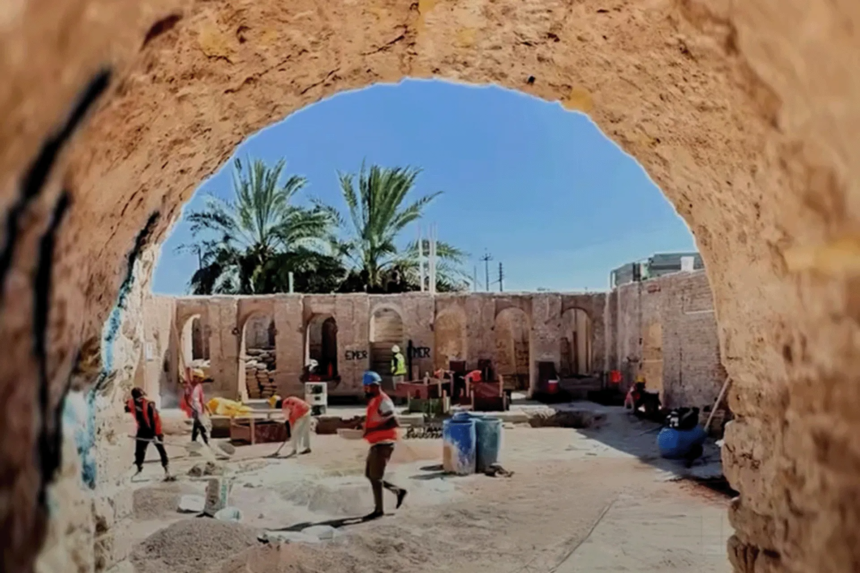
A joint project between the Iraqi Ministry of Culture, Tourism and Antiquities, the United Nations Educational, Scientific and Cultural Organization (UNESCO), and the European Union was launched in the village of Jikur in Basra (south), to rehabilitate the house of the pioneer of modern Arabic poetry Badr Shaker al-Sayyab and turn it into a cultural museum.
The project aims to save this historic clay edifice from neglect and destruction resulting from successive crises, through a careful restoration process that uses tools and materials that mimic the original building to preserve its traditional southern architectural identity.
Specific timetable
In a statement to Al Jazeera, the director of the Basra Governorate Antiquities and Heritage Inspectorate, Mustafa Jassim, announced the actual start of restoration work in accordance with strict heritage standards stipulated in international agreements and the Iraqi Antiquities and Heritage Law, to overcome 3 previous restoration stages that the house witnessed but were not completed.
Jassim explained that the scheduled period for completing the project is 10 months, as it is hoped that the house will be officially opened at the end of next April.
It is expected that the house will be transformed from just modest rooms into a lively center that hosts cultural activities, and includes the poet’s literary productions, his poems, and the works, studies, and dissertations written about his creative career.

Personal belongings
The director of the inspectorate revealed high-level coordination with the late poet’s family, which pledged to provide the museum with Al-Sayyab’s personal belongings as soon as the work was completed to display them to visitors.
In this context, the member of the administrative body of the Basra Writers and Writers Union, the storyteller Abdul Halim Mahudar, affirmed the union’s full support and praise for this wonderful initiative to save the house, which formed an influential mark in shaping the Iraqi and Arab poetic scene.
Mahudar pointed out that the documents and collectibles owned by the Sayyab family remaining in Basra represent the true nucleus of establishing this heritage museum.
Honoring the pioneer of modernity
The project received wide praise from literary circles, as writer Yasser Jassim believes that converting Al-Sayyab’s house into a museum is a worthy step that put things in the right place in honor of an exceptional poetic stature, even if it came late.
Jassim pointed out that Al-Sayyab’s uniqueness lies in his being a pioneer of poetic modernity and of human suffering and pain, as he succeeded in transforming the walls of his house, the shades of Basra’s palm trees, its streams, and the Buwaib River into symbols and an immortal global poetic legacy that changed the face of Arabic literature.
Al-Sayyab (1926-1964) is considered one of the founders of the free poetry school that introduced modernity to Arabic poetry. He sang a lot about the village in which he lived, poor and deprived, which was reflected in his poetry, which took on a revolutionary character.