Updated 00.05 | Published 2026-06-28 23.54

This weekend, the attacks have continued.
The ceasefire between Iran and the US hangs on an increasingly fragile thread.
– The parties must establish some form of contact, says Jan Hallenberg, security policy expert.
During Sunday evening, information came that new agreements had been concluded.
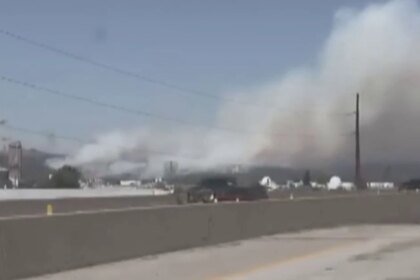
The US has attacked Iran again – and Iran has targeted US bases in countries around the Persian Gulf. Among other things, there have been attacks with drones and robots in Bahrain and Kuwait.
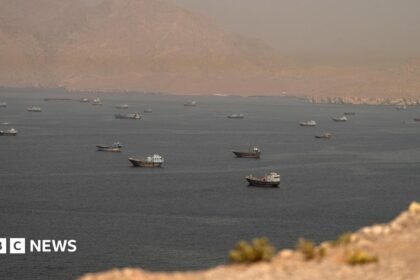
The latest escalation started on Thursday, when a ship in the Strait of Hormuz was said to have been attacked by a drone that came from Iran. From the side of Iran and the Revolutionary Guards, it has been described as the vessel violating the rules that apply.
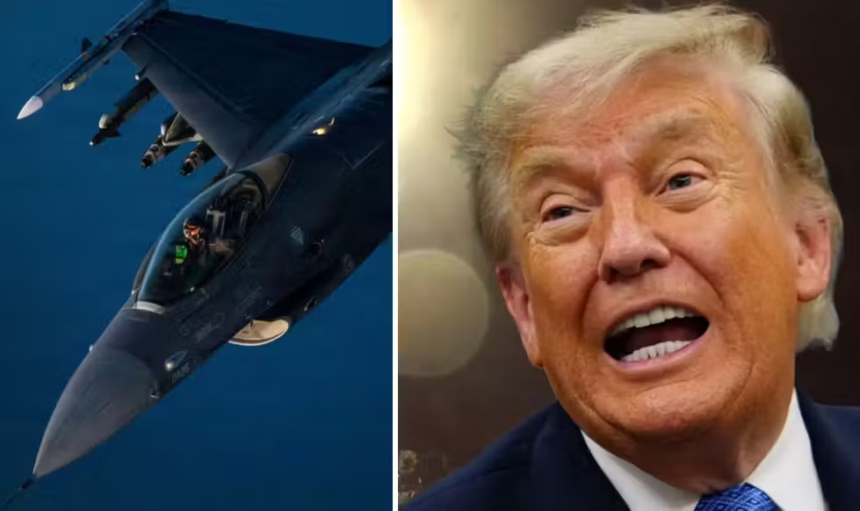
Donald Trump has threatened that if the war resumes, Iran will be “destroyed”.

“Forced to complete”
“It may come to a point where we cannot be reasonable anymore and are forced militarily to finish the job we have very successfully begun,” the US president wrote on Truth Social on Sunday.
“If that happens, the Islamic Republic of Iran will no longer exist.”
The US had then carried out attacks against Iran from the air again. The attacks were more extensive than those that occurred a day earlier, according to The New York Times.

“Unclear”
One of the problems – and one of the reasons the conflict continues – is that the statement of intent is unclear.
That’s what Jan Hallenberg, an expert on US foreign and security policy, says.
– The agreement is unclearly written in paragraph five. It says nothing about the US having any role in the strait. But it is only Iran that, in cooperation with Oman, should have it. And Iran considers it that no ships should be brought through the strait without being informed. When the US tries that, in Iran’s view, they violate the agreement, he says.

Stays away
He continues:
– Then the US said, I think it was JD Vance most recently, that “if the Iranians are dissatisfied, they can just pick up the phone”.
But Jan Hallenberg doesn’t think there is any phone to pick up.
– Another problem is that there is no individual decision-maker who has the complete right to make these decisions, as far as we can judge. There is a religious leader who stays away. And then they have a president who has significantly less power. And then they have a foreign minister who has even less power.

“Must establish contact”
The resumption of shipping in the Strait of Hormuz – a bottleneck for a large part of the world’s oil exports – is one of the most important points in the declaration of intent. At the outbreak of war, Iran stopped traffic with attacks and threats, which shook the world economy.
– I think it will continue to be like this for a while. If things are not to go badly then they must somehow agree on what is valid. You have to establish some kind of contact, says Jan Hallenberg.
And perhaps a new ceasefire could be near. According to Axios should the US and Iran have already agreed to stop attacking each other.
This is according to a high-ranking American official for the news site.
They will also plan to meet on Tuesday in Qatar’s capital Doha to try to resolve the conflict around the Strait of Hormuz, according to Axios.

14 points in the letter of intent
The US and Iran agree to a ceasefire and a 60-day deadline to negotiate a peace settlement. The letter of intent consists of 14 points and was signed on 17 June.
In a first stage, both countries and their allies must cease all hostilities. Lebanon’s “territorial integrity and sovereignty must be ensured”.
The US is to begin dismantling its naval blockade against Iran and ensure that Iranian crude oil exports can resume. Iranian assets that have been frozen should begin to be made available.
Iran must ensure that commercial traffic through the Strait of Hormuz can be resumed for 60 days, including by clearing mines. The country repeats a pledge never to acquire nuclear weapons. Negotiations on Iran’s nuclear material are linked to the issue of sanctions relief.
In the event of a possible peace agreement, the US must lift all sanctions against Iran and move all military forces from Iran’s vicinity. The United States, together with partners in the region, must come up with a scheme where Iran receives the equivalent of just over SEK 2,800 billion for “reconstruction and economic development” in the event of an agreement.
The deadline of 60 days can be extended. A final agreement must be accepted by the UN Security Council.
Source: TT