Published on 6/28/2026
Hebron- Waiting for hope and any phone call, the children of the Palestinian prisoner Doaa Al-Battat sit in the Israeli occupation prisons, longing to hear her voice or see her.
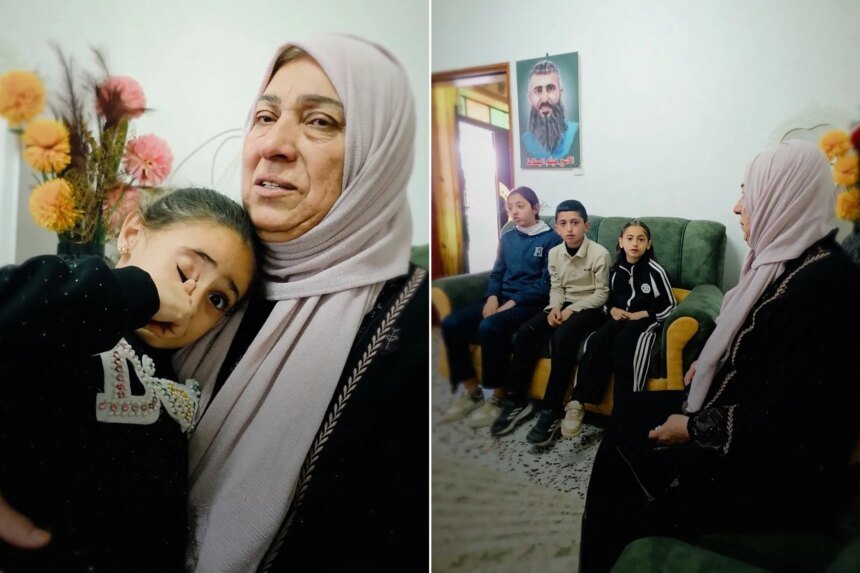
Accompanied by their maternal grandmother Siham Al-Battat, the five children, the eldest of whom is Yaqout (12 years old) and the youngest of whom is Acid (a year and a half), are experiencing a state of intense sadness over the absence of their mother.
Duaa was arrested from her home in the city of Al-Dhahiriya, south of the city of Hebron, in the south of the West Bank, on March 26, and – according to institutions concerned with prisoners’ affairs – she is still detained and subject to investigation at the “Al-Mascobiyya” investigation center, and her detention is being extended, against the backdrop of what the Israeli occupation claimed was her “incitement.”
The elderly Siham Al-Battat, the mother of prisoner Duaa, says that the occupation army stormed the house at that time, and was accompanied by heavily armed male and female soldiers.
Sadness and setback
Regarding the condition of her daughter’s children, Siham added in her interview with Al Jazeera that they are going through bad circumstances due to the loss of their mother, especially her two children, Asid and Areen, who is five years old, who suffers from severe food allergies and needs her mother.
Haitham (11 years old), the eldest male son, also faced a major setback that lost his vitality as an active athlete and Taekwondo martial artist, and he suffered “a state of intense sadness over the absence of his mother,” says Siham.
Like them, the grandmother feels great distress due to this forced absence of her daughter, and she adds, “The children are very attached to me, and her arrest shocked me, and I wake up from my sleep from time to time terrified and worried about her.”
Siham – who had previously been arrested by the Israeli occupation army several times and for different periods – denies the occupation’s allegations regarding her daughter, and explains that what he calls incitement is publishing pictures of her freed prisoner brother Haitham Al-Battat on social networking sites.

Sibling responsibility
Like her grandmother, Yaqut (12 years old), the eldest daughter, feels a great responsibility towards her siblings after her mother’s arrest. She tells Al Jazeera that they continue to cry and ask about their mother, especially little Asid, who has become “suffering from illnesses from crying too much. We try to keep him busy with a picture of his mother or something like that, but he holds my hand and takes me to the kitchen to check whether my mother is there or not.”
The family lives in a constant state of tension and anxiety, waiting for any call from the lawyer to reassure them of Doaa, or the news of her release.
One of 93 female prisoners
The Palestinian prisoner, Haitham Al-Battat, Duaa’s brother, was arrested after a chase by the occupation authorities, and was sentenced to three life imprisonments and several years on the grounds that he was accused of acts of resistance. He was released as part of the “Flood of Free People” deal with the resistance in Gaza in February 2025 and deported abroad.
According to the Palestinian Prisoners’ Club, the Israeli occupation is detaining 93 Palestinian prisoners under compelling and difficult circumstances, including dozens of mothers and three pregnant women who are serving various sentences between arrest, sentencing, and administrative detention.
According to the club, the occupation has arrested more than 765 women since the start of the genocidal war on the Gaza Strip, including children, elderly women, and people from different social groups and strata.
Statistics from prisoner institutions indicate that the number of Palestinian detainees in the occupation prisons reached about 9,500 prisoners and detainees, including 3,324 administrative detainees and approximately 360 children.