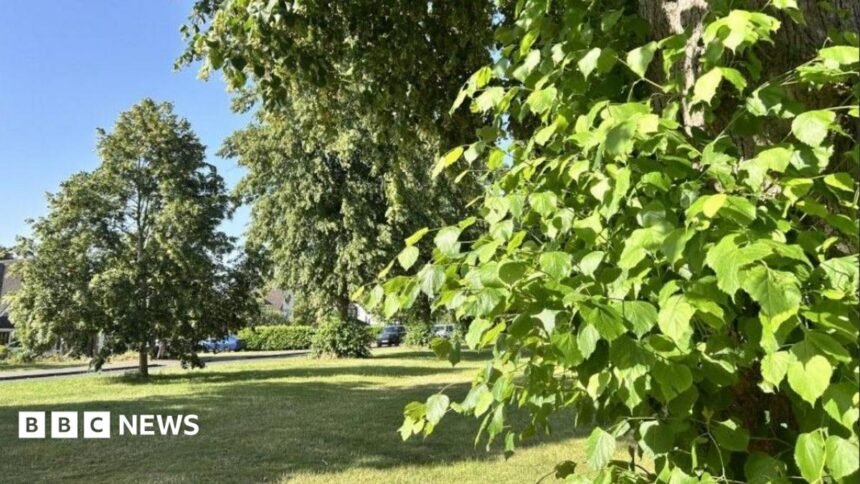

Shade offered by trees is prized during extreme heat
Shade offered by trees is prized during extreme heat
In the last week, a group of bowlers had a lucky escape when a tree crashed down onto a green. A few days later, an MP in the House of Commons revealed a mature tree had fallen on her house. So could this be linked to the recent soaring temperatures?
Trees can really suffer during a heatwave and the heat stress can show in lots of different ways.
It can affect processes on a molecular level, right up to the biology of the whole tree itself.
A three-day heatwave has been shown to be more than enough time to cause real damage to a tree population.
Dr Anna Gardner, a research fellow at the University of Birmingham’s Institute of Forest Research, studies the effects of climate change on trees.
“During prolonged hot, dry weather, trees lose more water through their leaves than they can replace from the soil, placing them under water stress,” she said.
“This can alter the physical properties of their tissues and reduce the margin of safety against mechanical failure, making large branches more likely to fail under their own weight, even in calm conditions.”
Not every tree or branch would respond in the same way, she explained, with factors such as species, age and overall health influencing their resilience.

Dr Anna Gardner researches the impact of climate change on trees
Dr Anna Gardner researches the impact of climate change on trees
Last Sunday, bowlers narrowly escaped injury when branches fell from a tree onto a green in Leamington Spa, Warwickshire.
Then during Prime Minister’s Questions on Wednesday, MP and chair of the Environment All-Party Parliamentary Group Fleur Anderson said a mature tree fell on her house that morning, blaming extreme heat.
The UK’s summers are getting hotter – but how prepared are we?
Why this heatwave feels worse than the last one
June’s temperature record set to be broken again today as 38C forecast

Bowlers competing in matches were lucky to escape injury when branches fell in Leamington Spa last Sunday
Bowlers competing in matches were lucky to escape injury when branches fell in Leamington Spa last Sunday
In parts of the country, some councils have warned people not to gather in the shade under a tree because of an increased risk of falling branches, known as sudden branch drop syndrome, possibly linked to the extreme heat.
Scientists are now researching how different species of tree react to heatwaves and the differences between how urban trees and those in forests and woods cope.
Understanding the responses helped us better care for urban trees, Gardner said, so they could continue to deliver benefits such as “cooling our towns and cities, improving air quality and supporting biodiversity”.
Get in touch
Tell us which stories we should cover in Warwickshire
Follow BBC Coventry & Warwickshire on BBC Sounds, Facebook, external, X, external and Instagram, external.
Related topics
Man’s narrow escape as tree falls on bowling green
Heatwaves leave London’s trees under extreme stress
Related internet links
The Birmingham Institute of Forest Research