Published on 6/27/2026
Israel has released a group of secret documents that reveal for the first time broader details about the Entebbe operation carried out by its special forces in Uganda in 1976 to free more than a hundred hostages who were being held at Entebbe Airport, days before the fiftieth anniversary of the operation.
The Independent newspaper said that the publication of these documents comes at a time when Israel is still dealing with the repercussions of the prisoner crisis that broke out following the attack on October 7, 2023, which gave the documents an additional political and historical dimension.
Read also
list of 2 itemsend of list
The documents showed – according to a report by Sam Metz and Ibrahim Hazbon to the newspaper – that the Israeli leadership did not turn to the military option from the beginning, as is common in the circulating narrative, but rather engaged in lengthy discussions about the feasibility of negotiating with the kidnappers in exchange for carrying out a long-term rescue operation that entails great risks.
In the early days of the crisis, the crisis management team headed by then Prime Minister Yitzhak Rabin insisted on refusing to negotiate with the perpetrators of the kidnapping, who were members of the Popular Front for the Liberation of Palestine and the German “Revolutionary Cells” organization who seized an Air France plane that was heading from Tel Aviv to Paris after stopping in Athens, and demanded the release of Palestinian prisoners and others in a number of countries.

As the hostages continued to be held for 6 days and pressure from their families escalated, the Israeli government began to reevaluate its position – according to the documents – and agreed to open negotiation channels regarding some of the kidnappers’ demands in an attempt to buy time and prevent the implementation of their threats to kill the hostages.
At the same time, the military establishment was putting the finishing touches on a complex plan to rescue the detainees, which included collecting accurate intelligence information about Entebbe Airport, preparing detailed plans for it, and arranging the route of the military transport planes that carried the attacking force through Kenya to Uganda.
A violation of Uganda’s sovereignty
The documents revealed that Israel adopted a dual policy during the management of the crisis, as it supported the negotiations led by France with Ugandan President Idi Amin, while at the same time preparing to implement a military operation if diplomatic efforts failed.
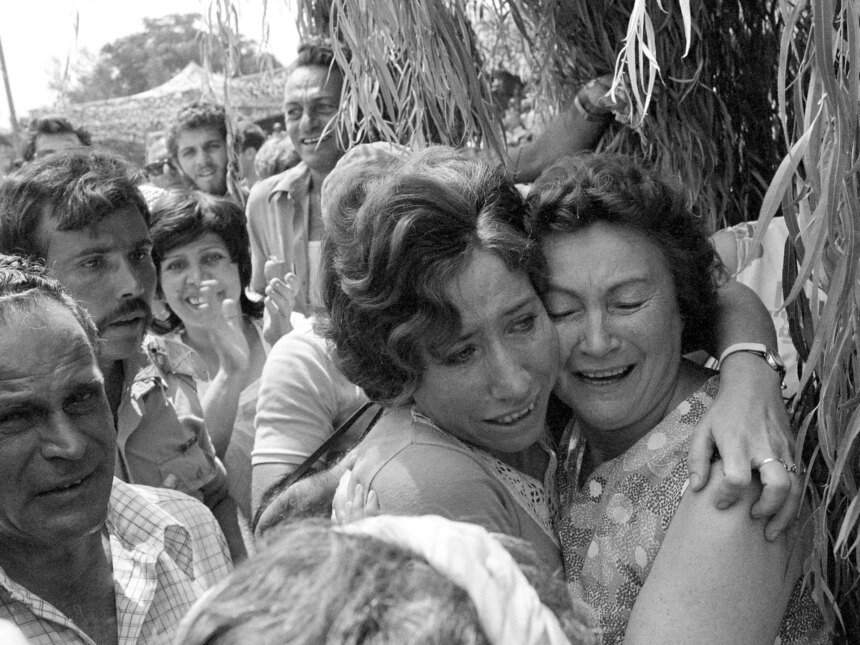
The operation, which took less than an hour, ended with the liberation of most of the hostages, while 3 of them were killed during the clashes, as were all the kidnappers and dozens of Ugandan soldiers who were supporting them.

The only loss among the Israeli force was the killing of its commander, Yonatan Netanyahu, brother of the current Israeli Prime Minister Benjamin Netanyahu, who later became one of the most prominent symbols of the operation in Israeli memory.
The Ugandan President and the Organization of African Unity criticized the operation – as the documents indicate – as it constituted a violation of Uganda’s sovereignty, while Israel saw that it was a necessary operation to save its citizens after exhausting opportunities for a peaceful solution.
Despite the widespread Israeli celebration of the Entebbe operation as one of the most successful hostage-liberation operations in history, the documents revealed that the political leadership was more cautious in evaluating its results, as Rabin warned in one of his memoirs against believing that military success had ended the problem, stressing that “terrorism will remain an ongoing challenge,” according to what the newspaper reported.
This assessment highlighted that decision-makers at the time viewed military success as a tactical achievement, rather than a final solution to the conflict or the hostage-taking phenomenon.