The Supreme Court decision that will allow deportation of Haitians and Syrians protected under a federal humanitarian program was the culmination of a long campaign by conservatives whose efforts to dismantle it had been blocked by lower courts.
“This is a victory 10 years in the making,” Stephen Miller, the White House deputy chief of staff, told Fox News on Thursday. “We can finally remove these Haitian illegal migrants from the United States.”
Immigration hard-liners in the Trump administration have long railed against the program, known as Temporary Protected Status, and have accused previous administrations of abusing it. They say the program allowed some migrants to stay in the United States for years even though the protections, as the name implies, were meant to be temporary.
Now the administration can unwind the status, not only for the nearly 350,000 Haitians and hundreds of Syrians directly affected by the ruling, but also nationals from several other countries in the coming months, including El Salvador and Ukraine.
Hundreds of thousands of immigrants with valid status could soon be vulnerable to expulsion, handing the administration a large new pool to target in its mass deportation plan.
“Thousands of people protected from immigration detention and deportation are now vulnerable to it,” said Ahilan Arulanantham, one of the attorneys involved in the T.P.S. litigation. “At their next check-in, or if they encounter an ICE officer on the street, they could be detained and deported.”
Thursday’s ruling by the Supreme Court gives the White House wide latitude to end a program that officials have blamed for holding back their efforts to tighten up immigration laws and expel undesirable groups.
“It’s an affirmation that the rule of law actually applies here,” Chad Wolf, the acting secretary of homeland security during the first Trump administration, said of the Supreme Court decision. Mr. Wolf said the ruling also affirmed that “this program is supposed to be temporary in nature.”
T.P.S. extended protections to certain nationalities whose countries were deemed by the U.S. government to have unsafe conditions, like wars and natural disasters. For instance, Haiti received T.P.S. status after the 2010 earthquake devastated the country; the status was extended several times, and the number of people allowed to apply for it ballooned during the Biden administration after the country fell into conflict in 2021. Efforts by the Trump administration to end the protections for Haitians nearly a decade ago were blocked by the courts.
The Department of Homeland Security, which oversees immigration enforcement, did not respond to questions about how it planned to respond to the ruling.
Immigration and Customs Enforcement had previously considered an enforcement operation earlier this year in anticipation of Haitians losing the protections, according to two people with knowledge of the plans. After lower-court decisions blocked the administration from undoing T.P.S. for certain countries, immigration officers received guidance instructing them to hold back on enforcement against citizens of those countries, according to internal documents obtained by The New York Times.
The guidance said that Haitians with T.P.S. “may not be removed despite having an administratively final removal order” and that they “may not be detained on the basis of their immigration status alone.”
Practical realities remain because the administration would have to find ways to ramp up deportations to countries where doing so may be difficult, including Haiti, where there is ongoing conflict. Since early last year, just over 2,000 Haitians have been deported, according to a U.S. official with knowledge of the data.
The Supreme Court ruling comes after months of criticism by Trump administration officials directed at courts, which they contended had overstepped in blocking their efforts to strip groups of their protected status. Mr. Miller, an architect of some of Mr. Trump’s most aggressive immigration policies, was particularly incensed.
“When courts stepped in, they were violating explicit language that Congress had enacted,” he asserted just weeks after a judge had stymied their effort to strip the deportation protections from Venezuelans.
“We are living under judicial tyranny,” Mr. Miller said a few months later on social media, after a judge again blocked the termination of the program, this time for immigrants from Honduras, Nepal and other countries.
On Thursday, after the Supreme Court ruling, Mr. Miller was in a better mood.
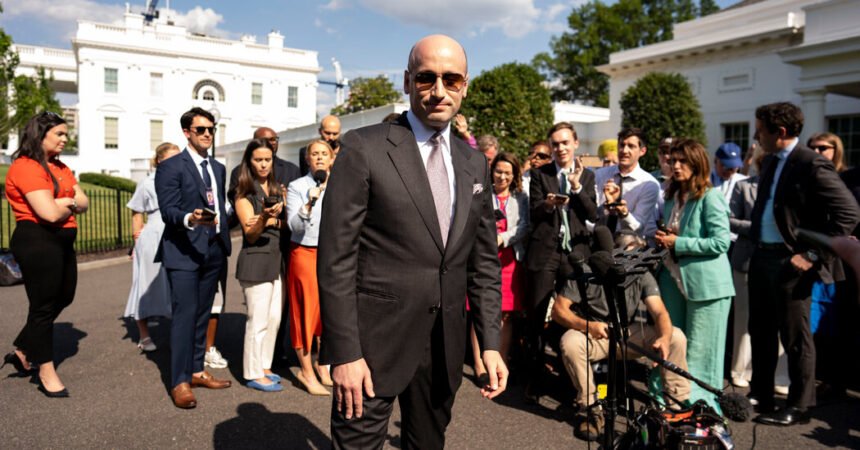
When asked by reporters outside the White House whether immigrants who lose T.P.S. would be vulnerable to deportation, he was blunt: “Well, of course, if you no longer have status in this country, then you’re supposed to be deported.”
Mr. Miller was unmoved when asked whether the administration considered Haiti a safe place.
“Haitians live in Haiti,” he said. “I mean, it would be crazy for us to say that Haitians couldn’t live in Haiti. It’s their country.”