Published on 6/24/2026
Behind every settlement outpost in the West Bank stands not only a group of settlers on the ground, but a broader network of entities that provide money, equipment, logistical services, and organizational support, according to what Western countries say that recently imposed sanctions on entities they accused of contributing to financing and expanding settlement activity.
In a remarkable shift, international sanctions no longer target only individuals accused of carrying out attacks against Palestinians, but rather extend to what Western governments describe as the “settlement economy,” that is, the financial and commercial system that helps establish settlement outposts and strengthen their presence on the ground.
Britain, Canada, France, and Norway announced the imposition of measures against individuals, organizations, and companies, which included freezing assets, travel restrictions, and a ban on financial and commercial transactions, considering that confronting settlement violence requires pursuing those who provide financing and infrastructure, not just the direct implementers.
Among the most prominent entities affected by the sanctions is the “Farms” Association, which Western countries accuse of providing financial and organizational support to pastoral farms and settlement outposts, including sites that they say have been linked to incidents of violence and intimidation against Palestinians.
The sanctions also included the Ahvat Gilad Association, which the sanctioned authorities describe as having played a role in transferring donations and funds to settlement outposts and providing the financial resources necessary to continue its activity.
But these parties – according to Western countries – are only links within a broader network that includes associations, electronic platforms, and commercial companies working to finance and establish a new settlement reality in the West Bank.
Among the names included on the sanctions lists is the “Artsino” organization, which Britain accuses of promoting farms and settlement outposts and collecting donations to finance their needs, including purchasing equipment that it said is used by armed guard groups affiliated with the settlers.
The sanctions also affected the entity registered financially and legally under the name “Shevat Zion Lergvei Adamata,” which London says formed a financial channel through which donations and transfers related to the activities of “Artsino” and the outposts pass.
Crowdfunding platforms
At the heart of this economy have emerged online crowdfunding platforms, including the “Are Yeshag” platform, which Western countries consider a model of fundraising networks that help provide the resources necessary to establish new infrastructure in settlement outposts and continue their work.
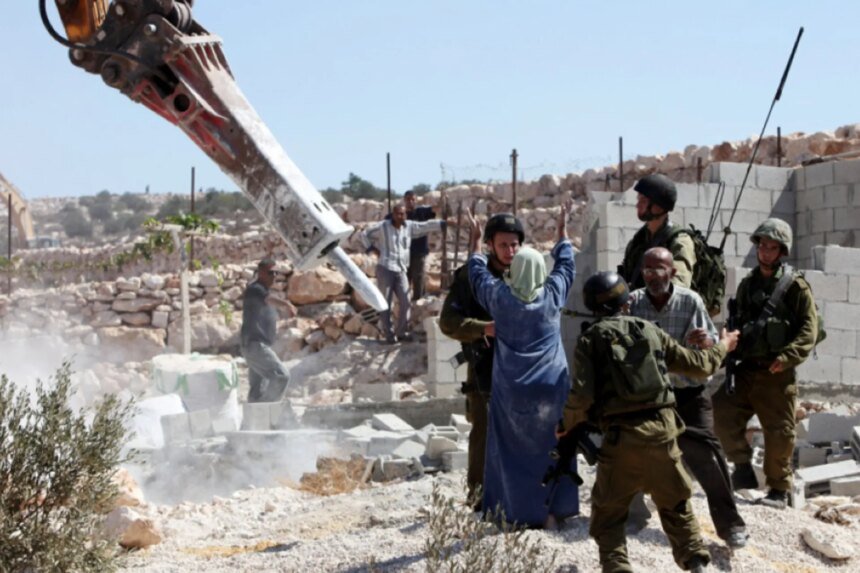
The measures were not limited to associations and platforms, as they also included companies working in the fields of construction and heavy machinery, including the “Eyal Hari Yehuda” company, which Western authorities accuse of providing equipment and resources that were used in the demolition and expansion of settlement outposts, in addition to assaulting Palestinian property.
The company’s owner, Itamar Yehuda Levy, was also included among the sanctions, on charges of facilitating the use of the company’s resources in these activities.
The countries that imposed the sanctions say that targeting these networks represents a transition from pursuing individuals only to striking the financial and organizational structure that allows settlement expansion to continue.
On the other hand, Israel rejected these measures, and Prime Minister Benjamin Netanyahu considered that the sanctions unfairly targeted settlers, and said that the countries that imposed them failed to confront what he described as anti-Semitism.
Between Western countries’ accusations of the existence of an integrated financing system behind the settlement outposts, and Israel’s rejection of these measures, the “settlement economy” file remains at the heart of the international debate about the future of the West Bank, and the role of money, companies, and digital platforms in creating facts on the ground.