In recent years, citizen science methodology has gained remarkable momentum and has become an increasingly important tool in large-scale environmental and biodiversity conservation research.
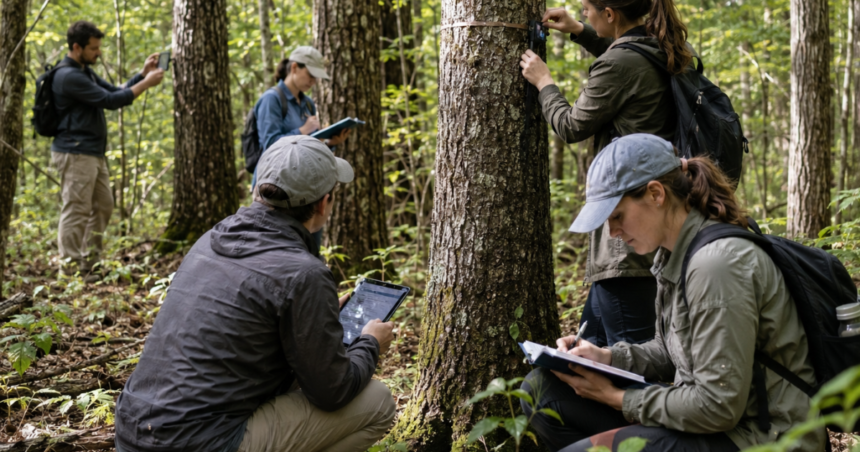
Zuszka Vašarhelyi, a researcher in the Evolutionary Ecology Research Group at the Hungarian Hun-Rin Center for Environmental Research, says, “Citizen science, or what is sometimes known as participatory science or community science, is an old concept based on the involvement of non-specialized individuals in scientific research and projects, by sending photos, audio recordings, and field notes, and sometimes even contributing to the analysis of the data itself, which is difficult for researchers to manage alone.”
She added in her interview with Al Jazeera Net, “Although this type of participation occurred centuries ago in an unorganized manner and without rigorous scientific review processes, today it has become a recognized methodology in many research fields, including ecology and biodiversity conservation biology.”
The data collected by citizens is of particular importance because it provides huge amounts of information covering wide geographical areas and long periods of time, and it is data that is difficult for scientists alone to collect because of the time and great costs it requires.
But despite its many advantages, a new study recently published in the journal People and Nature reveals that citizen science data often suffer from a number of methodological limitations, including varying monitoring efforts between different regions, varying data quality from one participant to another, as well as various forms of biases, such as detection or reporting biases, and biases related to the participants themselves.

Citizens’ observations under the microscope
To address this problem, the study’s lead author and her research team, led by the Hun-Rin Center, sought to identify environmental and socio-economic variables that give rise to non-random patterns in data provision and control the number of notes submitted by participants in citizen science projects.
To achieve this, the researchers launched an unprecedented national collaboration between citizen science projects concerned with the environment and nature conservation in Hungary. This collaboration has made it possible to analyze detailed spatial databases containing records from 17 different projects covering the same geographical areas.
The researchers applied an innovative approach based on comparing a database of more than 300,000 observations collected across the projects with independent administrative data issued by the Hungarian Central Statistical Office at the municipal level, which included information on income, education, population structure, population density, and the percentage of protected areas.
The citizen science database included projects specialized in monitoring arthropods, molluscs, reptiles, birds and mammals, in addition to streams and ponds.
In simple terms, the researchers sought to find out whether the characteristics of the local population and surrounding environments systematically influence the activity of participants, which varies greatly depending on the different goals, topics and characteristics of the projects.
The meta-analysis methodology used also allowed the identification of project-specific factors that influence participation patterns, in addition to a number of general trends that apply to all projects, making the results applicable at multiple levels.

Participation is not random
The results of the analysis showed that participation in projects does not occur randomly. It was found that there is a positive relationship between the level of activity of participants and the percentage of protected natural areas, as municipalities that contain higher percentages of more environmentally protected, and therefore more natural, areas receive a greater number of observations compared to the number of residents.
Although the study was not designed to determine the direct cause of this relationship, Zushka believes that volunteers are naturally drawn to environments rich in biodiversity and rare or interesting species.
She adds, “Even in projects that rely on collecting data from around participants’ homes, it can be expected that there will be more diverse ecosystems and more rare species near protected areas, which may explain the higher number of observations recorded there.”
Population density showed a more complex pattern. In general analyses, higher population density was associated with lower participation, and less densely populated areas with more protected and natural spaces were found to have higher monitoring rates compared to others.
However, this effect disappeared after the capital, Budapest, was excluded from the analysis as it is the most urbanized and densely populated region compared to the rest of the regions. After this adjustment, “we found that outside of the Hungarian capital, both education level and the proportion of older people in the population were associated with increased rates of participation in citizen science projects,” Zuschka says.
Differences from one project to another
The study’s findings were not limited to general trends, but also revealed more detailed patterns at local levels. For example, projects relying on field observations collected from private home gardens showed a significantly positive relationship with the proportion of children in the population, a pattern not observed in other types of projects.
Another striking finding was that projects focusing on specific ecological habitats tended to receive a greater number of observations from municipalities with lower levels of education and income, which may be related to lower levels of urbanization in those areas.
Vasarhelyi cites her own research team’s project, known as Mosquito Monitor, which focuses on monitoring invasive mosquito species. She explains that these species prefer environments dominated by human activity, whether because of the availability of breeding sites or because of their dependence on human blood as a source of food.
She added: “As these species spread across the country, we also noticed increasing population concerns about the potential outbreak of diseases associated with them, risks that affect more in dense urban areas.”
The researcher explains that these factors explain why the project received a greater number of observations from municipalities with higher population densities, higher levels of education and income, and older average ages, which are indicators usually associated with urban environments.
How to deal with biases
Not only does the study clarify how citizen science data are distributed, it also provides strong evidence to support the view that this data is not immune to biases.
However, it is not possible to identify a single factor responsible for this bias in all citizen science projects, as each initiative showed a particular pattern of relationships between environmental and population characteristics and level of participation.
Therefore, researchers warn against generalizing the results of a particular project to all projects, while emphasizing that making the most of this data requires understanding the factors that affect its production, and consciously taking these factors into account when designing projects, analyzing their results, and using them to support decisions to preserve biodiversity and manage the environment.
Zushka emphasizes that “there are no universal solutions that are suitable for all cases,” noting that “biases can be taken into account from the planning stage of the study, and they can also be reduced during recruitment of participants by intensifying information campaigns in less active areas. It is also necessary to take these biases into account when verifying the data and evaluating its quality.”
In addition, it indicates that there are a variety of statistical methods that can be used to correct for these biases or reduce their influence during data analysis and interpretation of results.
The researcher believes that the responsibility for dealing with these challenges falls on all researchers who use citizen science data, by choosing the methodologies most appropriate to the nature of each project.
Ultimately, Zushka and her colleagues hope that their findings will provide new insights that can help scientists in other countries improve methodologies and designs for future citizen science projects more efficiently, and interpret their results more accurately and objectively by taking these or similar biases into account.
Article summary
By analyzing more than 300,000 observations, the researchers found that some categories and regions contribute more to data collection, suggesting systematic biases that should be taken into account when using this information in ecology and biodiversity research and environmental decision-making.