Published on 6/21/2026
African governments and the African Union welcomed the agreement reached by the United States and Iran to end the war and reopen the Strait of Hormuz, in an interaction that focused on the economic dimension related to energy and supplies more than the political aspect.
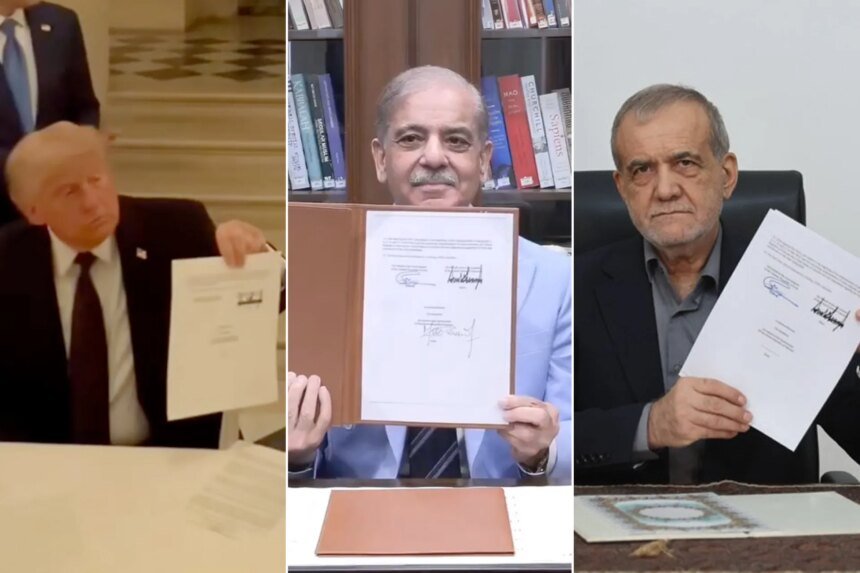
The agreement, which was signed in the form of a “memorandum of understanding” through mediation led by the Pakistani Prime Minister, stipulates an immediate and permanent cessation of military operations on various fronts, including Lebanon, and the reopening of the strait, which remained closed to navigation, provided that negotiations continue regarding the Iranian nuclear program and the lifting of sanctions.
Welcome African Union
The Chairman of the African Union Commission, Mahmoud Ali Youssouf, welcomed the agreement, describing it as “an important step towards ending hostilities and reducing tensions.” Youssef said that the agreement “demonstrates the power of dialogue and diplomacy in resolving disputes and building confidence between nations, and gives renewed hope for peace, stability and cooperation in a region of global importance for its security and prosperity,” noting the mediation efforts made by Pakistan, Oman and Qatar.
At the governmental level, Kenyan Prime Minister and Foreign Minister Musalia Mudavadi described the agreement as a “major diplomatic success” that holds hope for lasting stability and relieving the burdens on economies damaged by the war. He said in a statement, “The government of Kenya warmly welcomes the announcement of the peace agreement between the United States and Iran, which stipulates a permanent end to military operations on all fronts, including Lebanon.”
He added that the agreement “comes as a great relief to Kenya and to many African countries that have endured great economic pressures as a result of the conflict,” noting that reopening the Strait of Hormuz will benefit global energy security and trade, stressing his country’s commitment to comprehensive diplomacy and the United Nations Charter.

For its part, South Africa welcomed the signing of the memorandum of understanding, and the Minister of International Relations and Cooperation, Ronald Lamola, said in a statement by the ministry that the agreement “hopefully ends the unlawful use of force and violations of the United Nations Charter in this war,” recalling that “all countries, especially developing countries, felt the economic repercussions of the war.”
Pretoria considered the reopening of the Strait of Hormuz “critical to calm the fluctuations in global oil markets and mitigate the energy and food security challenges facing developing countries.” It also welcomed the pledge to lift sanctions on Iran, and called for addressing the outstanding issues through the International Atomic Energy Agency and the Security Council. As for Sudan, the Minister of Energy and Oil, Moatasem Ibrahim, told Al Jazeera Net that opening the strait “removes one of the most important external factors causing the rise and fluctuation of fuel prices,” and contributes to the stability of the pound’s exchange rate.
The East African newspaper reported that the interaction in East Africa was “particularly welcoming,” with governments and companies hoping that the calm would reopen shipping routes and ease fuel pressures. Razia Khan, chief economist for Africa and the Middle East at Standard Chartered Bank, said that the signing of the agreement would be viewed positively for Kenyan assets in light of economic fragility in the face of fuel prices, remittances, and tea and flower exports. For his part, energy expert Patrick Obath expected a “slow return” to normal, which could be completed after about three months, provided that the ceasefire holds.

Burdens of war and cautious optimism
This welcome comes after months in which African economies bore the burdens of the closure of the Strait, from rising fuel prices and the cost of shipping and insurance, to disruption of fertilizer supplies and faltering agricultural exports. The African Export-Import Bank (Afreximbank) had approved financing of about $10 billion to help African and Caribbean countries cope with the consequences.
Despite the atmosphere of détente, caution remains, as the basic issues are still unresolved, most notably the future of the Iranian nuclear program and Tehran’s demands to lift sanctions and release its assets, in addition to Israel’s refusal to adhere to the agreement, which makes the truce an important gain, but it can be tested unless it turns into a permanent settlement.