Published on 6/24/2026
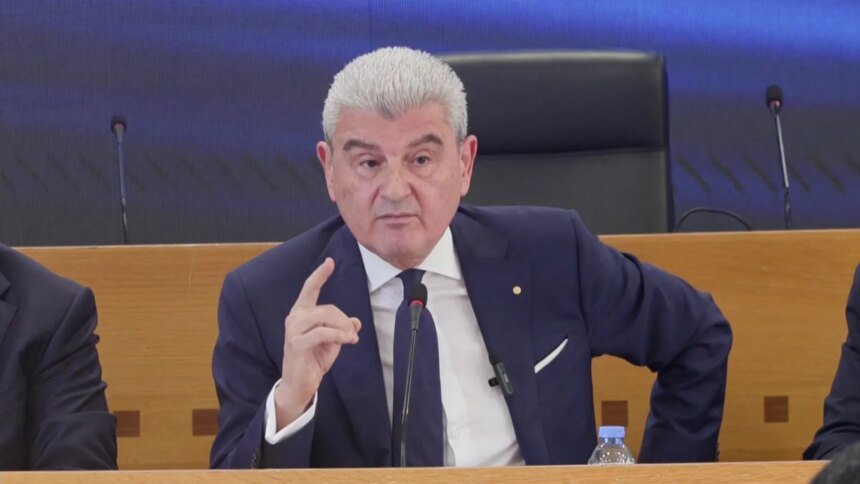
The Lebanese Minister of Industry, Joe Issa Al-Khoury, announced an executive plan that includes 5 basic pillars, with the aim of saving the industrial sector, which has been suffering from neglect for decades, and turning it into a real lever for the national economy in the face of a chronic structural crisis, as he put it.
During a press conference reported by Al Jazeera Live, the Minister identified 4 global variables that force Lebanon to reposition its industry, which are:
- Digital transformation and artificial intelligence
- Restructuring supply chains
- Transition to green industry and circular economy
- Orientation towards industries with high added value
The Minister stressed that Lebanon possesses elements of real strength, represented by industrialists who have persevered in almost impossible circumstances, institutions that export to global markets, and human competencies that quickly adapt, in addition to an expatriate sector that can form a bridge to foreign markets.
However, he pointed out the major challenges facing the sector, including factories operating under high and unstable energy costs, in addition to the absence of sufficient financing, a crumbling infrastructure, and unfair competition from smuggled goods.
The Minister reviewed the first pillar of his plan, which focuses on developing modern and sustainable industries by relying on data and artificial intelligence, while conducting a comprehensive national industrial survey and digitizing licenses.
In the same context, the Minister stressed giving priority to the circular economy, noting that Lebanon produces about 6,000 tons of waste daily, of which 60% is organic materials that can be converted into fertilizer, instead of importing it at a value ranging between 50 and 60 million dollars annually.
He pointed out that the country currently buries 90% of its waste, while this percentage should not exceed between 5% and 10% under normal circumstances, calling for replacing the concept of “waste treatment” with the principle of “waste industry.”
Empowering talent
The Minister allocated the second and third pillars to quality, excellence, and empowering talents, stressing that the world does not open its doors with emotion, but with trust, which is built with specifications, laboratories, and accreditation.
He also stressed the need to link vocational and technical education to the needs of factories, praising institutions such as Don Bosco, which graduate between 100 and 150 professionals annually.
The Minister addressed the fourth and fifth pillars, related to creating a competitive environment that attracts investment and modernizing the energy infrastructure.
He pointed out that the cost of electricity in Lebanon amounts to 30 cents per kilowatt-hour, compared to 4.2 cents in Egypt, 5.4 in Saudi Arabia, and 5.7 in Turkey, which completely deprives the Lebanese product of its competitive ability, calling for support for the sector to confront subsidized foreign goods.
The minister pointed to the indicators of the Lebanese trade deficit, explaining that Lebanon records the highest structural trade deficit in the world in relation to the gross domestic product, at a rate of 34.5% annually, while in America this percentage does not exceed between 3% and 6%.
He pointed out that Lebanon imported $21 billion in 2024, compared to exports not exceeding $3.5 billion, which created a deficit of $17 billion that would force the state to borrow via Eurobonds to cover the balance of payments gap.
The Lebanese Minister of Industry stressed that the radical solution to the financial crisis in the country lies in reducing imports by stimulating the local industry and opening new export markets for the Lebanese product, stressing that the state’s role must be limited to setting rules, securing infrastructure, and combating dumping, without being a substitute for the private sector in innovation and investment.