Two expensive House primary races are coming to a close on Tuesday in Maryland.
In one district, where Democrats are jockeying to succeed the retiring Representative Steny H. Hoyer, the longest-serving House Democrat, a leading candidate has drawn millions from groups tied to the powerful American Israel Public Affairs Committee and the cryptocurrency industry.
In the Democratic primary for another district, a wealthy businessman who used to hold the seat has spent millions of his own money to try to reclaim it — even as the incumbent Democrat has laid out millions of her own cash to defend her position.
Here’s a look at the fund-raising and spending in the two races.
AIPAC and crypto money
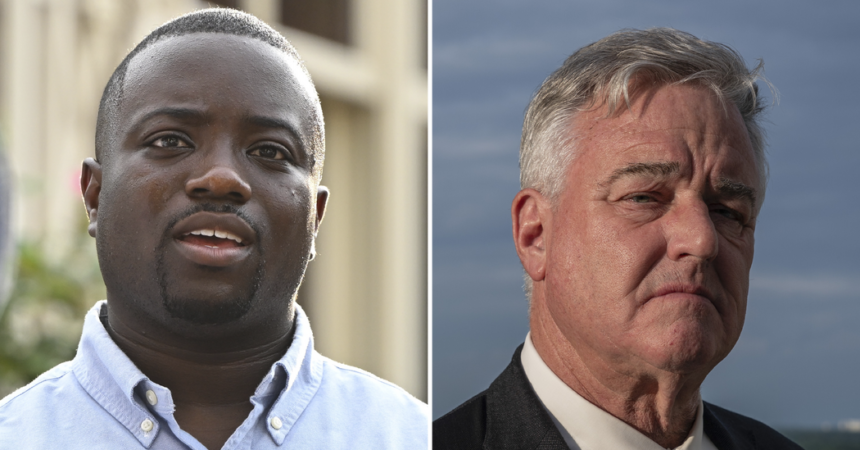
In TV ad after TV ad, Maryland residents have been told that Adrian Boafo, a Democrat vying for a House seat in the Fifth Congressional District in suburban Washington, is endorsed by Gov. Wes Moore of Maryland, Senator Angela Alsobrooks of Maryland and Mr. Hoyer, the retiring Democratic congressman.
But absent from that list are the actual funders of those ads: AIPAC and the crypto industry.
Those power players are Mr. Boafo’s biggest funders, and two of the most influential and sometimes controversial groups in Democratic primaries this year.
Both have spent enormously on multimedia ads propping up Mr. Boafo, a state lawmaker. The United Democracy Project, AIPAC’s official super PAC, spent about $4.7 million as of Monday morning, according to the media tracking firm AdImpact. And Protect Progress, a super PAC affiliated with the crypto industry and the industry’s main super PAC, Fairshake, had spent about $3.4 million.
Together, those totals account for more than 80 percent of the ads benefiting Mr. Boafo.
In total, including mailers and other campaign efforts, the United Democracy Project and Protect Progress have spent almost $11 million to help Mr. Boafo, according to Federal Election Commission records through mid-June, a remarkable amount even in the expensive Washington media market.
Mr. Boafo’s Democratic rivals have tried to wield that support against him, releasing a statement last week calling on him to reject so-called dark money.
One of those Democrats, Harry Dunn, a former Capitol Police officer who defended the building during the riot on Jan. 6, 2021, has tried to keep up. He raised a striking $4 million between January and early June of this year — more than any of the other Democrats in the primary, including Mr. Boafo, whose campaign raised $1.1 million over the same period, according to F.E.C. records.
A third Democrat, Quincy Bareebe, a businesswoman, raised only about $180,000 in campaign contributions between January 2025 and early June of this year. However, she has lent her campaign more than $5.7 million, allowing her to spend heavily on ads.
Deep-pocketed candidates
At the same time, another Democratic primary in Maryland has featured an extraordinary amount of money mustered by the candidates themselves.
In the Sixth Congressional District, which includes a wide stretch of the state’s northwest, David Trone, the wealthy Democratic co-owner of a major wine retailer, has spent heavily from his own fortune to try to reclaim a House seat he abandoned for an expensive, unsuccessful run for the Senate in 2024.
Mr. Trone lent his House primary campaign $25 million and gave it another $406,000 in campaign contributions. That has allowed him to spend about $15.2 million on ads.
The incumbent Democrat trying to fend him off, Representative April McClain Delaney, lent herself another $7.4 million. Ms. Delaney, a lawyer who is married to the former congressman and businessman John Delaney, has spent about $7.4 million of that on ads.