Published on 6/23/2026
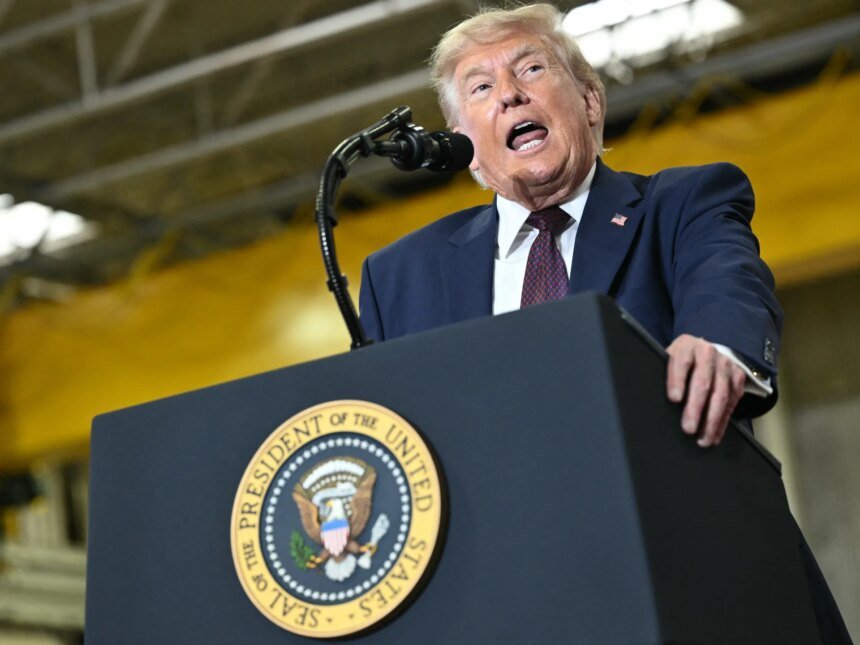
US President Donald Trump said in a post on the Truth Social platform on Tuesday that he agreed to allow Iran to use $6 billion of its frozen financial assets to purchase American products, following the first round of talks between the two sides in Switzerland.
Trump stated in his post that the released funds “will be used to purchase food and medical materials exclusively from the United States,” explaining that they include the purchase of “corn, wheat, and soybeans from our great American farmers,” which Iran “direly needs,” according to his description, adding that he “felt it was his duty to help confront the humanitarian crisis” in Iran.
Read also
list of 4 itemsend of list
On the other hand, the Iranian Tasnim Agency quoted the Governor of the Central Bank of Iran, Abdel Nasser Hemmati, as saying that there is no obligation to allocate the frozen funds to purchase American goods in the two memorandums that were signed during the negotiations.
Hemmati added, “We see no objection to purchasing American products if their prices and quality are appropriate,” explaining that in the coming days we will purchase the first batch of purchases from our frozen funds.
US Vice President J.D. Vance said on Monday that the release of frozen Iranian assets “will enrich the Americans and feed the Iranians,” noting that it is “a very good and wonderful deal for the Iranian and American people.”

Release funds in stages
The Financial Times quoted a source familiar with the negotiations between Iran and the United States that the amount of $6 billion will be released in stages according to the progress of the talks between the two sides.
This source added to the newspaper that another $6 billion will be released if Tehran spends the first installment, which amounts to $6 billion, and progress is made in the negotiations aimed at reaching a final agreement that includes the nuclear file. Thus, the amount of Iranian funds that will be released will be $12 billion.
The volume of frozen Iranian funds is estimated at about $100 billion, distributed among several countries, most of which are countries that buy Iranian oil, such as China, India, and Japan.
In the first of several steps expected under the agreement to provide economic support to Iran, the US Treasury Department announced on Monday that Iranian oil would be exempt from sanctions until August 21, allowing Tehran to sell oil and related products and receive payments for them.
“The basis for a final agreement”
J.D. Vance said that talks with Iranian officials in Switzerland had laid a good foundation for a final agreement and that Iran had agreed to the return of International Atomic Energy Agency inspectors to the country.
But Iran denied that it had begun discussions on its nuclear program or agreed to invite IAEA inspectors to return.
Iranian Foreign Ministry spokesman Ismail Baghaei said on Tuesday that Iranian officials had not held any meeting with…
Director General of the International Atomic Energy Agency, Rafael Grossi, is in Switzerland, and they have no plans to allow inspections by the agency of the damaged Iranian nuclear facilities.
Oil tanker traffic through the Strait of Hormuz began to increase on Monday, but Iran and the Sultanate of Oman hinted in a joint statement at the possibility of imposing fees on the use of the Strait, the closure of which led to a rise in oil prices and global inflation.
Oman and Iran said that a joint working group will seek to reach an agreement on the management of navigation in the strait, the services provided and the costs associated with it. They added that any arrangement must respect “their sovereignty and sovereign rights.”

A political burden on Trump
The war on Iran has become a political burden at the domestic level for Trump and his colleagues in the Republican Party in Congress as the midterm elections approach in November.
Opinion polls show that Americans are extremely frustrated by the rise in gasoline prices since the outbreak of the war. Trump is also facing pressure from Republicans who say Iran’s nuclear program should be stopped completely.
In the same context, a poll conducted by Reuters/Ipsos showed that only one in four Americans believes that there is justification for the war launched by Trump against Iran, and that the majority of Americans are concerned that the truce with Tehran will not hold, it seems.
The poll, which lasted for five days and ended on Monday, showed that the war cast a shadow on Trump’s popularity, as his approval rating dropped to 34%, the lowest level during his second term.