Published on 6/22/2026
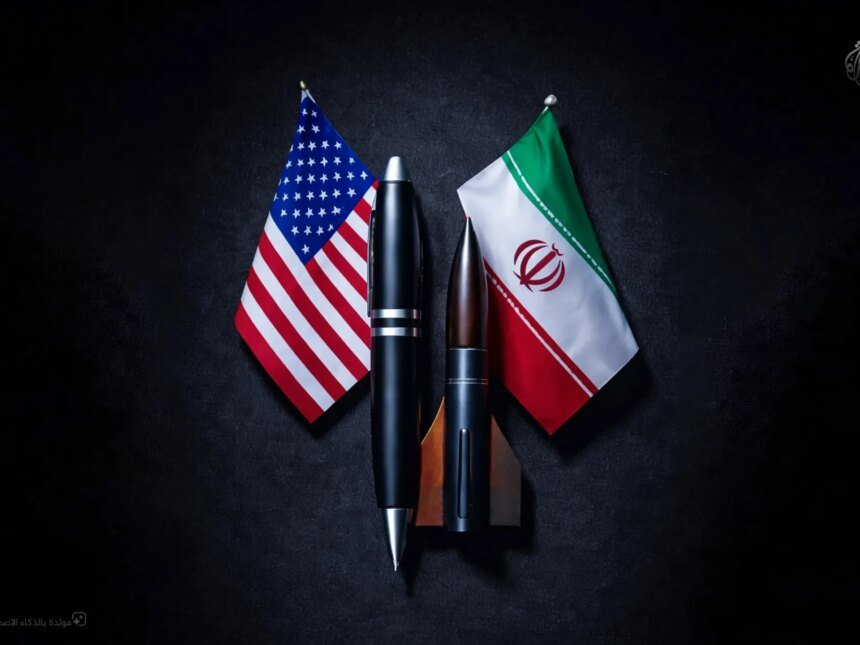
Although US President Donald Trump presented the agreement with Iran as a historic achievement that opens a new page in the Middle East, doubts are growing in American circles about the real gains achieved by Washington, and some analyzes consider that the agreement revealed the limits of American power and placed the Trump administration before new challenges.
Reports and analyzes published by the New York Times, the Washington Post, and Newsweek magazine converge on one conclusion: that the agreement did not resolve the fundamental issues over which Washington declared war, but rather postponed them to future negotiations that may be more complex.
Read also
list of 2 itemsend of list
While the agreement reopened the diplomatic track between the two countries, it left the files of the Iranian nuclear program, ballistic missiles, the relationship with Israel, and the future of American influence in the region without final solutions, which puts the Trump administration before a difficult test in the coming months.
The new negotiating rounds in Switzerland still face obstacles related to Lebanon, the Strait of Hormuz, and other issues.
Limited gains
The New York Times asks, “What has changed after about 4 months of war?”, to answer briefly, “Not much,” because the Iranian nuclear program was not destroyed, the fate of the ballistic missiles was postponed to later negotiations, and Iran’s regional proxies still represent a source of threat.
The newspaper quoted Caitlin Talmadge, professor of Gulf security at the Massachusetts Institute of Technology, as saying that the agreement does not reflect American military superiority, but rather reflects the limits of the American ability to continue escalation.
The newspaper points out that Tehran was able to transform one of its weak points into a new source of influence, namely the Strait of Hormuz, as the war revealed Iran’s ability to use the strait as a strategic pressure card.
Under the agreement, Iran will receive huge economic gains that include lifting the US naval blockade, creating a $300 billion reconstruction fund, releasing frozen Iranian assets, and ending US sanctions.
The agreement also stipulates a 60-day negotiation period to address the most complex files, including the nuclear program and sanctions.
America’s papers decline
The Washington Post believes that Trump now has fewer pressure cards than he did before the war. Last February, Tehran feared that any American attack would lead to the overthrow of the regime, but the war proved the regime’s ability to withstand even after the killing of Supreme Leader Ali Khamenei.
The newspaper says that Iran has also proven its ability to confuse global markets by simply threatening to close the Strait of Hormuz, through which about 20% of global oil and gas trade passes.
One of the most prominent repercussions of the agreement is the widening gap between Washington and Tel Aviv. According to the New York Times, Israel entered the war believing that it would eliminate the Iranian threat for decades to come, but it found itself marginalized after Washington signed an agreement that did not take into account its strategic goals.
Former Israeli intelligence officer Danny Citrinovic described the agreement as “a complete collapse of the strategy we adopted toward Iran.”
The inclusion of a ceasefire in Lebanon in the agreement also puts Washington in a critical position, as it now has to put pressure on Israel to control its military operations, which increases tension with the government of Benjamin Netanyahu.
Internal pressures
The challenges are not limited to foreign policy, as Trump faces increasing criticism within his Republican camp.
The Washington Post notes that some of his conservative supporters accuse him of offering excessive concessions to Iran in exchange for stopping the war, while the economic repercussions resulting from high inflation and energy prices are pressuring his electoral base before the midterm elections.
A poll conducted by Fox News showed that 58% of voters believe that the decision to war against Iran was wrong, while the satisfaction rate with Trump’s way of managing the Iranian file reached only 35%.
China is the silent beneficiary
Newsweek magazine adds another dimension to the scene, considering that China emerged victorious from the war without firing a single bullet.
Beijing has strengthened its image as an international force that calls for dialogue and respects the sovereignty of states, in contrast to portraying the United States as a hasty and costly military force for its allies.
The head of the China and Globalization Center in Beijing, Henry Wang, said that the American and Israeli war on Iran “set an unprecedented bad precedent and dismantled eighty years of the world order.”
Ryan Haass of the Brookings Institute also considered that the differences that have emerged between Washington and its European and Gulf allies “provide China with a comfortable space to enhance its influence.”
Thus, it seems that the agreement that Trump sought to present as the culmination of a strategic victory may turn into a new source of challenges, because the basic issues that sparked the war are still pending, while Washington’s ability to impose its conditions has become the subject of an unprecedented test.
Source: The Washington Post + Newsweek + New York Times