Since the White House announced, on June 14, 2026, that it had reached a memorandum of understanding with Iran, a widespread wave of criticism has escalated on the “X” platform from Israeli or pro-Tel Aviv accounts, which considered the agreement a worrying strategic shift in Washington’s approach towards Tehran.
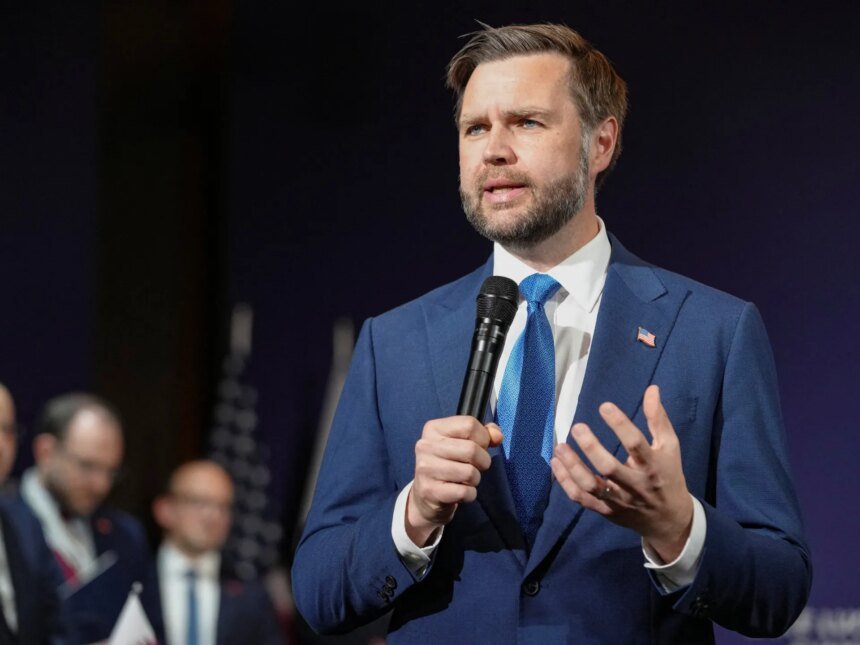
The controversy was not limited to the terms of the memorandum of understanding or its political dimensions, but rather quickly extended to symbols in the American administration itself, as part of the discourse circulating on digital platforms moved from criticizing the American approach to targeting prominent figures, most notably J.D. Vance, the US Vice President, who became one of the most prominent targets of the attack on social media platforms.
Read also
list of 2 itemsend of list
The Al Jazeera Network’s Open Source Unit tracked the course of the controversy since the White House announced the memorandum of understanding with Iran until the escalation that followed Vance’s statements criticizing some of Benjamin Netanyahu’s government ministers.
Monitoring reveals that the attack was not an organized campaign, as much as it was an intersection between pro-Israel voices and others close to the Iranian opposition, united by one narrative, which is holding the US Vice President responsible for the White House’s new approach towards Tehran, which led to Vance being likened to the “Iranian guide” or to a commander in the Iranian Revolutionary Guard on social media platforms.
Agreement ignites anger
The first wave began on June 14, 2026, after the White House announced the completion of the US-Iranian agreement, at which time Israeli calculations focused on the content of the agreement itself: What did Washington provide? What did Tehran get? Did the agreement ignore the issue of Iranian missiles and Iranian agents in the region?
The objection, at its beginning, was directed to the US administration in general, and to President Donald Trump and the negotiating team in particular, but this broad discussion gradually began to turn into a search for a person within the administration who could be considered responsible for pushing toward the deal or defending it politically.
At this stage, Jewish voices close to Trump emerged, including commentator Ben Shapiro, who described the agreement as a “disaster” and directly criticized Vance during an interview with the American “Fox News” network, considering that “the chief negotiator (Vance) did not serve the president optimally.”
Step up against Vance
The biggest escalation came after statements by the US Vice President during a press conference last Thursday in which he criticized some of Netanyahu’s government ministers, saying that if he were in the place of any member of the Israeli government, he would not have “attacked the only remaining strong ally in the entire world,” noting that “two-thirds of the weapons that protected them over the past months were manufactured and financed by the United States.”
Israeli ministers and accounts on the X platform began to gradually move the discussion beyond the terms of the memorandum of understanding towards attacking Vance and his role within the US administration in passing the deal with Tehran.
Israeli National Security Minister Itamar Ben Gvir attacked Vance’s positions, describing him as “dealing with the Nazis of the twenty-first century, in the same way that the United States dealt with the Nazis of the twentieth century.”
Ben Gvir said in another blog post, “Vance, the people of Israel have persevered through the generations and defeated all their enemies thanks to the Lord and the Holy Torah. Whoever supports us will win, and whoever turns his back on us will lose. Do not threaten us. Israel’s eternity does not lie.”
In the same context, Israeli Minister of Culture and Sports Miki Zohar wrote, “The intelligence we provide to the United States has saved the lives of countless American citizens. Technologies developed in Israel are used by the United States military before anyone else. The partnership between Israel and the United States is important to the free world.”
Pro-Israel accounts and personalities also emerged at the forefront of the wave of criticism directed at Vance, as they accused him of adopting positions that conflict with Israeli interests. Some publications described him as “anti-Semitic,” while others shared sarcastic descriptions, including considering him “the man who runs the Iranian Revolutionary Guard,” in an attempt to link him to Tehran.
Others also criticized Vance for his reference to Tel Aviv’s dependence on American military support, stressing that this dependence was not imposed on it, but rather came as a result of its strategic choices over the years.
Similar speech by the Iranian opposition
The interaction was not limited to Israeli accounts, but extended to other parties, including Iranian figures opposed to the agreement, and others close to the pro-Israel discourse, where Vance’s image was used in sarcastic contexts.
Accounts on social media platforms circulated complex posts showing Vance dressed as the Iranian leader, in an attempt to reframe his positions and portray them as closer to Tehran.
Interaction map
The interaction map prepared by the Al Jazeera Network’s Open Source Unit reveals that the attack on the US Vice President did not come from one side, nor did it move along one path, but rather was formed through multiple digital circles that met with one common goal, which is holding Vance responsible for the new direction in Washington’s policy towards Tehran.
The map included pro-Israel accounts, official and semi-official Israeli accounts, and right-wing activists in the United States, in addition to Iranian accounts opposed to the US-Iranian agreement.
It seemed clear that each circle entered the discussion from its own angle. The pro-Israel accounts linked Vance to Israel’s security, the right-wing accounts attacked him from the angle of the agreement with Iran, while the opposing Iranian accounts used sarcasm and modified images to present him as close to Tehran.
Despite the differences between these circles, they agreed on one narrative, which is that Vance is not just a vice president, but rather one of the faces who pushed, or defended, the new path with Iran.

Who sparked?
At the beginning of the interaction, some accounts played a key role in publishing the original material that sparked the controversy, including the “atrupar” and “ericmgarcia” accounts, which published clips and statements by Vance or conveyed press questions regarding his position on Israel and the agreement with Iran.
These accounts did not initially appear as part of the attack itself, but they provided the material upon which other accounts later relied. After the statements and clips spread, pro-Israel and conservative networks began to reuse them in an offensive manner.
Thus, the material moved from being news or a political clip to a tool in a broader digital campaign against Vance.
Amplify content
On the other hand, the “koshercockney” account emerged as one of the most prominent accounts that helped amplify offensive and sarcastic content against Vance.
The role of this account was not only to report the news, but to participate in pushing the mockery to a broader scope, especially through the pictures that re-presented Vance in the guise of an Iranian cleric, or linked him to the title of “Ayatollah.”
This type of content played an important role in simplifying the offensive message. Instead of explaining the details of the US-Iranian agreement, the satirical images summarized the idea in one message: “Vance, in the eyes of these calculations, is closer to Tehran than the position of Israel’s allies.”
Israeli department
The interaction map showed a clear presence of Israeli and pro-Israel accounts, and the role of these accounts varied between official and media discourse, and pro-Israel digital activity. But it agreed to link Vance’s position on the agreement to a broader narrative related to Israel’s security and its position in the face of Iran and Hezbollah.
In this circle, the attack on Vance was not separate from the agreement itself. He was presented as one of the faces pushing the American administration onto a path that, in the eyes of these calculations, might weaken the Israeli position in the region.

Iranian opposition
Iranian accounts opposing the agreement were not far from this wave, as they used sarcastic language and modified images to present Vance as a face close to Tehran.
Some of these posts depicted Vance in the clothing of an Iranian cleric, or linked him with expressions such as “the guide” and “the ayatollah,” in an attempt to turn him into a visual symbol of the agreement with Iran.
Map summary
The interaction map shows that the attack on Vance was not a single closed campaign, but rather a multi-source digital wave.
The wave began with political statements and clips, then influential accounts picked it up and reformulated it into offensive comments, sarcastic images, and simplified political messages.

Trying to contain the exchange
Israeli officials reported that Prime Minister Benjamin Netanyahu asked his ministers to refrain from directing personal criticism at US President Donald Trump, while tensions are escalating between Tel Aviv and Washington over dealings with Iran and Hezbollah.
The officials claimed – according to the Israeli website “I24 News” – that the Trump administration and his negotiating team misunderstand the ideology that drives Iran and Hezbollah.
According to the officials, Israel fears that Iran will exploit any potential agreement with the United States to rebuild its economy and enhance its military capabilities, in exchange for making limited concessions on its nuclear program and support for its allies in the region.