Published on 6/20/2026
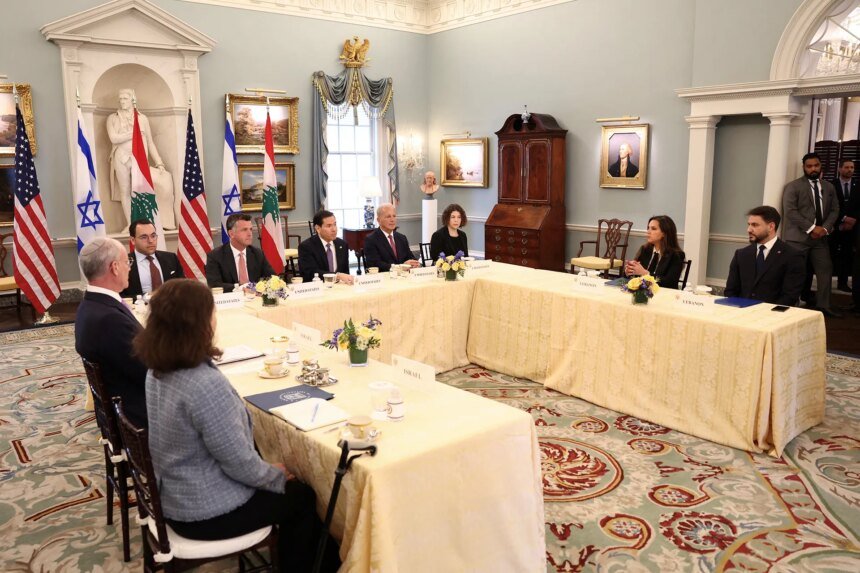
Yesterday, Friday, the US State Department announced the holding of a new round of direct negotiations between Lebanon and Israel in Washington, DC, during the period from June 23 to 25.
This is the fifth round of Lebanese-Israeli talks hosted by Washington, after four previous rounds that began last April, as part of a negotiating path aimed at reaching an agreement between the two sides.
US State Department spokesman Tommy Piggott said – in a statement – that Secretary of State Marco Rubio held a phone call with Lebanese President Joseph Aoun, during which they discussed the next round of negotiations.
The statement added that the two sides discussed the discussions scheduled in Washington, where “the two parties – as sovereign governments – will work to make progress towards a lasting peace.”
Piggott noted that Rubio praised what he described as “President Aoun’s courage in seeking to seize a historic opportunity to strengthen Lebanon’s sovereignty and recovery.”
The US Secretary of State also renewed – according to the statement – Washington’s support for the Lebanese government’s efforts aimed at establishing a fully sovereign state that lives in peace with its neighbors.
He considered that the negotiations represent “the only practical path for reconstruction, achieving economic recovery, and ending the recurring cycles of violence.”
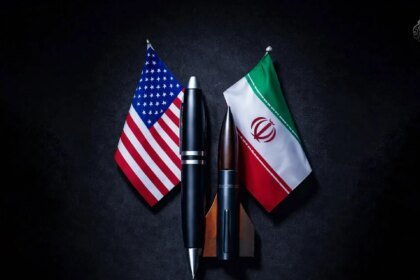
The announcement of the new round of negotiations comes two days after the United States and Iran signed an agreement stipulating the immediate and permanent end of military operations on all fronts, including Lebanon.
This coincides with an Israeli escalation in Lebanon, as the Israeli army launched – yesterday, Friday – more than 106 attacks, killing 47 people and wounding 97 others.

Create experimental areas
In the fourth round of negotiations organized at the beginning of this June, the United States announced that Lebanon and Israel had agreed to a ceasefire that included the establishment of what were called “experimental zones,” following the conclusion of two-day talks in Washington, amid the continued Israeli escalation in southern Lebanon.
The US State Department stated that the two parties agreed – under Washington’s guidance – to accelerate the establishment of “experimental areas” in which the Lebanese Armed Forces would exclusively control the land, excluding all non-governmental parties.
According to the American statement, control within those areas will be exclusively for the Lebanese Army, with the exclusion of all non-governmental parties, a clear indication that this area will be free of Hezbollah or any non-governmental armed entity.
Lebanese President Joseph Aoun revealed – in statements reported by Lebanese media on June 4 – that Lebanon proposed that the “experimental zone” include in a first stage the western and eastern regions of Zawtar and Qalaat Shaqif, indicating that implementation of the agreement may begin within 24 hours of the approval of all parties and the provision of the necessary guarantees.
The Lebanese President said at the time that the negotiations “were difficult, and they resumed after US Secretary of State Marco Rubio intervened following a request to suspend them from the head of the Lebanese delegation,” adding that “the agreement may be the last chance, otherwise each party should bear its responsibilities.”
He continued, “The agreement will be sustainable, and we are counting on the role of President Trump.”
Since last March 2, Israel has launched a massive attack on Lebanon, resulting in the killing of 3,980 people and the injury of more than 12,000 others, in addition to the displacement of more than a million people, according to the Lebanese Ministry of Health.
Israel has been occupying areas in southern Lebanon, some of them for decades, and others since the war between 2023 and 2024. During the current military operations, it has also penetrated more than 10 kilometers into Lebanese territory, in its deepest incursion since its withdrawal from southern Lebanon in 2000.