Published on 6/16/2026
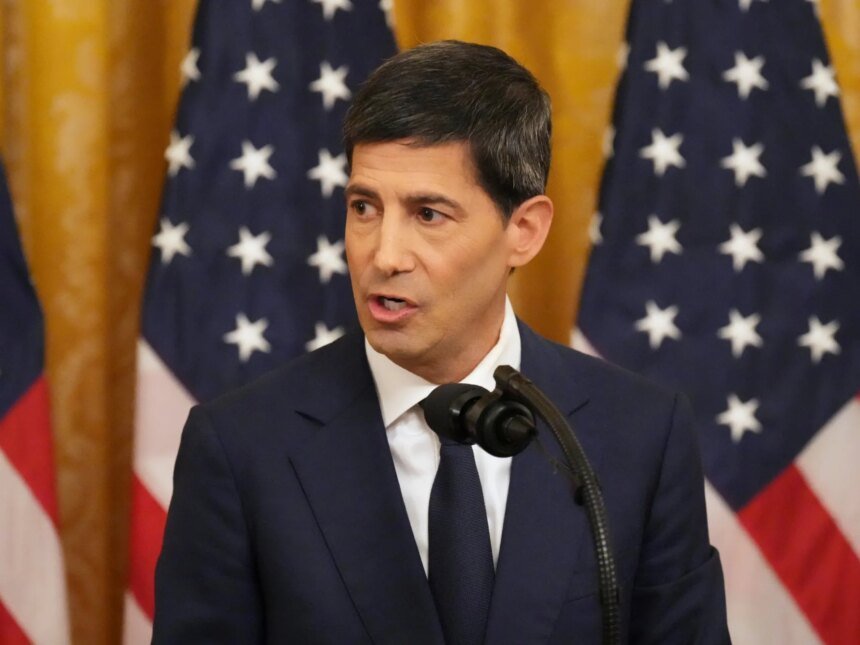
Kevin Warsh is the new head of the US Federal Reserve (the central bank). Today is Tuesday and tomorrow is Wednesday First meeting of the committee Monetary policy Specialized in determining Interest ratesAmid investors’ anticipation of what might emerge from this meeting.
It is widely expected, according to what the British newspaper “Financial Times” reported, that the Federal Reserve will maintain the interest rate at its current level, between 3.5% and 3.75%.
Read also
list of 4 itemsend of list
However, the Federal Reserve Committee may delete the phrase “tendency towards accommodation”, which was included in its latest statement, with the level of inflation rising to about 4.2% on an annual basis, according to the latest report of the US Bureau of Labor Statistics.
Three heads of the Federal Reserve branches had previously opposed the use of this phrase at the meeting last April, according to what the newspaper reported.
The latest report from the US Department of Labor indicated that the job market achieved good growth, better than expected, during last May, which means that the Federal Reserve will focus on establishing a balance between achieving the largest amount of employment and maintaining price stability.
The Financial Times indicated that any statements by Warsh that ignore the risks of inflation may be seen as a response to the demands of US President Donald Trump, who chose Warsh for his position, and repeatedly criticized former Chairman of the Federal Reserve, Jerome Powell, for not lowering the interest rate.
Warsh faces the pressures of high inflation, which may require raising interest rates to control prices, and Trump’s continued demands to lower interest rates.

Reduced pressure to raise interest rates
However, pressure on the Federal Reserve to raise interest rates to reduce inflation may decline with Trump announcing that he had reached an agreement with Iran to stop the war that caused a jump in oil and gas prices after the closure of the Strait of Hormuz, according to Bloomberg.
The price of oil fell by more than 4% yesterday, Monday, after the announcement of the agreement between Washington and Tehran, reaching $83 per barrel of Brent crude, the lowest price of oil since last March.
Bloomberg quoted Leslie Falconio, Head of Fixed Income Strategy at Global Wealth Management at the Swiss bank UBS, that the pressure on the Federal Reserve to raise interest rates will decline, after stopping the Iran war.
Leslie added that she expects the FOMC to abandon its easing approach at this week’s meeting, but expects the next step to be lower interest rates in 2027.
She believes that the Federal Reserve will wait before making any change in interest rates in light of good growth in the labor market, and may take its decision on changing the current level of interest in the first or second quarter of 2027.
In the same context, the Financial Times newspaper quoted an investment portfolio manager at JPMorgan Asset Management, Priya Misra, as saying that she expects Warsh to keep interest rates at their current level, and at the same time, he will remove references to monetary easing in the statement that the Federal Reserve usually issues after its meeting.

“He’ll have to wait”
On the other hand, the American newspaper “The Wall Street Journal” said that the new leader of the US Central Bank should wait before he changes the interest rate, even if he has plans to do so.
The newspaper added that the high level of inflation, as a result of the increase in the cost of energy after the Iran war, led to a shift in the discussion among members of the Federal Reserve Board about the possibility of raising interest rates, rather than lowering them.
The Wall Street Journal continued: “It is almost impossible for the Fed Chairman to overcome this situation,” even if he wanted to, indicating that Warsh may prefer to lower interest rates.
It is noteworthy that Warsh has previously criticized the many statements made by members of the Federal Reserve Board about the policies followed by the Council, according to what the “Wall Street Journal” reported, which means that he may talk less about what he plans to do in the future.
Source: Bloomberg + Financial Times + Wall Street Journal