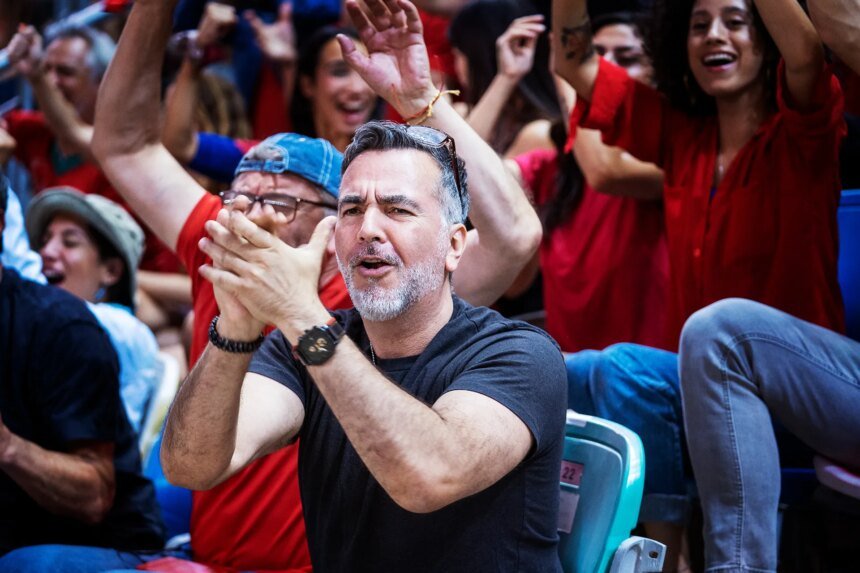
If you are a football fan, and one of those who wait for their favorite player to take to the field as they wait for the return of a dear person, then you may have experienced that strange feeling of familiarity towards someone who does not know you.
You rejoice for him when he scores, worry about him when he falls, and defend him if he is attacked. Perhaps you feel that his exit from the tournament is a personal loss, not just an athletic one. Here, encouragement is no longer just watching a match, but rather turns into an unequal emotional relationship. A relationship in which we feel close to someone who does not share the same knowledge as us.
Read also
list of 2 itemsend of list
A strong relationship…but it is one-sided
This feeling is not just an emotional exaggeration on the part of football fans, but rather a phenomenon known in psychology and communication as “parasocial relationships”, which are one-sided bonds formed between the audience and public figures such as a player, actor, or influencer.
According to psychiatrist Adam Borland, in an article on the Cleveland Clinic website, a person can feel a real connection with someone he does not know personally, only because of repetition, familiarity, and constant exposure to his image and story.
In the case of a football player, he does not only appear to fans on the field, but also appears at them in press conferences and through his accounts on social networking sites, in clips of crying and brokenness after injuries or defeats, and clips of celebrating victory.
This constant dose of visibility makes the player very familiar in the fan’s consciousness, as a face we always see at home, even if we have never met him once in reality.

We know him well…but he does not know us
In this type of relationship, strong feelings of admiration and love do not begin all at once, but grow gradually. Match after match, shot after shot, story after story, until the player becomes present in the details of our day. We wait for his statements after the meeting, we look for news about him, we get angry when he is attacked, and we imagine him in different life situations as if he were a friend we have known for a long time.
In an article about feelings of admiration for athletes, researcher Mingyi Ho explains to the Dutch Tilburg University Journal that fans may feel that they know the athletes personally, because they follow their performance, details of their lives, struggles, and victories. But the relationship remains one-sided; The audience knows, feels and imagines, but the player does not know his fans individually and does not share this amount of emotional closeness with them.
In major tournaments like the World Cup, this familiarity is multiplied; The player here does not represent only a club, but also carries the shirt of an entire country, and in the eyes of many he turns into an embodiment of deeper feelings: belonging, dignity, patriotism, and the collective dream. A player who runs after the ball with all his energy may seem as if he is running on behalf of millions watching him in homes, cafes and squares.
On the other hand, a study published in the American Elon University Journal of Communications Research indicates that prominent athletes are no longer just players, but rather have turned into personal brands who build their public image through their social media platforms, by sharing their diaries, training, food, family relationships, weak moments, and daily challenges. Thus, the observer feels that he is entering the “backstage” of the player’s life, and not just into the ninety minutes on the field.

The other side of celebrity admiration
In many cases, this familiarity is not a problem in itself. A football player may become for the fan a source of inspiration, a symbolic companion during a difficult period, or a model of discipline and overcoming failure. In an article entitled “Healthy and Worrying Aspects of Parasocial Relationships” on the Cleveland Clinic website, experts point out that these relationships may be healthy when they give a person a feeling of inspiration or joy, as long as they do not disrupt his real life and do not control his time and relationships.
But the problem begins when admiration turns into a feeling of personal right to the player’s life and decisions. Here the cruelest face of social media appears. The study issued by Elon University monitors how some followers address athletes through their accounts as if they have the right to evaluate their bodies, their choices, their private lives, and even their moments of weakness.
Someone may write a harsh comment and then justify it as “out of love” or “out of anger for the team,” while in reality this “love” turns into harmful psychological pressure that the player may only see in the form of a torrent of hurtful messages after a bad match.
The other side of this emotional closeness appears not only in cruelty, but also in sadness. The injury of a beloved player or his exit from the tournament may seem to some to be just a detail in the match schedule, but for many fans it turns into a real personal disappointment. Cleveland Clinic experts explain this as what is known as “parasocial grief,” when a person is affected by the loss or departure of a public figure with whom he was emotionally attached, even if they did not have a direct relationship.
In the World Cup, this sadness is magnified because the loss does not concern the player alone, but rather affects the image of the nation and shakes the story that we have built around it: the dream of a national team or the “last generation” of stars or a leader for whom we were waiting for a happy ending in which we invested a lot of emotions and follow-up.
Encouragement.. How to stay healthy?
All of the above does not mean that we should love footballers less, but rather that we should love them more consciously. Attachment to a player or team may give the fan a sense of belonging, create a social space in which people share joy, disappointment, and memories, and may support psychological health when it remains within reasonable limits.
Sports psychologist Daniel Wan, in a talk with the American Psychological Association about the psychology of sports fans, believes that sports affiliation may be an important part of people’s social and psychological lives, because it provides them with a collective identity and a common ground for conversation and communication.
But this affiliation becomes healthy when it remains within its limits: to be happy for the player and sad for him without seeking to possess him, to criticize his performance without hurting his humanity, and to remember that our realistic relationships should not be replaced by a one-sided relationship.
According to Cleveland Clinic doctors, parasocial relationships become worrying when they overwhelm a person’s life or compensate for a deep emotional deficiency, instead of remaining a fleeting source of inspiration or comfort. In cheerleading, perhaps the simple rule is: Love the game and its stars as much as you want, but never forget that the player is ultimately a human being, not a perfect symbol, and that the fan is also a human being with a life that should not be reduced to the fate of a player he does not know.