Published on 6/13/2026
After years of experiments in the United States and China, Europe is preparing to enter a new phase of autonomous transportation with the intensification of competition between Waymo, a subsidiary of Alphabet, the Uber platform, and Wayve, a British company specializing in self-driving technologies.
Today, the British capital, London, seems closer than ever to becoming the first major European arena to witness the operation of “robotaxi” services on a commercial scale, which opens the door to a technical and economic race that may completely reshape the urban transport sector.
These developments come at a time when global investments in autonomous driving technologies are accelerating, amid expectations that autonomous taxis will become one of the most important artificial intelligence markets during the next decade.

London…the first European battlefield
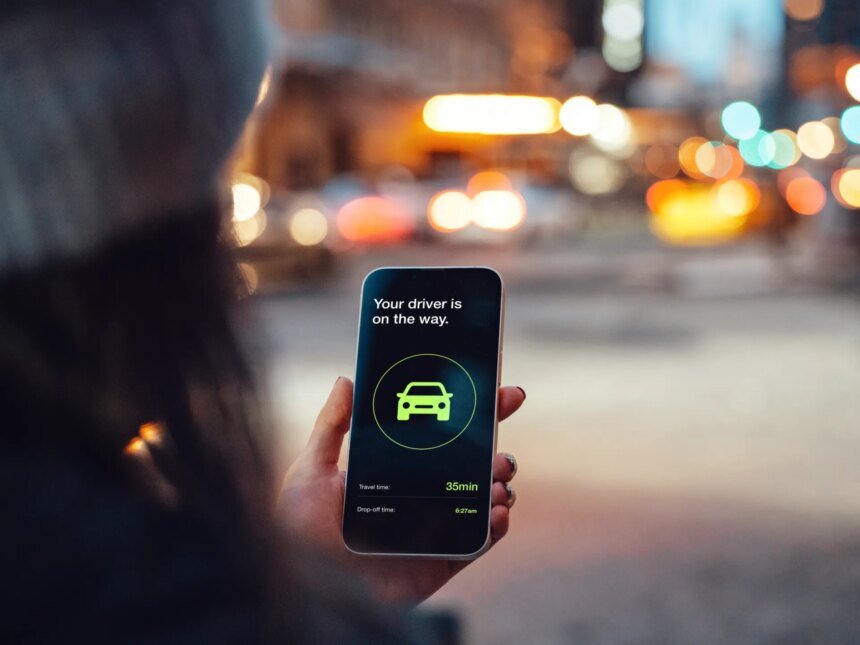
This year, Uber announced the opening of registration for users wishing to experience the first robotaxi trips in London, in cooperation with the British company Wave, in preparation for launching the service as soon as final regulatory approvals are obtained. According to a report published by Reuters, Uber expects to start the service in the coming months if it gets the green light from regulators.
The vehicles rely on self-driving technology developed by Wave, while Uber designed the passenger experience and linked the service to its global platform, which includes millions of users. The company also revealed that the user interfaces inside the vehicles support dozens of languages to facilitate the riding experience in a global city like London.
But Uber and Wave are not alone in this race.
Waymo enters Europe with confidence
At the same time, Waymo, which is currently the most advanced company in the field of autonomous taxis in the United States, is preparing to launch its service in London during the fourth quarter of this year, according to official statements reported by Reuters.
Waymo already operates robotaxi services in a number of American cities, and carries out more than half a million trips weekly through its autonomous fleet, which gives it a significant advantage in terms of operational experience and accumulated data compared to competitors. The company also confirms that its systems have achieved high safety rates compared to human driving, which is a crucial factor in gaining the trust of governments and users.
Waymo seeks to repeat its American success in Europe, benefiting from many years of testing and development that began since Google’s self-driving car project more than a decade ago.

Wave…the British bet on artificial intelligence
On the other hand, Wave represents the European hope to compete with giant American companies, as the company’s philosophy differs from many of its competitors by relying on a comprehensive artificial intelligence model based on direct learning from data instead of extensive reliance on high-resolution maps.
Alex Kendall, the company’s founder and CEO, says Wave’s approach relies on advanced neural networks that allow the vehicle to understand the surrounding environment and make decisions in a way similar to how modern artificial intelligence models such as GBT Chat learn. The company confirms that this approach may contribute to accelerating the deployment of autonomous vehicles in multiple cities without the need to rebuild detailed maps for each city separately.
Wave has succeeded in attracting huge investments amounting to about $1.5 billion, with support from major companies such as Uber, Microsoft, and Nvidia, in one of the largest funding rounds obtained by a British technology startup.

Fundamental difference in strategy
Although the ultimate goal of the three companies is the same, the methods for reaching it differ clearly. Voymo relies on an integrated operating model, as it develops the software and manages the service directly through its own application, giving it complete control over the operational experience.
As for Uber, it adopts a partnership strategy, providing the platform, user base, and operational structure, while specialized companies such as Wave develop self-driving technologies.
While Wave seeks to license its technology to car manufacturers and transportation companies around the world, rather than building its own commercial fleet similar to Waymo.
This difference makes the competition in London an important test to determine which business model will be more successful in Europe in the coming years.
The biggest challenge: laws and trust
Despite rapid technical progress, the main obstacle to the spread of robotaxi in Europe remains regulatory and societal. European laws regarding safety and legal liability are more complex than in some other markets, and European cities are characterized by narrow streets, heavy traffic, and diverse driving styles, which makes testing autonomous systems more difficult.
Field reports from London indicate that autonomous vehicles encounter an environment full of pedestrians, cyclists, construction works, and complex intersections, elements that constitute a real test of the capabilities of artificial intelligence to make decisions in real time.
Part of the public is still cautious about the idea of riding a car without a driver, despite increasing indicators showing the ability of autonomous systems to reduce accidents resulting from human error.

What does this mean for the future of transportation?
If the current experiments succeed, the European transportation sector may witness a radical transformation in the coming years, as autonomous taxis are expected to contribute to reducing operating costs, reducing traffic congestion, and improving the efficiency of movement within major cities.
It could also open the door to new services based on artificial intelligence, such as around-the-clock on-demand transportation, smart fleet management, and integration with public transportation networks.
But on the other hand, this revolution will raise important questions related to the future of drivers’ jobs, legal liability in the event of accidents, and the privacy of data collected by self-driving vehicles.
Accordingly, observers confirm that autonomous taxis are no longer just an experimental project or a distant future vision, but rather have become a reality that is rapidly approaching European streets.
Between Waymo’s operational experience, Uber’s commercial strength, and Wave’s technical ambition, London appears to be facing one of the most important technological battles in the transportation sector this year, and the outcome will not only determine the winner in the European robotaxi market, but may also shape the future of urban mobility in the world during the next decade.