Published on 12/6/2026
Morocco is studying a Chinese request to sign a free trade agreement between the two countries, in a move that may expand the access of Moroccan industries to the Chinese market, but at the same time raises questions about its impact on the existing trade deficit in favor of Beijing.
Moroccan Minister of Industry and Trade, Riad Mazour, said in an interview on Friday with Bloomberg Agency that the proposal is “under study,” explaining that Rabat is evaluating the impact of a possible agreement with Beijing on its economy, and that official talks have not yet begun.
Mazour added that an agreement of this type may give local manufacturers wider access to the Chinese market, and help Morocco diversify export destinations away from Europe, but he said that any new agreement requires consultations with companies and government agencies, and an evaluation of its relationship with Morocco’s existing free trade agreements.
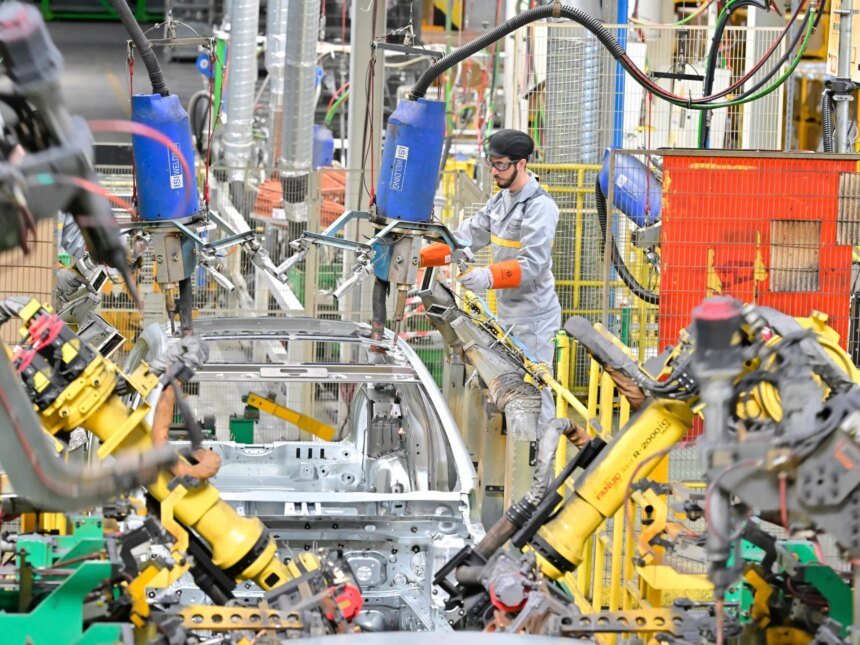
Over the past two decades, Morocco has built an export-oriented industrial base, especially in cars, aviation, and batteries, and has trade agreements with several markets and blocs, including the European Union, the United States, Turkey, and a number of Arab countries.
Widespread deficit
The study of the agreement comes at a time when China’s commercial presence in Morocco is expanding. The Chinese embassy in Rabat said that the volume of bilateral trade exceeded $10 billion in 2025, recording a historic level, while the Moroccan Exchange Office report showed that China was Morocco’s main Asian partner in 2024.
According to data from the Exchange Office, trade exchange between Morocco and China increased by 18.4% in 2024, equivalent to 14.6 billion dirhams ($1.58 billion), reaching, according to calculations based on the report, about 94 billion dirhams ($10.1 billion), continuing growth for the 13th year in a row.
But the trade balance remained strongly tilted in favor of China, as Morocco’s deficit with it reached 86.3 billion dirhams ($9.3 billion) in 2024, compared to 72.5 billion dirhams ($7.82 billion) in 2023, after Moroccan imports from China increased by 14.2 billion dirhams ($1.53 billion), while exports to it only increased by 448 million dirhams ($48.3 million). dollars).
At the level of general foreign trade, Morocco’s imports of goods increased in 2025 to 822.2 billion dirhams ($88.7 billion), and exports increased to 469.1 billion dirhams ($50.6 billion), expanding the total trade deficit to 353.1 billion dirhams ($38.1 billion), according to preliminary data issued by the Exchange Office.
This trade imbalance makes the evaluation of any agreement with China more sensitive for local industries, especially since a wider customs opening may increase the competitiveness of Chinese products in the Moroccan market, while Rabat is betting on greater export opportunities in the Chinese market.
Chinese investments
The Moroccan minister’s statements coincided with European concern about the growing Chinese industrial investments in Morocco, especially in battery supply chains, but Mazour rejected these concerns and said that his country is open to foreign investments regardless of their source.
Data from the Chinese embassy in Rabat indicate the expansion of industrial cooperation between the two countries in several areas, including the Mohammed VI Tangier-Tech City project, Chinese companies winning works on the high-speed train project between Kenitra and Marrakesh, and projects in wind energy and materials related to new energy.
China said that, as of May 1, 2026, it began applying a comprehensive customs exemption on its imports from 53 African countries with which it maintains diplomatic relations, considering that the step reduces the cost of African products entering its market, a factor that may enter into Rabat’s calculations when assessing the need for a broader bilateral free trade agreement.
Mazour said that Morocco is also studying a free trade agreement with Chile, adding that the agreement may support Moroccan exports, such as cars, to the Mercosur bloc in South America.