Published on 6/6/2026
|
Last update: 12:41 (Mecca time)
Waves of displacement continue in southern Lebanon in the wake of field escalation and increasing Israeli threats, amid mounting pressure on the towns receiving the displaced and local attempts to secure alternative shelter centers with diminishing capacity.
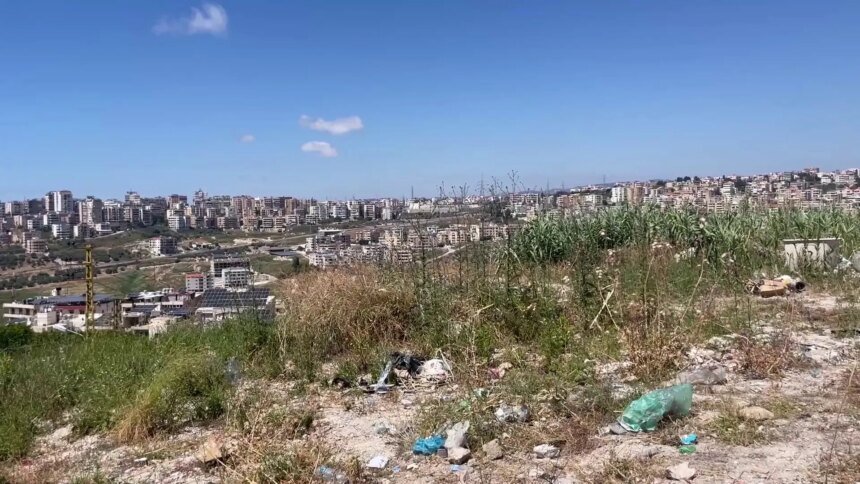
In a tour prepared by journalist Bassam Fakih for Al Jazeera live from the Sidon neighborhood in southern Lebanon, he reported that the region is witnessing a continuous influx of displaced people after Israeli warnings were issued since the morning hours to more than 10 villages in the Nabatieh and Zahrani districts, followed by raids on a number of those areas.
He pointed out that the town of Anqoun near Sidon, which was previously considered a relatively safe area, witnessed a new displacement after receiving threats, despite it hosting two shelter centers that housed more than 2,800 displaced people, which prompted residents to move towards the Sidon neighborhood and the city, while others continued on their way towards Beirut.
In an attempt to accommodate the increasing pressure, the Haret Sidon municipality opened last week the “Dignity Center” to host the displaced, stressing that it is not a camp but rather a temporary residence space, which includes tents set up on a street that was closed specifically for this purpose.
One of the displaced women from the town of Shahhour in the Tire district said that she arrived at the center “miraculously” after the intensification of the bombing, confirming that she received basic accommodation needs immediately after her displacement.
Capacity under pressure
For his part, the mayor of Haret Sidon, Mustafa Al-Zein, explained that the center was established within 24 hours in cooperation with the municipal council and volunteers, to accommodate dozens of families who did not find shelter.
He pointed out that the number of displaced people in Haret Sidon ranges between 38 and 40 thousand, adding that the new wave of displacement prompted the municipality to distribute families to private homes, and direct others towards northern Lebanon due to overcrowding.
Al-Zein stressed the municipality’s work to provide basic services despite limited capabilities, explaining that local initiatives and civil support contribute to covering part of the needs, in addition to assistance provided to families residing in shelter centers.
He pointed out that preparations are continuing in anticipation of any additional escalation, while keeping the option of establishing new centers on the table if the waves of displacement continue.
Keep an eye out for the return
In testimonies from inside the center, a displaced woman from the town of Adloun described the living conditions as providing food and services, but she considered that being away from home remains the most difficult burden.
In turn, another displaced person spoke about repeating the experience of displacement after a previous return during a truce period, explaining that the conflicting news regarding the ceasefire makes the decision to return postponed for many.
Fakih concluded his tour by pointing out that the services provided within the shelter centers reduce the burden of living, but they do not dispel the state of anticipation and waiting that the displaced are experiencing in the hope of returning to their towns with any possible field breakthrough.
This comes amid the escalation of Israeli aggression against towns in southern Lebanon, despite the fragile ceasefire that has been in effect since April 17, which Washington extended until the beginning of next July.
Against the backdrop of the Iran war, since March 2, Israel has launched an expanded aggression against Lebanon, leaving 3,556 dead and 10,870 wounded as of Friday, in addition to more than a million displaced, according to official data.