Published On 4/6/2026
|
Last update: 18:13 (Mecca time)
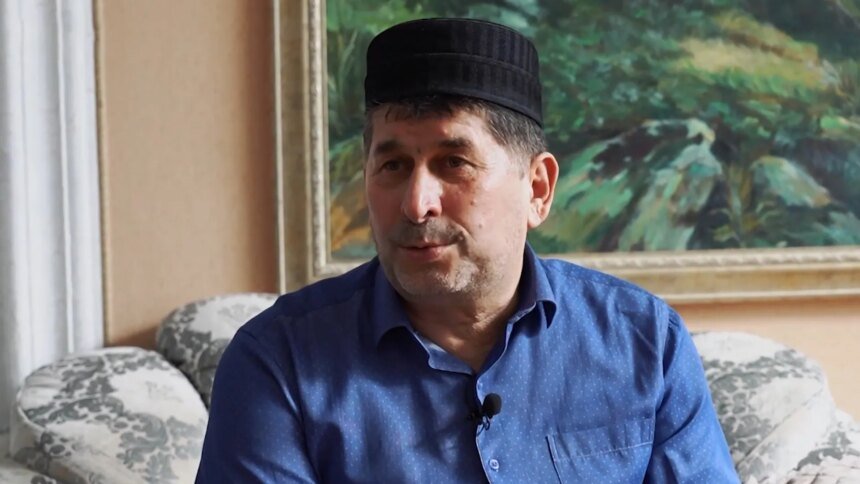
On a journey that spanned more than 35 years in the art of Arabic calligraphy and Islamic decoration, calligrapher Suleiman Ashirlayev from the Russian Republic of Dagestan wrote the entire Qur’an in his own handwriting, in an experience that is considered one of the rare works in the region in recent decades.
Suleiman, known in Dagestan for his work decorating mosques, is widely appreciated within religious and cultural circles, and has also received local honors and awards in recognition of his long career in preserving and developing the arts of Arabic calligraphy.
Asherlaev confirmed – in an interview with Al Jazeera – that his relationship with Arabic calligraphy began since childhood when the shapes of letters attracted him for the first time, recalling one of the first memories that linked him to this art.
He said: “I remember before I entered school, when I wrote my name for the first time with a red pencil after I saw it in my father’s handwriting. I was about five years old, and from that time my real interest in Arabic calligraphy began.”
Over the years, Ashirlaev moved between dozens of mosques in Dagestan and other regions, where he participated in the decoration of more than 100 mosques, before he decided to embark on the experience of writing the entire Qur’an, a project that required almost full time.
The calligrapher indicated that he devoted most of his time to completing the Qur’an, explaining that the work took 4 months and 19 days of continuous daily writing, with the exception of prayer times and some necessary obligations within his village.
The calligrapher’s commitment to the principles of art
Asherlaev does not link the value of handwritten Qur’ans only to their age or rarity, but rather believes that the main factor lies in the quality of the handwriting and mastery of the technical rules adopted in this field.
He said that many people offer him old Qur’ans for evaluation, but he believes that the real value is related to the beauty of the writing and the extent of the calligrapher’s commitment to the principles of art established by the great calligraphers over the centuries.
Asherlaev chose to write the Qur’an using the Thuluth script, one of the most complex types of Arabic script, which is the script used to write decorations and verses on the covering of the Kaaba. He told Al Jazeera that his choice of this type of script came with the aim of presenting a work that reflects the connection of the people of Dagestan and the Caucasus with the Holy Qur’an.
The Dagestani calligrapher said that this project for him was not just a work of art, but rather an attempt to present an image that expresses appreciation for the word of God through the art of Arabic calligraphy.