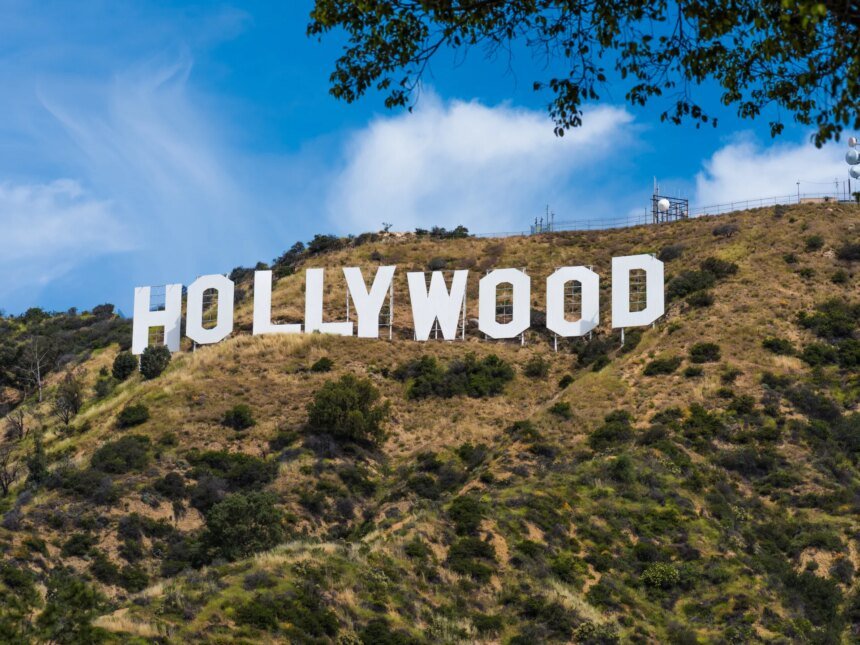
When dismantling Hollywood’s relationship with the history of events and their impact on the public, the equation appears clear, which is that in pivotal historical periods, the facts were on one hand and the image that Hollywood conveyed of the events that the world experienced was on the other hand. There is no doubt that Hollywood films reshape events according to pragmatic political and ideological visions, and manipulate the minds of viewers until they adopt the facts that its films create. Thus, it writes history with purely Hollywood pens, and promotes that history as the absolute truth.
Hollywood’s manipulation of the public and directing its opinion towards its own vision is often evident through depicting the wars that the United States of America fought and even those that it did not fight. For more than a century, most of the films produced by Hollywood companies identified with the American political position and became a support for the White House’s narrative of history.
Read also
list of 2 items
end of list
In an interview published by the UNESCO magazine in its July 1993 issue with the American director Oliver Stone, the latter admitted that films manipulate the public’s conscience and direct their collective mind towards fully comprehending the image they promote. In that interview, Stone says:
“Good films create your perception of who the villain is. I have to say that the film industry has often distorted history. It is famous for that. We have undoubtedly made heroes out of empty people.”
White goodness
In 1915, the film “Birth of a Nation,” directed by David Wark Griffiths, was shown. Although the film revolutionized photography in the era of silent cinema, it sparked controversy because of its clear racist tendencies, its adoption of white supremacy, and its glorification of the Ku Klux Klan.
The events of the film deal with the period of the American Civil War, and the film’s characters of African descent, played by white actors with black faces, were depicted as naive and aggressive, while the Ku Klux Klan appeared in the role of savior fighting black barbarism.
advertisement
Despite the controversy surrounding the film, a special screening was devoted to it at the White House and it was watched by President Woodrow Wilson, who literally said during that screening, “It is like writing history with a camera, and my only regret is that everything in it is horrifyingly real.” It seemed that the White House had captured something important, which is that the United States can use a soft weapon in its wars, which is cinema.

Black Africans in the United States were not the only victims of negative stereotyping in cinema; indigenous people had their share of artistic racism.
In 1924, John Ford directed the film “The Iron Horse,” in which he depicted an unequal conflict between the indigenous people and the Americans who began building a railway that divided the indigenous lands. The film depicted that conflict, far from being a colonial issue, but rather a conflict between the hostile and savage Native Americans and the whites who were trying to defend themselves and protect their project.
Often in films that do not have a clear colonial vision, the Native Americans appear as a dramatic event of suspense to feed the image of the white hero who triumphs in the end, and this was clear in the films “Cimarron” by director Wesley Ruggles, which was shown in 1931, and in the film “The Carriage of Horses” by John Ford, which was released in 1939.
While Hollywood draws parallels with US policy, enemies and villains, it sometimes refrains from depicting other wars such as the Spanish Civil War, as happened with the movie “The Siege”, in which American producer Walter Wanger wanted to produce a film about the Spanish Civil War, but was subjected to severe censorship that led to the suppression of details referring to that war.
“Neutrality rules imposed by the 1937 Congressional Neutrality Act prevented Hollywood films from taking sides in European conflicts,” researcher Claire DeMoulin says in a study titled “The Siege and the Spanish Civil War in Hollywood: Balances of Conflict in the Context of Political Neutrality.” “The filmmakers sought to distort the narrative enough to avoid explicit reference to the Civil War. Therefore, terms such as Loyalists, Republicans, and Fascists were not used.”
World War II
A study entitled “Cinema and Propaganda in the United States of America” says: In fact, Hollywood clearly appeared as a mirror reflecting American military trends at the outbreak of World War II. At that time, the United States of America had not actually entered the war, but at the beginning of the forties it began preparing to enter it. In 1940, Frank Borzage directed his film “The Mortal Storm.” The film depicts the danger of Hitler’s rise to power and its impact on the Germans.
The study “Cinema and Propaganda in the United States of America” says: “In 1942, President Roosevelt invited the most famous faces of cinema to the White House, including John Ford and Frank Capra, and asked them to make dozens of films dedicated to American war propaganda in World War II.”
advertisement
cold war
After nearly three years of glorifying Russia’s victory over the Nazis in the “Why Do We Fight” series of films, Hollywood turned against the Soviets and transferred them to the ranks of enemies and villains.
In 1948, William Wellman directed his film “The Iron Curtain,” which tells the story of a Soviet spy who tried to seize secret military documents, some of which were related to atomic energy. However, he felt guilty and doubted about the operation, so he decided to hand over the secret documents he had embezzled to the Canadian government despite Soviet threats to him.
In 1968, at the height of the American war in Vietnam, John Wayne and Ray Kellogg directed the film “The Green Berets,” and the directors’ lens was not wide enough to depict the barbarism of American soldiers nor their crimes they committed against the Vietnamese.
“The Green Berets” was one of many films that depicted the American war in Vietnam as a legitimate war, along with “Missing in Action” (1984), directed by Joseph Zito, which portrays the Vietnamese as villains against the saga of an American soldier who went through the process of freeing American prisoners.
During the Cold War, in conjunction with the involvement of the United States of America in Vietnam, Hollywood followed two parallel lines: the first was taken by most directors to reverse the reality of what was happening on the field and depict the heroism of American soldiers facing the evil Vietnamese enemy. The second line was the least impetus, as Hollywood produced films that more clearly narrated the truth of what was happening in Vietnam, such as the film “Platoon” by director Oliver Stone, which was released in 1986, where the film depicted some of the crimes committed by American soldiers against villagers. From Vietnam.
During the war, it seemed that the Pentagon’s hand was somewhat turned away from Hollywood studios, which is understandable, especially since a large portion of Americans were opposed to their country’s involvement in Vietnam.
Iraq
In 1993, the movie “Hot Shots Part Deux” by American director Jim Abrahams was released, and that was nearly two years after the end of the Second Gulf War.
This film is classified in the list of comedy films, and unlike the first part of it, which was released in 1991, a main comic character appeared in the film, which is the character of former Iraqi President Saddam Hussein, who is killed by the American president in a way that contains exaggerated sarcasm.
A full decade after the release of the second part of director Jim Abrahams’ film, American forces invaded Iraq under the pretext of possessing weapons of mass destruction. US President George W. Bush exploited Americans’ shock over the September 11 attacks to convince everyone to invade Iraq, and weapons of mass destruction were a reason that was difficult to believe for a large part of the world except Hollywood.
American director Oliver Stone says in his interview with UNESCO magazine: “Someone told me that the Gulf War was not a war, but rather a television movie.
No one was killed on our side and we did not see bodies on the other side. “There were six Time magazine cover reports about the situation before the war, and at the end of them Saddam Hussein looked like another Hitler, complete with a mustache.”
Hollywood produced an arsenal of films about the war on Iraq that was divided into two directions. The first depicted the Iraqis as either terrorists or dangerous enemies threatening American soldiers. The second direction was to focus on the psychological and social impact of the war on American soldiers fighting in Iraq. The two directions taken by Hollywood did not, in any case, cover the tragedy of the Iraqis during that war.
One of the films that took the second direction was the film “Home of the Brave,” directed by American director Irwin Winkler in 2006, which tells the story of four soldiers who experienced psychological suffering after their return from Iraq, and the film focused on their struggle against memories of war.
advertisement
On the other hand, films such as “Green Zone,” released in 2010, and “American Sniper,” directed by Clint Eastwood, appear to be highly misleading. For example, “Green Zone” portrays Iraqis as either terrorists or corrupt, while the hero of “American Sniper” appears as the invincible soldier who kills his victims in cold blood. This film was a great success, which surprised the American philosopher Noam Chomsky, who asked with astonishment during a meeting held in Cambridge in 2015, “What is the patriotic film that captured the hearts of ordinary Americans? It talks about the deadliest sniper in American history, a man named Chris Kyle, who claims to have used his skills to kill hundreds of people in Iraq.”
Israel in Hollywood
It is not an exaggeration to say that Hollywood often sided with Israel until it swayed public opinion towards its own vision, as it was able, in a skillful way, to extract from the minds of Americans and Europeans the stereotype that had been engraved in their imagination for decades.
In fact, this was not a coincidence. Rather, many factors intertwined to change that image. In the 1950s, Hollywood actually began to portray Israelis as victims, and its films clearly dealt with the suffering of the Holocaust. Sympathy for Israel reached its peak in the late 1960s, despite Israeli crimes and repeated attempts to exterminate the Palestinian people. Researcher Hanan Omri notes, in a study entitled “Portraying Israeli Characters in Hollywood Films (1948-2008),” that the position toward Israel “changed after… Its victory in the Six-Day War in 1967, becoming a major military power, is said to have made American Jews proud of their Jewish identity for the first time and ready to declare it publicly.
In 1960, the film Exodus, directed by Otto Preminger, clearly presented the American vision of the Israeli occupation of Palestine. The film narrates the journey of the Jews’ exodus to the “Promised Land”, and depicts their conflict with the British there, and then with the Palestinians. In the end, the Jews triumph in achieving their dream of settling in their “original homeland,” according to the film.
Hollywood is no longer just an entertainment industry, but has turned into a force that writes history with its images and narratives and presents it to the world from an American angle that imposes itself as the dominant narrative. However, leaving this field limited to one cinema means accepting a single-minded history, in which the experiences of other peoples are marginalized or presented in a distorted way. Hence the necessity for international cinema, and Arab cinema in particular, to take the initiative to write its own history before the American camera devours it along with the dollar.