Published On 4/28/2026
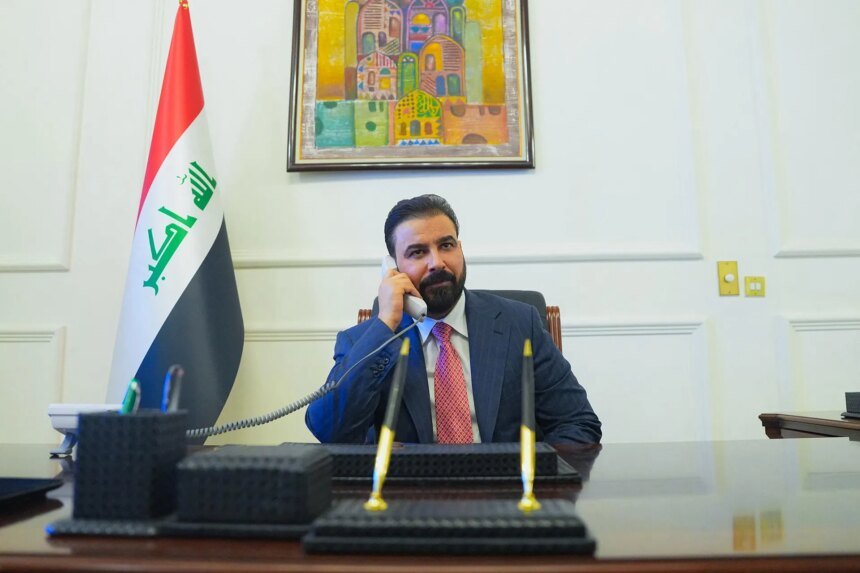
While the Iraqi street was awaiting the name of the man who would be agreed upon by the components of the coordination framework, Ali al-Zaidi was announced in charge of forming the new government, raising more questions than he provided answers.
During Tuesday’s episode of the “Behind the News” program, political analysts dismantled the dimensions of this choice, trying to answer the most important question, which is: Is Iraq facing a real change in approach, or just a change in faces to perpetuate the regime?
After weeks of tensions and conflicts between the components of the coordination framework, as each pole refused to concede to the other, Al-Zaidi’s name emerged as a “necessity option,” according to the description of the professor of political science at Al-Mustansiriya University, Issam Al-Fayli.
Iraqi political analyst Saif Al-Saadi considered that what is more important than his being a youthful figure with an economic background is that he is “outside the traditional political box,” which makes him formally acceptable as a compromise solution to end the blockage.
Iyad Al-Anbar raised a fundamental problem: It lies in the fact that Al-Zaidi does not have a political party or a parliamentary bloc to support him, which puts him in a trapped position among the blocs that nominated him.
The Iraqi academic pointed out that this situation raises a question about his ability to choose his ministerial cabinet freely, wondering about the consequences of this matter. Will the framework leave him the freedom to choose, or will the Zaidi be born restricted by the demands of quotas and the distribution of ministerial quotas as is usual?
Analysts believe that the political blocs are still dealing with the ministries as “electoral entitlements,” which may make Al-Zaidi merely a director of implementation of the framework’s interests instead of a prime minister with full powers.
What challenges does it face?
Al-Saadi spoke about the nature of the complex administrative and political challenges facing Ali Al-Zaidi, which begin with the narrow constitutional deadline of thirty days for the formation of the ministerial cabinet and the government platform amid…
An unfavorable environment and sharp regional and international tensions.
Al-Zaidi also clashes with the nature of the “political system” and the controlling “cartels” that turn the exception into the rule and hinder any real treatment, in addition to the dilemma of administrative corruption, dollar smuggling, and factional weapons, which arouses the ire of the international community, according to Al-Faili.
Perhaps the deepest challenge lies in his lack of professional experience within state institutions, and the fact that he is a designated president without a party or parliamentary bloc, which makes him “trapped” between the dictates of the blocs demanding their ministerial shares and his ambition for change, which may transform his role into a mere “director general” to manage the interests of the coordination framework instead of exercising his powers as a sovereign prime minister, according to Al-Anbar.
Blessed be the veto
On the external level, academic Issam Al-Faili considered that Al-Zaidi’s success is not only dependent on internal consensus, but rather is pending the approval of the American veto. In his reading of the international situation, Al-Fili wondered whether Washington would follow the example of its allies in Britain, France and Germany in blessing this choice, or whether it would go towards activating the political “veto” against Ali Al-Zaidi.
Analysts believe that the veto remains a drawn sword and is linked to the extent of the new government’s response to Washington’s list of strict requirements regarding three thorny files, which are:
- Dollar smuggling: a sensitive file affecting the joint American-Israeli economy.
- Faction weapons: and the extent of the government’s ability to control them.
- The relationship with Iran: balancing Iranian influence against international obligations.
Analysts believe that Washington may give Al-Zaidi a “test period” for months, during which it will monitor his seriousness in dealing with these files before taking a final position.
The economy bets against the reality of quotas
Regarding the fact that Al-Zaidi is a man with an economic and legal academic background, the bet promoted by the coordination framework is to advance the economy. But experts warned that the problem in Iraq is not the nature of the people, but rather the nature of the political system.
The quota system, which turned the exception into a rule, is capable of swallowing up any “technocrat” if he does not have the will and ability to confront, according to Al-Saadi.
Analysts pointed out that the selection of Al-Zaidi revealed the depth of the differences within the coordination framework, as he was preferred because he was a completely new face over the traditional faces to avoid internal explosion. However, the challenge remains: Will Al-Zaidi be able to withstand four years, or has he only come to calm the storm and cross a critical stage?
Analysts concluded that the selection of Ali al-Zaidi represents an attempt by political forces to introduce an “economic technocrat” to absorb popular resentment and meet international requirements, but the reality on the ground indicates that quota restrictions and regional pressures may make his mission “almost impossible” unless there is a radical change in the decision-making mechanisms within Iraqi state institutions.