Published On 5/22/2026
|
Last update: 15:29 (Mecca time)
The expansion of the use of assault marches in southern Lebanon has brought about a remarkable transformation in the nature of the field confrontation, as small marches whose cost does not exceed a few hundred dollars have begun to worry defense systems worth billions, due to their high ability to monitor their targets with flying eyes and hit them with extreme accuracy.
Shaima Boualem says, in a report she prepared for Al Jazeera, that the secret of the growing importance of these FPV drones, which Hezbollah is increasingly using on battlefields, lies in their structure based on three integrated industrial elements:
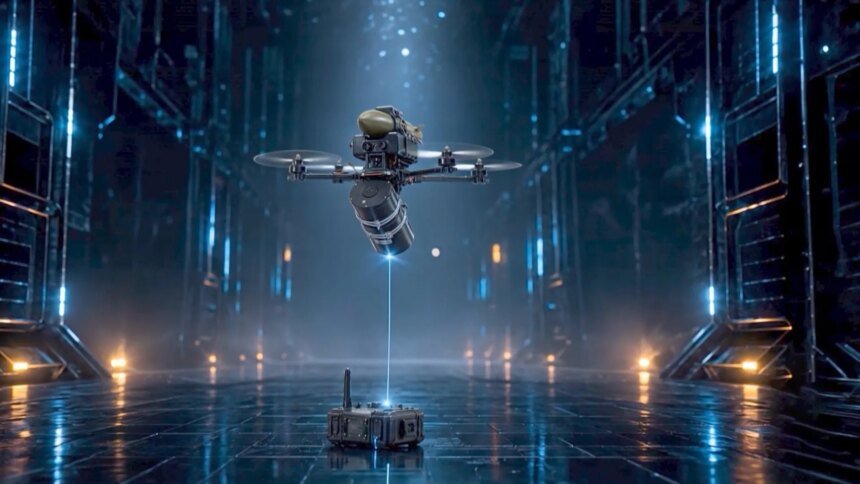
- The plane itself: It is made from commercial components, most of which are Chinese, in addition to 3D-printed parts, at a cost ranging between 300 and 500 dollars for simple models, and up to 4,000 dollars for the largest ones.
- Optical fiber cable: It is a very fine thread, no larger than dental floss, that connects the operator to the aircraft with a direct physical bond. This thread completely neutralizes the effectiveness of electronic jamming systems because the aircraft does not emit any targetable electromagnetic signal, and the cable extends for a distance ranging between 10 and 30 kilometers, allowing it to reach distant targets.
- Military payload: It is the heart of the strike derived from the specialized RPG-7 family of missiles, which vary according to the nature of the target.
Lethal payload.
The warheads used form an integrated family, distributed as follows:
- Model “PG-7VL”: It has a diameter of 93 millimeters, penetrates up to 500 millimeters of armored steel, and is effective against armored vehicles and fortifications.
- Dual “PG-7VR” model: It is 105 millimeters in diameter and operates in two stages, the first detonates the reactive blast armor, while the second penetrates the vehicle’s primary armor with a force of 600 to 900 millimeters of homogeneous steel.
- Thermal Diffusive Model “TBG-7V”: With a diameter of 105 millimeters, it is used in clashes and against groups of individuals.
Neutralize the human element
The advantage of relying on these drones is that they eliminate the need for the missile launcher in direct confrontations, and target the structural weaknesses of combat vehicles, such as crawlers and rotating towers, with high optical accuracy, via a camera that sends its signals without interruption through the cable.
According to the report, more than 27 documented Hezbollah strikes have been monitored since February 2026, most of which targeted Israeli “Nimr” and “Merkava” armored vehicles.
Yesterday, Thursday, Israeli news reports said that a number of senior officers in the occupation army were dissatisfied with the nature of the operations in southern Lebanon, saying that they had become like “ducks” in the range of attacks.
For its part, Haaretz newspaper quoted officers participating in the fighting in Lebanon as saying that they are conducting operations under a constant threat posed by Hezbollah’s assault marches.
It is noteworthy that the first documented field appearance of this type of drone was recorded in 2024 during the Russian-Ukrainian war, before it quickly transformed, with the escalation of fighting, from a technology of limited use to a pivotal tool in reconnaissance and attack missions.