Published On 4/24/2026
Yesterday, Thursday, Britain and France expressed their hope to formulate a military plan to protect the Strait of Hormuz and work to keep it open as soon as the war on Iran ends.Resuming trade flows through this vital corridor.
In an effort to make this plan a success, military planners from more than 44 countries participated in talks described as “constructive” in London over the course of Wednesday and Thursday, at the joint permanent headquarters of the United Kingdom in Northwood.
Participants in the Strait of Hormuz Military Planning Conference sought to build on talks held by British Prime Minister Keir Starmer and French President Emmanuel Macron in Paris last week, and agree on a defense plan that would restore confidence in commercial shipping.

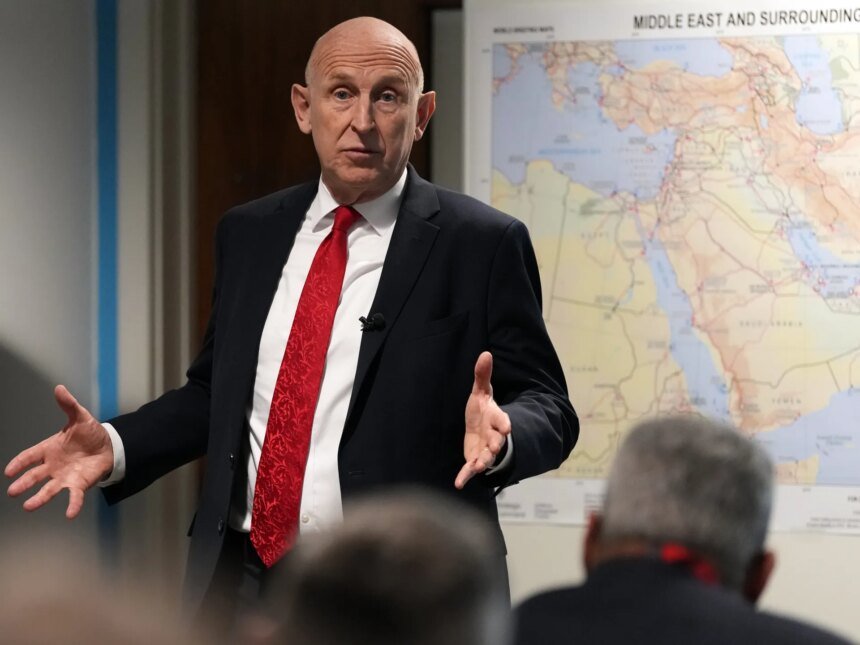
Military planners discussed the possibility of establishing a multinational mission led by the United Kingdom and France to protect navigation in the Strait of Hormuz after reaching a sustainable truce, according to British Defense Minister John Healey and French Minister of the Armed Forces Catherine Vautran.
The two ministers expressed – in a joint statement – their confidence in “the possibility of achieving real progress,” while the British Defense Secretary told attendees that “millions of people” depend on the success of this meeting because of the importance of the Strait, and added, “We cannot let them down.”

“International trade, energy, and the economic stability of all our nations depend on freedom of navigation in the Strait,” Haley said during the meeting, and called for “practical military plans.”
For his part, British Prime Minister Keir Starmer said that more than 12 countries have agreed to participate in the mission aimed at securing navigation in the Strait of Hormuz.
With attacks across the region almost completely halted after the ceasefire took effect, the United States and Iran continue to exert pressure regarding the maritime trade corridor, while Iran warned on Wednesday that it will not reopen the Strait of Hormuz as long as the United States continues to blockade its ports.
It is noteworthy that the Strait used to pass through a fifth of the world’s oil, and Iran’s effective closure of this vital supply route after the start of the US-Israeli bombing campaign at the end of last February caused a global economic shock, which led to a sharp rise in energy prices.