


Published On 9/7/2026
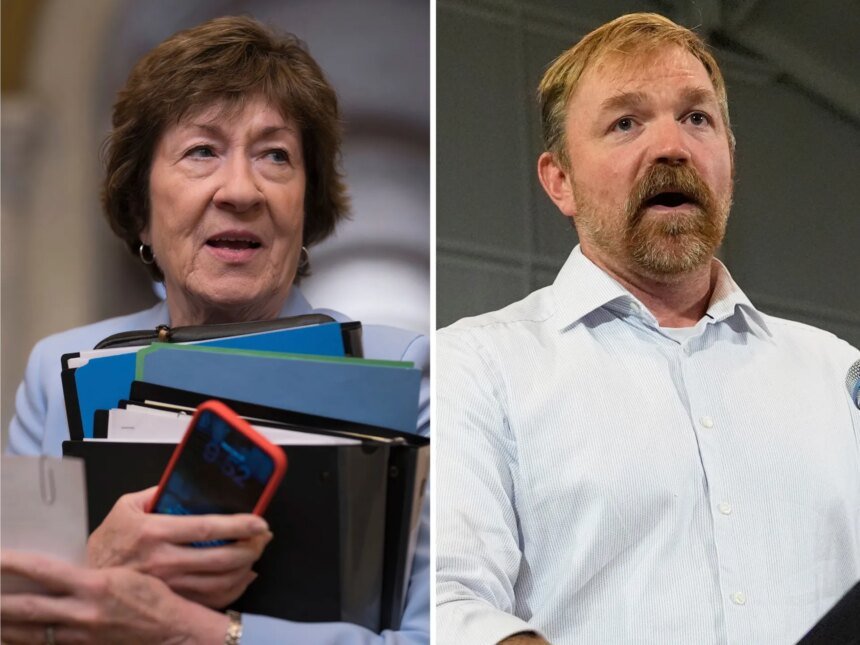
Graham Blattner, the Democratic candidate for the US Senate for the state of Maine, announced yesterday evening, Wednesday, that he was withdrawing from the electoral race after being accused of sexual assault, which is a setback for one of the party’s most prominent opportunities to seize a Republican-controlled seat, and threatens the Democrats’ efforts to regain power in Washington.
Plattner’s withdrawal came days after a woman, who was in a previous relationship with him, accused him of forcing her to have sex in 2021, accusations he strongly denied, stressing that they were “false.”
But pressure within the Democratic Party quickly escalated, as prominent leaders, including Senate Democratic Leader Chuck Schumer, called for Blattner’s withdrawal, while the party threatened to deprive his campaign of financial support.
“We are suspending our election campaign,” Blattner said in a video clip he posted on the X platform. “This is very difficult, because some will consider it an admission of guilt, but it is certainly not the case.”
Last month, Blattner won the party’s primary elections in the state, knowing that he is a newcomer to the world of politics. His rhetoric against the political establishment was well received by the voting base, while observers likened his political rise to that of President Donald Trump.
Maine is considered a pivotal state for controlling the closely divided Senate, and Democrats were in desperate need of a candidate capable of defeating Republican Senator Susan Collins.
According to the law, party officials may choose a new candidate if the winning candidate in the primary withdraws by 5 p.m. local time on July 13 and the replacement candidate must be named by July 27.
Democrats need to win 4 additional seats in the Senate to control the 100-member chamber, and party leaders considered Maine, along with Alaska, Ohio, and North Carolina, essential to this equation.
Observers believe that Blattner’s withdrawal may exacerbate the divisions between the moderate and progressive wings of the party, in light of the Democrats’ discussions about who will succeed him in the elections, and their tireless efforts to unify their ranks before the midterm elections this year.