

Published On 7/6/2026
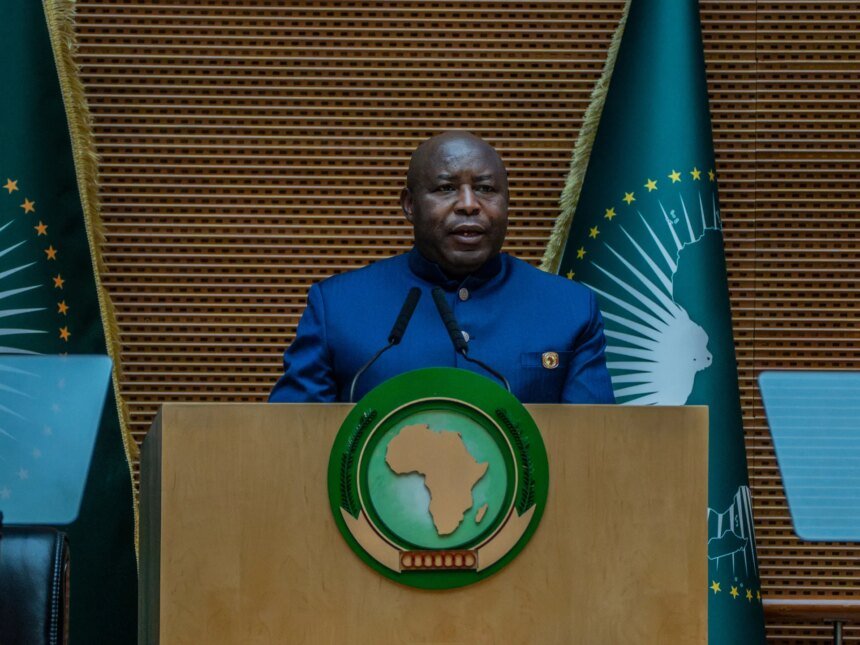
The “Article 64” coalition for the defense of the constitutional order, which includes the most prominent opposition leaders in the Democratic Republic of the Congo, announced last Friday the postponement of its protest march that was scheduled in front of the Palace of the Nation in Kinshasa on July 8 next to the twenty-second of the same month, in response to an invitation sent by the President of Burundi, Evariste Ndayishimiye, the current president of the African Union, to participate in consultations on the political, security and institutional situation in the country, according to what was reported by the Journal de Kinshasa website. (Journal de Kinshasa).
The announcement came in a statement signed by the five most prominent leaders of the coalition in which they affirmed their acceptance of the invitation “in a spirit of responsibility,” considering that this step could contribute to preserving the constitutional order, and that they intend to present their concerns to the President of the African Union “clearly and firmly” regarding the development of the political situation and the dangers that they see as threatening democracy and the country’s institutions.
The Africa Press website reported that the march was originally scheduled for July 8, and that an invitation was made to hold consultations in Gitega, the political capital of Burundi, noting that opposition leader Jean-Marc Kabonde was the first to leave from Kinshasa on Friday evening, followed by other coalition officials, including the leader of Dele Ssanga, who was able to retrieve his passport, which the General Directorate of Immigration had confiscated. The site added that the invitation also included prominent actors, including Doctor Denis Mukwege, Nobel Peace Prize laureate, the National Episcopal Conference in Congo, and the Church of Christ in Congo, while the camp of former president Joseph Kabila confirmed that it had not received any official invitation, an absence that the site considered not fleeting given this camp’s repeated criticism of Burundi’s role in eastern Congo.

In what capacity does Ndayishimiye move?
The initiative comes in a tense Congolese political climate characterized by firm opposition to reviewing the constitution and repeated calls for a comprehensive national dialogue. The Africa Press website reported that the issue was raised during Ndayishimiye’s visit to Kinshasa on June 23, asking whether the Burundian president was moving in his capacity as an ally of the country’s president, Felix Tshisekedi, or in his capacity as the current president of the African Union, noting that the invitees themselves are finding it difficult to decide, which casts doubt on the true nature of this issue. Mediation.
According to the same website, these consultations can be read from two angles: Either Burundi is seeking to assess the extent of the political crisis before engaging further in regional mediation, or it may be a channel to serve the Congolese authorities after the difficulties it faced in winning over Angola for the “general dialogues” project, which the opposition considers a pretext for changing the constitution. The website indicated that the opposition sees the step as an opportunity to present its demands regionally, but fears that it will be a maneuver to defuse the protest without substantive progress, while religious actors insist on a truly transparent and comprehensive process, and African diplomats question Burundi’s ability to play a neutral role.

Military ally of Kinshasa
The two countries have a bilateral agreement that allows the Burundian National Defense Force to deploy forces in eastern Democratic Congo. Between August 2022 and December 2025, Bujumbura deployed more than 29,000 soldiers in the provinces of North Kivu and South Kivu to fight alongside the Congolese army and the “Wasalindo” militias supported by Kinshasa against the M23 rebels, before returning the bulk of its forces in December. 2025 following the advance of the rebels and their allies.
Tshisekedi and Ndayishimiye met in Kinshasa on June 22 to evaluate the security situation in the Fizi and Uvira regions of South Kivu Province, and decided to strengthen the numbers deployed on the ground and improve the operational capabilities of the joint forces, at a time when battles continue in the highlands between the Congolese army and its allies on the one hand, and the “M23” movement and its local allies on the other hand.