Published On 7/8/2026
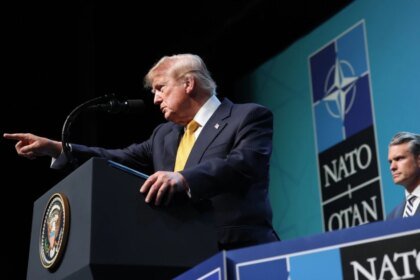
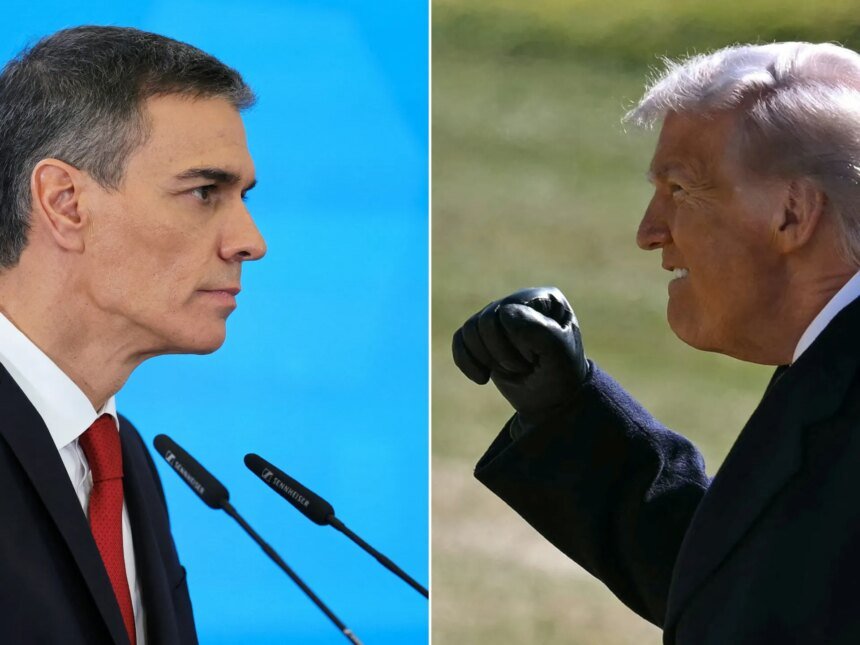
US President Donald Trump’s directives to his Treasury Secretary to cut trade relations with Spain sparked a severe crisis within the North Atlantic Treaty Organization (NATO) coinciding with the Ankara summit.
This sudden American anger against the “bad Spanish partner” – as Trump described it – goes beyond the borders of Madrid, putting Washington’s executive ability to the test, and testing the solidity of the joint European response in the face of a new rift that threatens the structure of NATO. The American decision also collides with a wall of structural and economic obstacles that make its actual implementation extremely complex.
In this context, Jim Townsend, former US Deputy Assistant Secretary of Defense for European and NATO Affairs, believes that the mechanisms of trade with a country in the European Union are completely different from dealing with other countries, which makes punishing Spain commercially confusing and unjustified for officials in Washington.
For his part, Hosni Abidi, professor of international relations at the University of Geneva, dismantles this impossibility through two paths, the first of which is institutional, where trade relations are entirely subject to the powers of the European Commission, which puts Washington facing the entire bloc.
The other is economic, as the trade balance tilts in favor of the United States with a surplus of $5.2 billion, which means – according to Obaidi – that severing relations will incur a direct loss to the American treasury.

Why Spain?
As for the backgrounds behind targeting Madrid, Lola Bagnion Castellon, professor of international relations at the University of Valencia, believes that Trump’s behavior represents a “distraction strategy” to divert attention from the recent American military failure in Iran.
According to the Spanish Academy, Trump is exploiting the position of Spain, which was the most clear in its refusal to use military bases on its territory to attack Tehran, and its opposition to the Israeli war on Gaza.
Bannion confirms that the Spanish response was characterized by calm and diplomacy, as Madrid adheres to its “defensive” obligations within the alliance, such as participating in Finland and guarding the Atlantic, while categorically rejecting “offensive” agendas.

What about NATO?
The repercussions of this crisis go beyond the Spanish issue and affect NATO’s security doctrine, as Abidi points out that Trump seeks to transfer the entire financial burden to the Europeans to force them to buy American weapons, which conflicts with Madrid’s internal priorities such as unemployment and health, despite raising its military spending to 2%.
This rift, coupled with European fears of the rapprochement between Trump and Russian President Vladimir Putin, is pushing the bloc to think about an “alternative European security umbrella” or a “coalition of the willing” to support Ukraine if a complete European consensus is not available, according to Obaidi.
Despite this, Townsend believes that Europe’s rearmament under NATO’s leadership does not pose a danger, but rather aims to confront common threats, while NATO secretaries continue to favor Trump and restore relations with him to avoid the scenario of Washington’s withdrawal.