

Published On 7/8/2026
|
Last update: 18:12 (Mecca time)
The German media believes that when the Kremlin – in a remarkable shift – changed the description of the war in Ukraine from a “special military operation” to a “war,” and held the West responsible for its continuation, it did not aim for a mere linguistic change, but rather sought to prepare the Russian interior for a long war and to facilitate mobilization.
The German media discussed this remarkable shift in the Russian official discourse regarding the Ukrainian war, and considered the ongoing conflict since February 2022 a “real war” and not a “special military operation,” as the Russian leadership has been calling it until now.
Read also
list of 2 itemsend of list
This comes against the backdrop of Kremlin spokesman Dmitry Peskov’s statement a few days ago that “the special military operation turned into a real war due to the intervention of Western countries and their support for Ukraine.”
This statement is seen as the Kremlin’s first public acknowledgment of using the description “war” for the conflict with Ukraine, after years of avoiding this term in official discourse, and imposing strict restrictions on the use of the word “war”, with anyone who uses it exposed to prosecution on charges of defaming the reputation of the Russian army.

Suddenly war
The newspaper “Tats”, among the German-language newspapers, commented on this remarkable change under the title “Suddenly War,” noting that the Kremlin was always keen to use the term “special military operation” when referring to its aggressive war in violation of international law, according to the newspaper’s expression.
The newspaper warned that anyone in Russia who uttered the word “war” was at best facing a fine, if not imprisonment, but this misleading and divorced classification – according to the newspaper’s opinion – has exhausted its purpose.
TATS saw that the new formula “is not just a simple linguistic change as Moscow says, but the truth – according to Peskov – is that the one responsible for turning the process into a war is the Western countries, including the United States, which supports Kiev in targeting deep into Russian territory.”
The newspaper does not believe that this shift at this particular time is a coincidence. Rather, it believes that it is directed at Russia and at what Moscow describes as the “degenerate West,” because this war, which was not allowed to be called by its real name, has long since become a reality in Russia.
This is because the time when the Russians mistakenly believed – as the newspaper says – that the military campaign on neighboring countries would not affect them has ended, and the data indicate that Russia has already begun a new phase of mobilization, even if it is doing so out of the limelight.
Tatz believes that this verbal shift is not without messages directed abroad as well, asserting that the messages to the West “do not tolerate interpretation” because the real instigators of the war are sitting in Berlin, Oslo and Paris.
Tats concluded her article by saying that the Kremlin continues to rely on misleading public opinion, creating a false image of reality, and establishing propaganda facades that hide the truth.

Intentional change
For its part, the newspaper “Merkur” says that Peskov’s choice of this description represents an intentional shift in Russian propaganda discourse, as it appears that the Kremlin is seeking to prepare Russian public opinion for the possibility of the war continuing for a longer period and perhaps to justify a new wave of mobilization.
It does not appear – according to the newspaper – that the use of the word “war” is limited to the linguistic dimension, but it may also have legal consequences, as the Kremlin’s official declaration of war may give it the opportunity to evade legal obligations, and it may provide the Russian authorities with broad powers under the Mobilization Law, including declaring a general mobilization and transforming the economy into a war economy.
Under Russian law, a declaration of war allows for expanded conscription, the call-up of reserve forces, and the obligation of civilian industries to shift to the production of military equipment.
The newspaper quotes researchers at the Carnegie Russia and Eurasia Center as saying that the Kremlin used the term “special military operation” to cover up the reality of the war, and at the same time to prepare society in Russia to adapt to a long-term military situation.
At the same time – as the newspaper points out – the Kremlin continues to promote the narrative that Russia is not the party responsible for the escalation, but rather is a victim of what it describes as “Western aggression.”

Why now?
The issue did not attract the attention of German newspapers alone, but rather included German-speaking newspapers in neighboring countries such as Switzerland, whose first newspaper, “Neue Zuricher Zeitung,” published an article entitled “From a special operation to a real war… Why has the Kremlin changed its rhetoric now?”
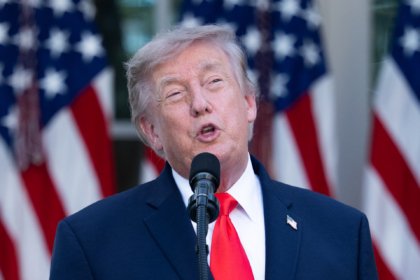
The newspaper says that this change was not spontaneous, but rather falls within Russian attempts to reformulate the official narrative of the war, influence US President Donald Trump, and deepen the differences within the North Atlantic Treaty Organization (NATO), especially with the alliance’s summit being held in Ankara.
The article also indicated that Russian President Vladimir Putin, during a phone call with Trump, tried to confirm that Russia is making progress on the ground and that victory has become inevitable, while the author of the article believes that the military reality is different in light of the slowdown in Russian progress and Ukraine’s intensification of its attacks on Russian supply lines and oil installations.
The article gives examples of Russian authorities punishing people who used the word “war” to describe the conflict in Ukraine, including local politician Alexei Gorenov and artist Alexandra Skochlenko.
The article concluded that the Kremlin’s use of the term “war” is not just a linguistic change, but rather a propaganda and political move aimed at holding the West responsible for the continued fighting and influencing the positions of the United States and NATO, while at the same time maintaining laws that punish Russian citizens if they use the same description.