

Published On 7/8/2026
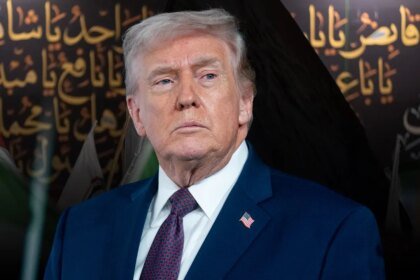
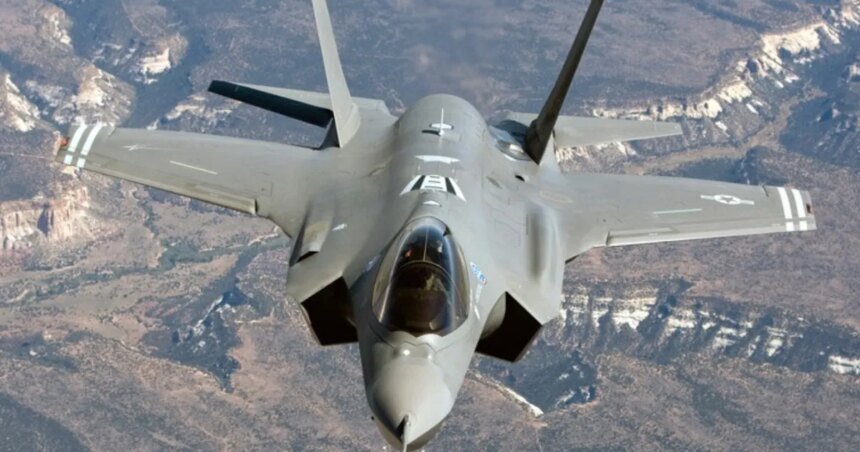
US President Donald Trump opened the door to a major shift in his country’s policy towards Turkey, after he announced during the NATO summit in Ankara that he would “certainly consider” selling F-35 fighters to Ankara, in a move that represents a retreat from a decision he took during his first term to exclude Turkey from the program due to its purchase of the Russian S-400 air defense system.
However, Trump’s statements, which were met with wide Turkish welcome, quickly collided with two main obstacles: an American law that prevents the completion of the deal as long as the S-400 missile system is in the possession of the Turkish army, and the opposition of Israel, which believes that Ankara’s possession of these fighters will undermine its military superiority in the Middle East.
Read also
list of 2 itemsend of list
The Financial Times newspaper said that Trump not only indicated the possibility of returning Turkey to the F-35 program, but also announced his intention to lift the sanctions imposed on it, saying: “We do not want to impose sanctions on friends.” He added, justifying his position that “Turkey was more loyal than other countries,” in a message that seemed directed to some European allies whom he repeatedly criticized for what he considered a failure to share defense burdens within NATO.
Congressional hurdle
This position represents a reversal of the policy adopted by Washington since 2019, when it excluded Turkey from the stealth fighter program after purchasing the Russian S-400 system, fearing that operating the two systems together would reveal the secrets of advanced American technology.
However, despite Trump’s clear desire, the implementation of the deal does not depend on the White House alone. The Wall Street Journal explained that in 2020, Congress passed a law preventing Turkey from returning to the F-35 program as long as it maintains the S-400 system, which puts the president in front of a potential confrontation with lawmakers from the Democratic and Republican parties.
This rejection was reinforced when 18 representatives in the House of Representatives, led by Democrat Dina Titus, announced their opposition to any potential deal, stressing that selling the fighters in light of the continued presence of the Russian system “would constitute a violation of American law and the sanctions imposed on Ankara,” according to what was reported by Axios.
On the other hand, the US administration seems to be looking for a legal way out. Vice President J.D. Vance revealed that the Department of Defense (the Pentagon) is conducting a review of the options that would allow the deal to be completed while complying with the law, explaining that the administration is required to provide “legal certificates” proving that the required conditions are met.
The Washington Post also quoted informed sources as saying that one of the proposed scenarios is transferring the S-400 system to a third country, dispelling security concerns related to its operation alongside the F-35 fighters. This is a formula that may give the White House a way out that allows the deal to proceed without directly colliding with current legislation.
Israel’s position
But the second obstacle is no less complex than the first, and is represented by the Israeli position. Axios revealed that Israeli Prime Minister Benjamin Netanyahu asked Trump, during a previous call, to refrain from selling the F-35 to Turkey, warning that this would change the balance of power in the region.
Netanyahu repeated this position in an interview with CNN, saying that giving Turkey fighters “will destroy the balance of power in the Middle East,” considering that Ankara “is not a model of an American ally.”
Netanyahu added that providing Turkey with these advanced military capabilities “will not bring stability, but will lead to more aggression,” in reference to the escalating tension between the two countries since the outbreak of the war on Gaza, and the ongoing disagreements over several regional issues.
Axios explains that Israeli concerns are not limited to Turkey’s possession of the aircraft, but rather extend to the possibility of it returning as a partner in the F-35 development and production program, which gives it a greater industrial and military role within the American project, making it the second country in the Middle East to possess these fighters after Israel.
Distinguished relationships
Despite these objections, Trump’s statements reflect the nature of the distinguished personal relationship that links him with Turkish President Recep Tayyip Erdogan. He described Türkiye as a “wonderful ally” and said that relations with it were “better than our relations with other countries that we thought would be more loyal.”
The Financial Times believes that this speech is consistent with Trump’s vision, which prefers direct bilateral relations over traditional considerations of alliances, which was also evident in his repeated criticism of NATO allies, and his demand that they increase defense spending, in exchange for his praise of the Turkish position.
On the other hand, the Wall Street Journal believes that Trump’s rush towards the deal may open a political and legal confrontation with Congress, especially if he tries to circumvent the legislative restrictions, while the Washington Post indicates that any final agreement will remain subject to finding an acceptable legal formula to address the S-400 issue.
Thus, Türkiye’s return to the F-35 program appears closer to a complex political and legal test than a normal military deal. The American President has the political will to complete it, and Erdogan is betting on his personal relationship with Trump, but the success of the project will remain linked to the administration’s ability to overcome two major obstacles: an American law and an Israeli objection.