The return of Muhammad Khater from the Pakistani city of Peshawar to the Nangarhar province in eastern Afghanistan was not just a geographical move, but rather an attempt to rebuild a commercial activity that he had accumulated during years of working in the textile trade between China, Japan, and Pakistani markets.
Khater, who worked in fabric trade and import through regional networks, is today seeking to transfer his experience to the Afghan interior, benefiting from his commercial relationships and knowledge of supply chains in the region. He tells Al Jazeera Net that his return came at a time when many Afghans are facing difficulties in finding stable job opportunities, but he sees in his experience an opportunity for a new beginning within the local market.
Read also
list of 4 itemsend of list
Since 2023, Afghanistan has witnessed one of the largest waves of returns in its modern history, as more than 6.04 million Afghans have returned from Iran and Pakistan until May 2026, according to data from the International Organization for Migration.
Experience and capital
Although this widespread return imposes pressure on the labor market and public services, at the same time it reveals a category of returnees that includes merchants, industrialists, and craftsmen who returned with professional expertise and capital acquired during their years of residence abroad.
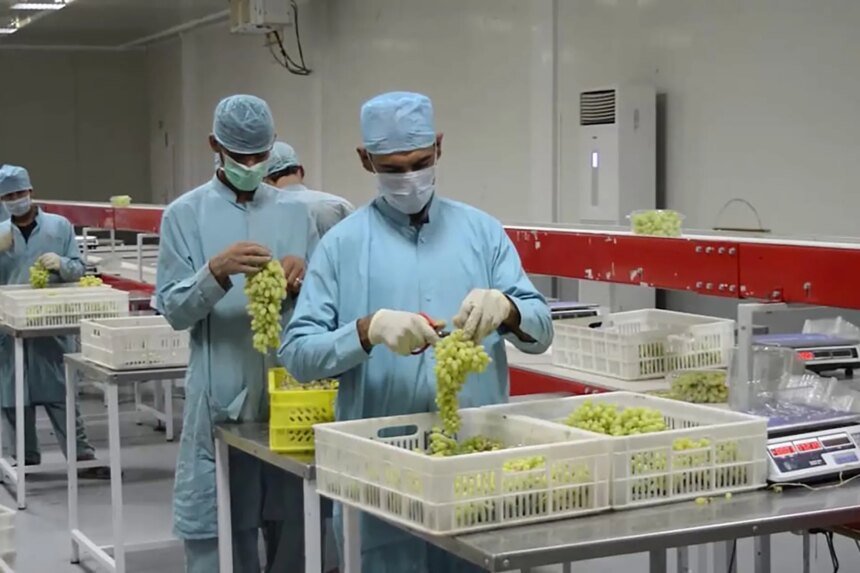
Official indicators indicate that some of these experiences have begun to turn into actual investments within the country, as the Ministry of Industry and Trade announced the approval of investments exceeding $26 million for seven businessmen and industrialists returning from Iran and Pakistan, in sectors including food industries, plastic products, cold storage, and manufacturing industries.
This reality raises questions about the ability of the Afghan economy to transform the wave of returns into a development opportunity, by investing expertise and capital coming from abroad in productive projects that contribute to creating job opportunities and revitalizing the local economy.

Localization of investments
In light of the increasing number of returnees, the Afghan government is trying to turn this wave into an economic opportunity by encouraging businessmen and industrialists to resettle their investments within the country and facilitating their work procedures.
Mawlawi Ahmadullah Zahid, the Afghan Deputy Minister of Industry and Trade, told Al Jazeera Net that the Afghan government is working to transform the wave of return of businessmen and industrialists into an economic opportunity by facilitating investment procedures and resettlement of capital that left the country during the past years.
Zahid adds that the Committee for Organizing and Facilitating the Affairs of Returned Traders and Industrialists periodically studies investors’ files, with the aim of accelerating the approval of executable projects and reducing administrative obstacles in front of them, allowing the start of production activity as quickly as possible.
He explains that the Ministry recently approved investments exceeding $26 million for a number of businessmen and industrialists returning from Iran and Pakistan, distributed across multiple industrial sectors, including food industries, plastic products, cold storage, and the manufacture of various consumer materials.
He points out that these investments, although they are still in their early stages, represent a step towards revitalizing the local industrial sector and expanding the production base within the country, especially in light of the need for projects that provide job opportunities and reduce dependence on imports.
Zahid confirms that the Afghan government views returning businessmen as a potential partner in the economic recovery process, given the experience and business networks they have acquired during their years of work outside the country, stressing that the success of these projects is linked to developing the investment environment and providing the necessary support to ensure their sustainability.
These investments are distributed across multiple sectors, including the food industry, the production and packaging of mobile phones, the manufacture of grease and antifreeze, plastic materials, paper products, and cold storage, in addition to other consumer industries.
Despite these indicators, observers believe that converting these investments into projects capable of creating a broad economic impact is still dependent on the extent of the government’s ability to provide a stable environment, ensure the flow of financing, and develop the infrastructure that supports the industrial sector.

Between experience and absorptive capacity
Afghan economist Muhammad Mohammadi told Al Jazeera Net that the return of businessmen and investors to Afghanistan cannot be read only from the perspective of the size of the announced investments, but rather through the ability of the local economy to absorb these experiences and transform them into sustainable production value.
He points out that returnees who have professional and commercial experience can make a real addition to the economy, but this effect remains linked to the size of the local market, the availability of financing, and the stability of the investment environment.
He adds that there is a fundamental difference between the return of workers searching for job opportunities, and the return of those with capital and administrative expertise, explaining that the second category is capable of creating added value if it is provided with appropriate economic conditions.
However, at the same time, Mohammadi warns against overestimating the impact of this return, pointing out that the Afghan economy still faces structural challenges, most notably the weakness of the banking system, difficulty in accessing financing, and the decline in foreign investments.
He stresses that transforming the wave of return into an economic opportunity requires clear policies to support investment, linking returning expertise to the local labor market, and providing a stable regulatory environment that allows projects to grow instead of remaining within a limited scope.
Return of experiences
Advisor to the Afghan Chamber of Commerce and Investment, Khan Jan Alkozi, told Al Jazeera Net that some of the merchants and industrialists who were running workshops and small factories in Pakistan have already begun to transfer their activities to the Afghan interior, benefiting from their previous experiences in production and distribution.
He points out that these activities are mostly concentrated in light industries and small projects, such as fabrics, shoes, plastic and consumer products.
But he stresses that this transformation is still limited, as the bulk of Afghan investments abroad have not yet been transferred internally, especially in Pakistan, due to challenges related to financing, infrastructure, and the difficulty of expansion.
He believes that experienced returnees represent an important opportunity for the local economy, but it needs institutional support and clear economic policies to transform individual initiatives into sustainable economic activity.

Examples of returnees
In addition to official statements and numbers, limited examples appear on the ground of returnees who have restarted economic activities that they managed abroad, especially in the areas of textile printing, trade, craft services and small industries.
In a number of Afghan provinces, merchants and craftsmen have returned to opening small workshops, or reviving family businesses, benefiting from their previous experience in markets such as Pakistan and Iran, where they acquired skills in production, distribution management, and supply chains.
Despite the importance of these experiences, they are still individual and have limited impact, and do not amount to the formation of an integrated economic sector capable of bringing about a broad transformation.
Despite these indicators, the process of transforming the experiences of returnees into sustainable economic projects faces a number of structural obstacles, the most prominent of which are:
- Difficulty obtaining the necessary financing to start or expand projects.
- Weak infrastructure supporting industrial and commercial activities.
- Limited investment environment.
- Labor market pressure and high unemployment rates.
These challenges affect not only the volume of new investments, but also the ability of existing projects to grow and transform into broad productive activities.
Between a large wave of returns from abroad, and limited investments that have begun to form inside the country, the question remains open about the ability of the Afghan economy to transform this expertise and capital into a real development opportunity.
Between the government’s promises of facilitation and the restrictions of the economic reality, the returnees’ experience stands at a crossroads: either it turns into a productivity lever, or individual initiatives remain with limited impact.