

Published On 7/6/2026
Japanese scientists did not find anything better than the famous story “Salamander” by the Japanese writer Masuji Ibuse, to resemble a unique scene they encountered at sea, and they documented it in a study published in the “Ecosphere” journal.
About 97 years ago, this story was published, which tells of a salamander who lives in a narrow cave, and continues to eat voraciously for two years until his body becomes larger than the opening of the cave, and he is no longer able to get out. This is the same thing that happened to the crab in the scene documented by Japanese scientists.
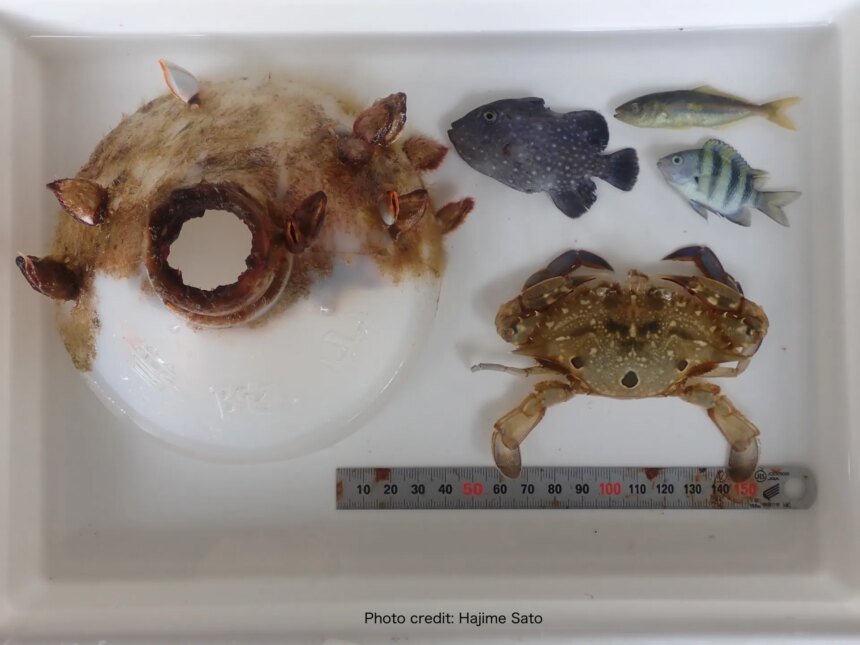
In July 2022, a team of researchers from Hiroshima University was conducting a study on small fish near the island of Okinawa in Japan. During their work, they found a plastic bottle floating in the sea surrounded by small fish, but the surprise was the presence of a live swimming crab inside the bottle.
The bottle’s opening was only 24 millimeters in diameter, while the length of the crab was 40.31 millimeters and its width was 88.23 millimeters, meaning that the crab became much larger than the bottle’s opening, and therefore it was not able to get out of it.
Scientists concluded that the crab entered the bottle when it was very small, then lived inside it and continued to grow, and over time its body became larger than the bottle’s opening, so it became trapped inside it.

How did the crab live in the bottle prison?
After taking the crab out, the researchers analyzed the contents of its stomach using DNA analysis, and discovered that it was feeding on small fish that entered the bottle, and algae that grew inside it, and this explains how it was able to remain alive despite its detention.
To find out how long he remained inside the bottle, there were small marine creatures called “barnacles” on it, and based on their growth rate and the growth rate of the crab, the researchers estimated that he was trapped inside the bottle for about two months.
If the study revealed the crab’s amazing ability to survive in unusual conditions, the most important message from that study that the researchers wanted to convey was to clarify one of the negative effects of plastic pollution on marine organisms.
The researchers said in a statement published on the Hiroshima University website that plastic pollution is not limited to animals ingesting plastic, but plastic may trap animals or change their behavior and environment as well.